Get Full Government Meeting Transcripts, Videos, & Alerts Forever!
Get email alerts on the Child Abuse Prevention topic
No spam. Unsubscribe anytime.
Prevention councils seek steady funding to expand community supports and parent outreach
Summary
Witnesses urged lawmakers to fund county prevention councils so they can expand universal, community‑level supports for families and prevent child abuse and neglect.
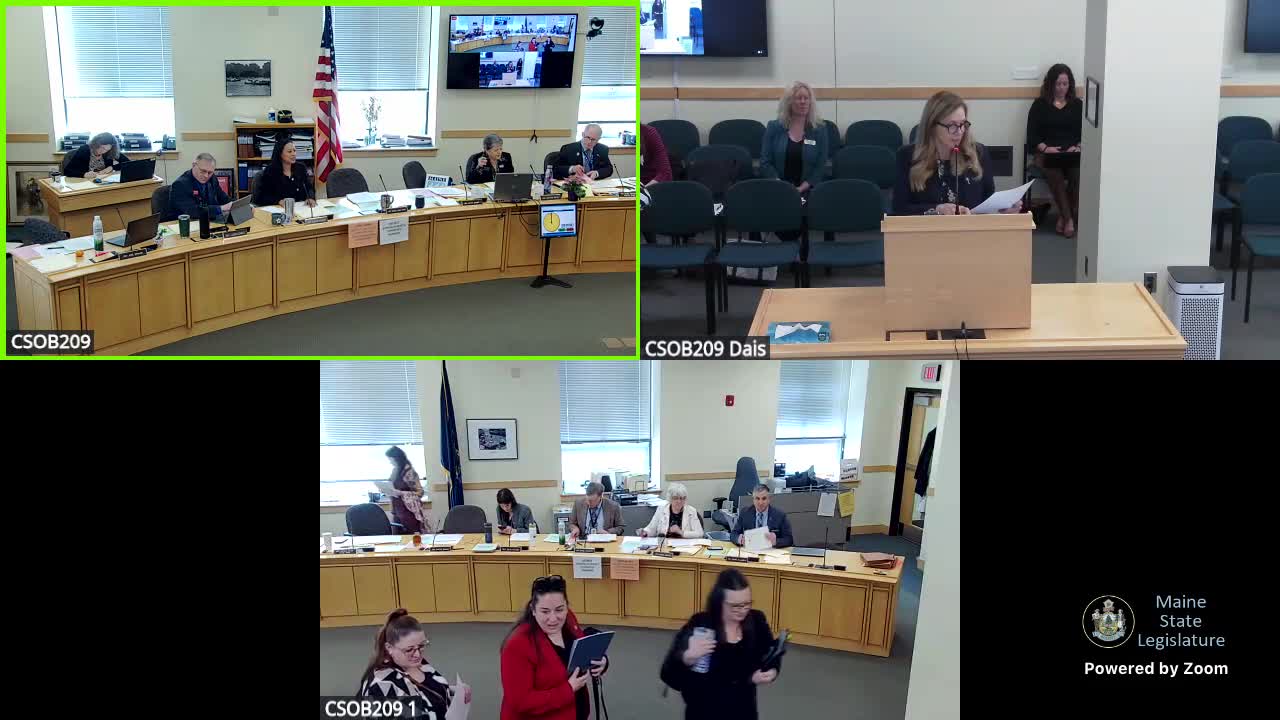
Representative Michelle Meyer presented LD 10 61 to provide funding to Maine's county prevention councils and to strengthen community supports for families. The bill would distribute funding to the statewide network of prevention councils to bolster prevention, coordination and education activities.
Heidi Aker, director of Maine Children's Trust, told the committee the councils have been flat‑funded despite expanded expectations and now operate with limited staff. "In fiscal year 24, half of Maine counties received less than $55,000 in total grant support and staffing," Aker said, adding that the statewide average staff level equates to roughly 0.64 full‑time equivalents per county for direct family education and 0.45 FTE per county for coordination.
Supporters described a range of activities the councils currently provide: parenting education, mandated‑reporting training for professionals, community events that connect families to services and the creation of community spaces for families. Testimony from Penquis Community Action, Franklin County Children's Task Force and local prevention council directors included concrete examples—school and community events, parenting classes and a dental outreach at a children's festival—that organizers said would scale with predictable county funding.
Advocates and local leaders framed the request as an upstream investment to reduce later, costly child welfare interventions. "When we help families better and sooner… we strengthen child safety and prevent the need for more intensive and often traumatic state child welfare agency intervention," Representative Meyer said. Committee members asked how the fiscal note was calculated; witnesses asked analysts to provide county allocations and staffing breakdowns at the work session.
The committee closed the public hearing and requested additional fiscal detail; no vote was recorded during the session.