Get Full Government Meeting Transcripts, Videos, & Alerts Forever!
Get email alerts on the Healthcare Workforce topic
No spam. Unsubscribe anytime.
Committee hears proposal for $5 million annual fund to expand clinical training and residencies in Maine
Summary
Lawmakers and health educators urged creation of a Maine Healthcare Education Training and Medical Residency Fund, a $5 million annual grant program to expand clinical rotations, residencies and preceptorships in rural and underserved communities.
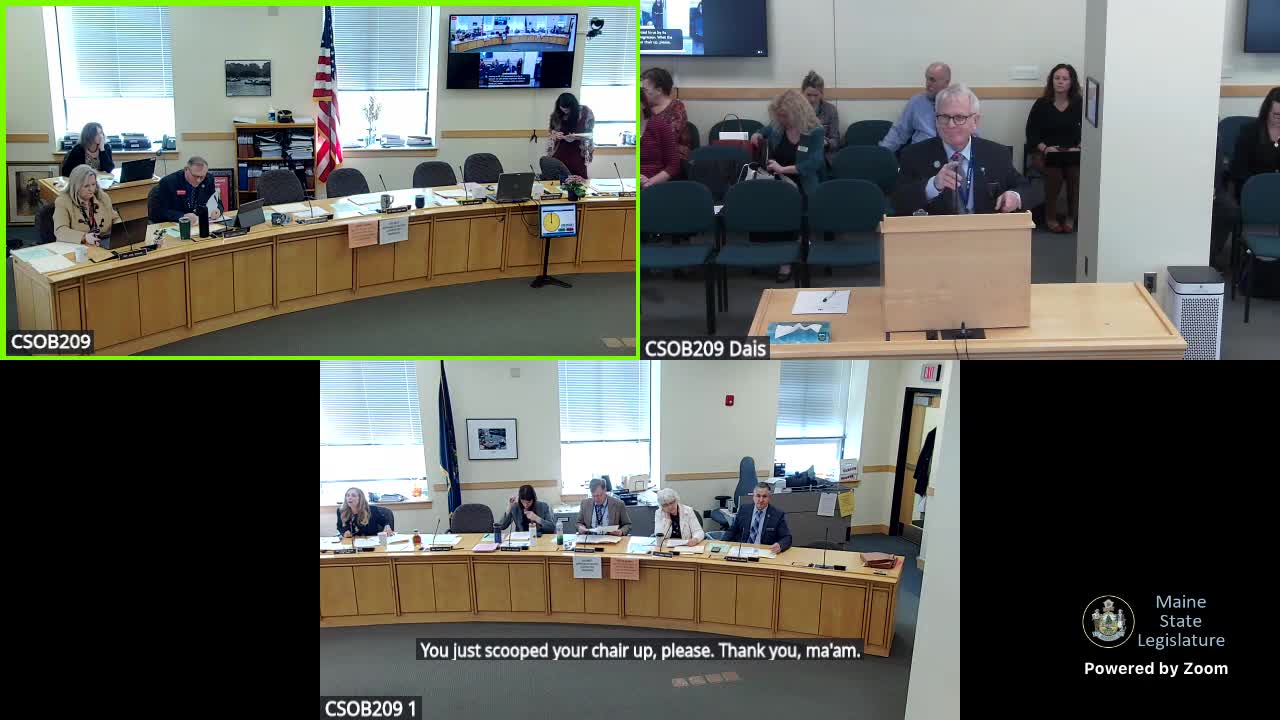
Senator Henry Ingwersen presented LD 13 11 on behalf of the sponsor, asking the Joint Standing Committee on Health and Human Services to create a $5,000,000 annual Maine Healthcare Education Training and Medical Residency Fund to expand clinical rotations, residencies and preceptorships in rural and underserved communities.
Supporters told the committee the state faces critical workforce shortfalls and that investing in training slots and preceptor support will help retain clinicians. "Clinical training and residencies are critical to meeting our health care workforce needs," Ingwersen said. University, hospital and health system witnesses described limited local capacity for student clinical placements and said expanding slots tends to increase the share of trainees who stay to practice in Maine.
The University of New England said it had 178 third‑year medical students this year but could place only 70 in Maine for that crucial clinical year; 108 students found placements out of state. "Our data shows that approximately 60 percent of all of our students either stay or return to the community where they had their third year clinical site or their residency," Ed Cervone, director of external relations at UNE, told the committee. UNE and other witnesses said adding 40 more clinical and residency slots could be expected to retain roughly 24 additional physicians in the state.
MaineHealth and the Maine Hospital Association emphasized broad workforce shortages across professions. "Today, hospitals are seeking thousands of healthcare professionals to fill critical roles," Sally Weiss of the Maine Hospital Association said, noting hospitals spent nearly $17 million on workforce development in 2024 across the reporting hospitals. Nica Smith of MaineHealth described programs organized under the MERGE collaborative and Building Maine network and warned that federal funding supporting those efforts is expiring.
Witnesses described how funds would be used: recruiting and training preceptors, compensating preceptor time, supporting travel and housing for learners, and piloting innovative training models (including virtual classrooms). Speakers repeatedly linked clinical placements to rural retention: several trainees testifying said rural rotations had shaped their career choices and that increased local rotations improve recruitment and retention.
No formal committee action or vote occurred during the public hearing. Committee members asked clarifying questions about program scope, whether the fund would cover professions beyond physicians and how per‑trainee costs would be estimated. Witnesses welcomed an amendment broadening the bill's language to explicitly include multiple health professions and asked analysts to provide cost estimates at the work session.
The public hearing was closed with committee staff and members noting follow‑up items for the work session, including cost estimates and examples of similar programs elsewhere.
LD 13 11 remains at public hearing; committee members requested additional fiscal and programmatic information for the forthcoming work session.