Get Full Government Meeting Transcripts, Videos, & Alerts Forever!
Get email alerts on the Humanitarian Crisis topic
No spam. Unsubscribe anytime.
U.N. says Myanmar quake, Gaza closures and multiple conflicts have pushed humanitarian needs beyond current response capacity
Summary
The U.N. warned that simultaneous emergencies — including a major Myanmar earthquake, closed Gaza crossings, renewed fighting in Sudan and eastern Democratic Republic of the Congo, and food shortages in Haiti and Ukraine — are overwhelming aid supplies and funding, prompting new appeals and urgent operational constraints.
The United Nations said its humanitarian operations are overstretched across several crises worldwide, reporting large-scale needs in Myanmar, Gaza, Sudan, the Democratic Republic of the Congo (DRC), Haiti and Ukraine while international funding and supplies lag behind.
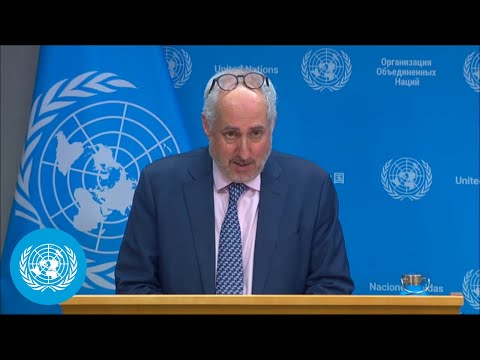
"So far, less than 5% of this appeal has been received," U.N. spokesman Stéphane Dujarric said of a new humanitarian appeal for Myanmar, which the U.N. said calls for $1,100,000,000 to meet needs after a major earthquake. Dujarric said Tom Fletcher, the U.N. emergency relief coordinator, arrived in Myanmar and met local responders; he reported that more than 25 search-and-rescue teams and multiple medical and shelter deliveries have been deployed to Mandalay and other affected areas.
Why it matters: simultaneous large-scale emergencies mean agencies must triage supplies and personnel, and shortfalls now affect how long basic services can be sustained for displaced people.
Key developments and numbers
- Myanmar: Fletcher visited Yangon and Mandalay, the epicenter of the quake, as U.N. agencies and partners have distributed water and shelter kits. Dujarric said more than 30 tons of medical supplies arrived just yesterday, bringing the total to about 100 tons since the quake. The U.N. refugee agency (UNHCR) is appealing for $16 million to assist 1.2 million people and to manage displacement sites through year-end; Dujarric said additional stocks in local warehouses can cover some needs but must be urgently replenished.
- Gaza and the occupied Palestinian territory: The Office for the Coordination of Humanitarian Affairs (OCHA) reported mass westward displacement inside the Gaza Strip after new evacuation orders. Dujarric said all crossings into Gaza remained closed, leaving no regular supply flow; the World Food Programme (WFP) has warned that food stocks are running out and some WFP programs are "gradually shutting down." Dujarric added that sanitation is deteriorating, that makeshift sites in Al Mawasi report infestations that require supplies only available when crossings reopen, and that criminal looting and insecurity have increased. On one recent day, "a distribution point used by a humanitarian agency was looted," Dujarric said.
- Sudan: The U.N. said civilians are fleeing Khartoum amid changing control of parts of the capital and reports of extrajudicial killings. Dujarric said roughly 5,000 displaced people from Khartoum were reported in Jabrat Al Sheik, North Kordofan (as reported by humanitarian partners), and that others have moved toward Umdukum in Central Darfur. He warned that funding shortfalls have reduced data collection and delayed early warning alerts. The U.N. also reported that a humanitarian convoy to South Kordofan has stalled in Al-Obeid because of insecurity and bureaucratic impediments.
- Democratic Republic of the Congo: The U.N. peacekeeping mission in the DRC (MONUSCO) reported fighting in Ituri and North Kivu that continues to target civilians and displace populations. Dujarric said the fighting between CODECO and Zaire-affiliated militias and clashes involving the M23 militia have prompted nightly requests for protection at MONUSCO locations; local sources cited about 7,500 people displaced in Ruchuru territory after renewed hostilities. The mission is rehabilitating roads around Goma to facilitate humanitarian access.
- Haiti: The WFP reported large-scale displacement after attacks around Mirebalais in the Centre department; the International Organization for Migration (IOM) estimated roughly 6,000 people displaced in that incident. WFP said it provided hot meals to about 2,000 of those people and is working to expand assistance; Dujarric noted WFP faces a funding gap of nearly $54 million for six months of operations in Haiti.
- Ukraine: OCHA reported continued attacks across populated areas, including repeated drone strikes on Kharkiv; local authorities reported multiple civilian casualties and infrastructure damage. The U.N. humanitarian coordinator in Ukraine, Matias Shmali, condemned the attacks, Dujarric said.
Operational strain and funding
Dujarric emphasized that appeals across several responses are significantly underfunded: the Myanmar appeal was at under 5% funded; a separate U.N. response plan for Colombia — which aims to reach 13.5 million people — had received about 12% ($41 million) of a $342 million request. He said partners are preparing a new appeal to align response planning with the scale of need.
Protection and humanitarian access
The U.N. reiterated international humanitarian law obligations and the need to protect aid workers and volunteers. Dujarric quoted Tom Fletcher’s recent remarks expressing outrage at attacks on community kitchens and safe spaces in Sudan: "Humanitarians must be protected and must be supported." The briefing urged parties in multiple conflicts to allow "rapid, unimpeded and impartial" relief.
Limitations and reporting caveats
Dujarric said ongoing insecurity and funding constraints have forced reductions in data collection, which delays reporting on new displacements and early warnings. Several figures cited (displacement counts and supply tonnages) were reported by humanitarian partners on the ground and reflect rapid, evolving situations.
Background and next steps
The U.N. said humanitarian partners are scaling responses where possible while preparing new funding appeals. Dujarric also noted Deputy Secretary‑General Amina Mohammed was in North Macedonia meeting national officials and reviewing joint U.N. SDG projects.
The U.N. briefing closed with a call for sustained access and funding so that humanitarian operations can continue serving affected populations across the crises described.