Get Full Government Meeting Transcripts, Videos, & Alerts Forever!
Get email alerts on the State Parks topic
No spam. Unsubscribe anytime.
State Parks details deferred maintenance, fire damage and access programs; lawmakers press for stronger management of campsite reservations
Summary
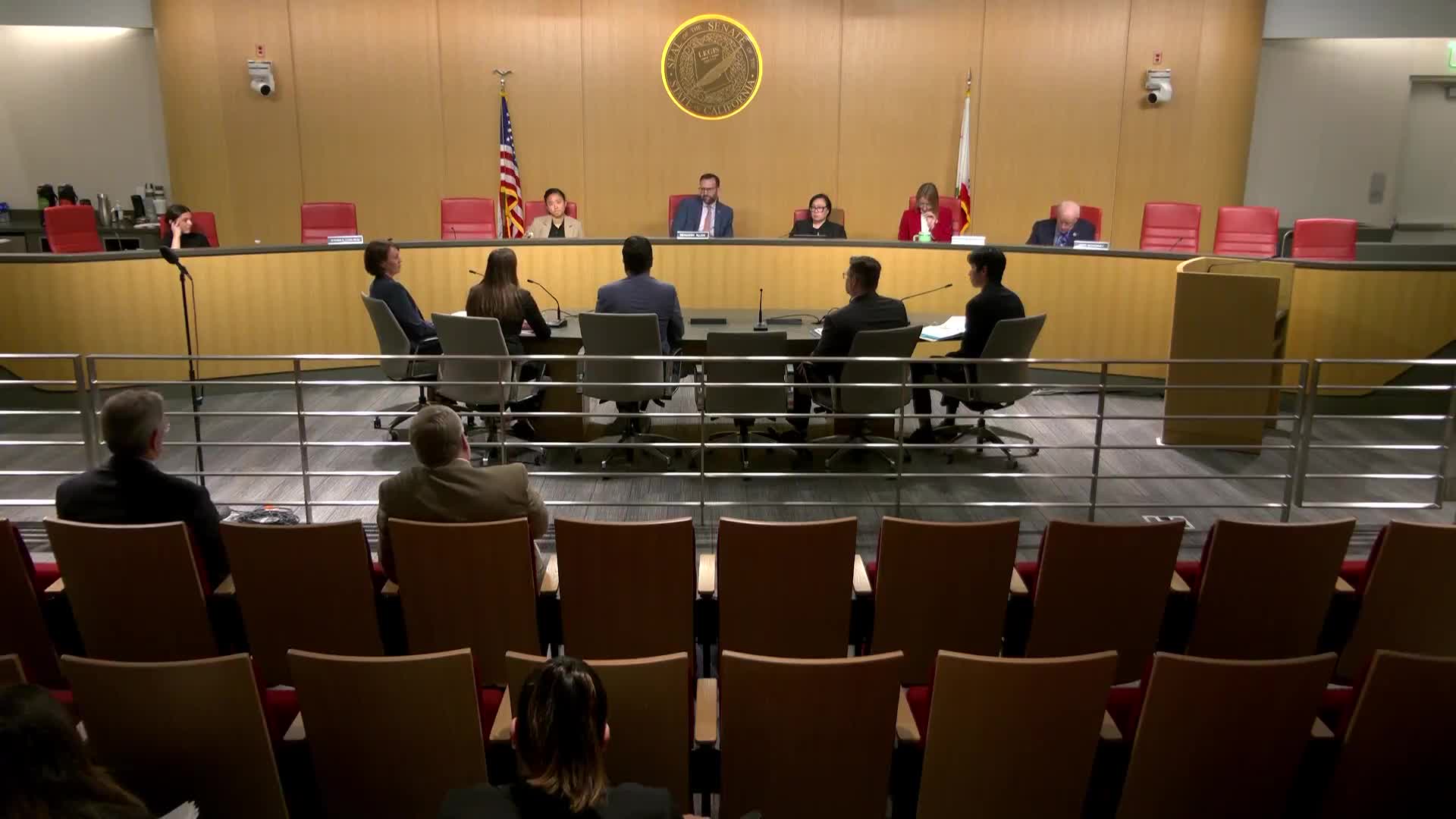
Armando Quintero, director of the California Department of Parks and Recreation, told the Senate subcommittee the department manages 280 park units across more than 1.65 million acres and outlined priorities including deferred maintenance, climate‑resilient projects and post‑fire recovery.
Armando Quintero, director of the California Department of Parks and Recreation, told the Senate Budget Subcommittee the department manages 280 park units across more than 1.65 million acres, serves roughly 70 million visits per year and is prioritizing equity, deferred maintenance and climate resilience.
Key priorities and funding - Deferred maintenance and climate bond: Quintero said the department has awarded roughly $1.2 billion to local park projects since 2008 through the Statewide Park Development and Community Revitalization Program and is seeking additional climate bond investments. The governor’s proposed climate bond included funding for deferred maintenance ($175 million for parks in the governor’s plan) and $190 million requested for statewide park development in 2025–26, Quintero said. - Wildland fire response and damage: Quintero and staff described the Palisades Fire in early January that burned more than 8,600 acres at Topanga State Park and Will Rogers State Historic Park, destroying historic structures and causing broad damage. State Parks deployed more than 60 staff who logged more than 10,000 hours on emergency response, mitigation and assessment. Quintero said the agency is preparing a FEMA damage assessment and will pursue community-engaged planning for rebuilding; he noted the Big Basin process after 2020 as a model. - Library pass, fourth‑grade Adventure Pass and access programs: Quintero highlighted several access programs the department runs to expand park visitation: the Library Pass (about 33,000 passes distributed through public and tribal libraries), the fourth‑grade Adventure Pass (roughly 78,600 passes) and other free-pass programs. The department said surveys show many passholders have household incomes under $60,000 and that passes reduce perceived cost barriers.
Operational issues and questions - Campsite no‑shows and reservation management: Senators pressed State Parks to reduce reserved‑site no‑shows and empty campsites, noting the demand for camping and limited supply. Quintero said a new reservation vendor began August 1 and that DWR is sending 10‑day, 4‑day and additional reminders; he said the department is exploring midday confirmation policies so reservations not confirmed by a deadline are released for walk‑ins. - Bidwell Mansion arson and other site-specific damage: Staff said some sites remain closed because of structural damage or operator defaults. Bidwell Mansion in Chico suffered an arson incident; State Parks reported heavy security and hazardous‑material testing, initial perimeter cleanup and a pending structural assessment to determine salvageable elements and design options. The department said the court ordered $37 million in restitution in that criminal case; staff cautioned restitution availability and timing are uncertain. - FEMA and rebuilding funding: State Parks said FEMA typically covers up to 75% of eligible in‑kind replacement costs for destroyed facilities; FEMA’s alternative funding for relocated or altered projects provides smaller cost shares. The department said it will pursue FEMA reimbursement where eligible and supplement with partner fundraising and potential legislative requests when project designs and cost estimates are complete.
Additional operational topics - Natural resources and prescribed fire: Quintero said State Parks has treated tens of thousands of acres for fuel reduction and used prescribed burns on approximately 30% of treatments; he said the department has increased forecast‑informed operations and coordination with CAL FIRE and federal partners. - Staffing and federal workforce transitions: Senators discussed opportunities to recruit federal staff leaving national parks and forests; Quintero said he and his team are contacting federal HR offices and that many federal employees have inquired about state opportunities.
What the transcript shows: The hearing covered broad State Parks priorities and detailed operational items: deferred maintenance, climate resilience projects, recent fire damage, FEMA process, campsite reservation reform and access program success metrics.
Ending note: State Parks said it will finalize FEMA damage assessments, pursue public engagement on rebuilds, continue to expand access programs and return with detailed project cost estimates; lawmakers urged prompt action on campsite no‑show rates, deferred maintenance and leveraging philanthropic partners for recovery.