Get Full Government Meeting Transcripts, Videos, & Alerts Forever!
Get email alerts on the Dgs Excess Property Dsa topic
No spam. Unsubscribe anytime.
Department of General Services outlines major functions, workforce agreements and surplus-property housing efforts; DSA describes expedited school-rebuild work
Summary
DGS briefed the Legislature on its statewide services, workforce provisions in major projects, and a program to screen state surplus property for affordable housing while DSA outlined emergency school-rebuild procedures and expedited plan-review options.
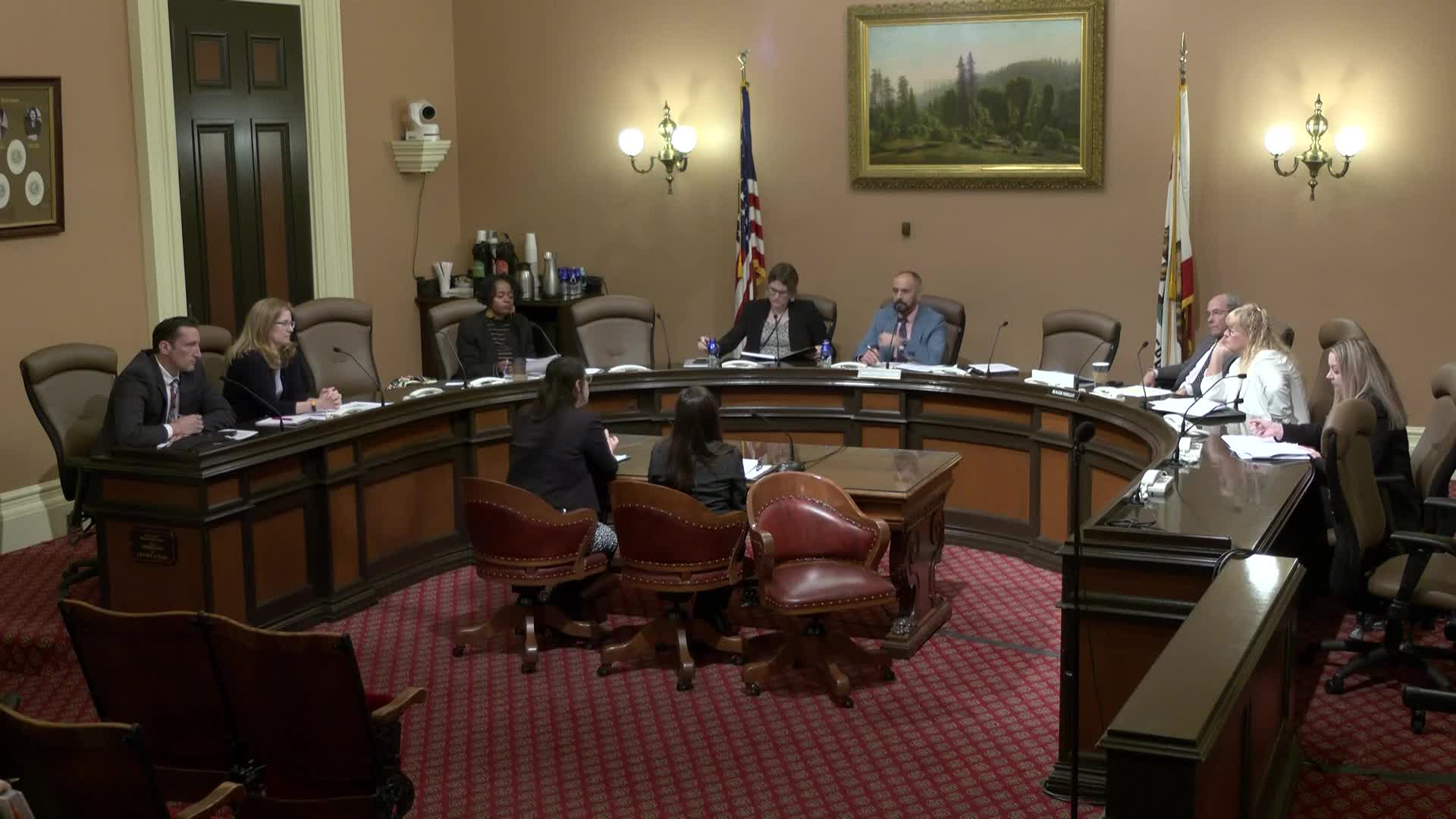
The Department of General Services (DGS) gave the Senate subcommittee an overview of the department's portfolio of services to state government, its use of project labor agreements and community workforce agreements on major public construction, and progress on identifying excess state property for affordable housing. The Division of the State Architect (DSA) described tools and expedited processes it uses to prioritize plan review and assessments in school rebuilds after disasters.
DGS portfolio and functions: Jennifer Osborne, chief deputy director at DGS, summarized the agency's divisions: real estate services (leasing, construction oversight), Division of the State Architect (K'12 and public building design and construction oversight), facilities management (building operations and maintenance), procurement, Office of Administrative Hearings, Office of Risk and Insurance, Fleet and Asset Management, Office of Public School Construction, and other offices. Osborne said DGS provides both service and mandated control functions for state agencies and has responsibilities that span procurement, facilities, and construction oversight.
Workforce, PLAs and community workforce agreements: Jason Kenny (DGS leadership on built environment work) described how DGS includes project labor agreements (PLAs) and community workforce agreements on major projects, and tracks workforce participation by priority groups: veterans, women, emancipated foster youth, formerly incarcerated individuals and people on public assistance. Kenny said DGS has used those provisions for major Sacramento projects (including the state annex project) and monitors compliance and apprenticeship targets with reporting to ensure contractors meet workforce goals.
Excess state property and affordable housing: DGS explained an inventory and screening process developed with the Department of Housing and Community Development (HCD) to identify state parcels suitable for affordable housing. The agencies screened roughly 44,700 state parcels algorithmically against tax-credit and subsidy feasibility criteria and landed on a smaller set of parcels suitable for reuse; the department described roughly 22 developments and about 4,700 units across those properties in various stages of development or award. DGS officials noted many state parcels are Caltrans right-of-way; those parcels are often subject to constitutional restrictions (Article XIX) and federal restrictions that make housing reuse more complicated unless specific approval or compensation arrangements are made.
Division of the State Architect: Ida Claire, State Architect, described DSA's emergency protocols for school rebuilds after disasters. DSA can dispatch structural engineers for rapid assessments, allow districts to establish interim facilities (portables) without DSA involvement, and prioritize plan review for school rebuilds. Claire said a typical new TK'5 school under regular plan review required roughly seven months in the DSA process (about three months of DSA time and four months for the district and design team), but DSA can accelerate the timeline for emergency rebuilds with overtime and prioritization.
Surge capacity, OPSC, and regional concerns: Committee members asked about equitable distribution of emergency funds for school rebuilding and how the Office of Public School Construction (OPSC) interacts with DSA. DSA said initial funds were used for rapid site assessments and that districts must request additional assistance as they finalize project plans; the agency said it will track requests and work to ensure equitable assistance for affected districts.
Ending note: Senators asked for follow-up briefings on specific projects (for example, the Sonoma Development Center and Delta habitat projects referenced in questions). DGS committed to follow up and to provide additional detail in subsequent briefings.