Get Full Government Meeting Transcripts, Videos, & Alerts Forever!
Get email alerts on the Land Use topic
No spam. Unsubscribe anytime.
Council pauses vote on zoning change after months of complaints over U‑Haul trucks at Big Ben's storage lot
Summary
Council continued consideration of an amendment to allow moving trucks and trailer rentals in the C‑1 zone after public comment from the storage operator, U‑Haul area manager and neighbors; staff recommended crafting an accessory-use approach limited to storage facilities and returning with site-specific standards.
The Ivins City Council on April 3 continued discussion of a proposed zoning-text amendment that would allow moving truck and trailer rental activity (commonly associated with brands such as U‑Haul) in the city’s C‑1 commercial zone. The Planning Commission had recommended denying the amendment at its March hearing; at council staff and applicants asked for an opportunity to refine standards and scope.
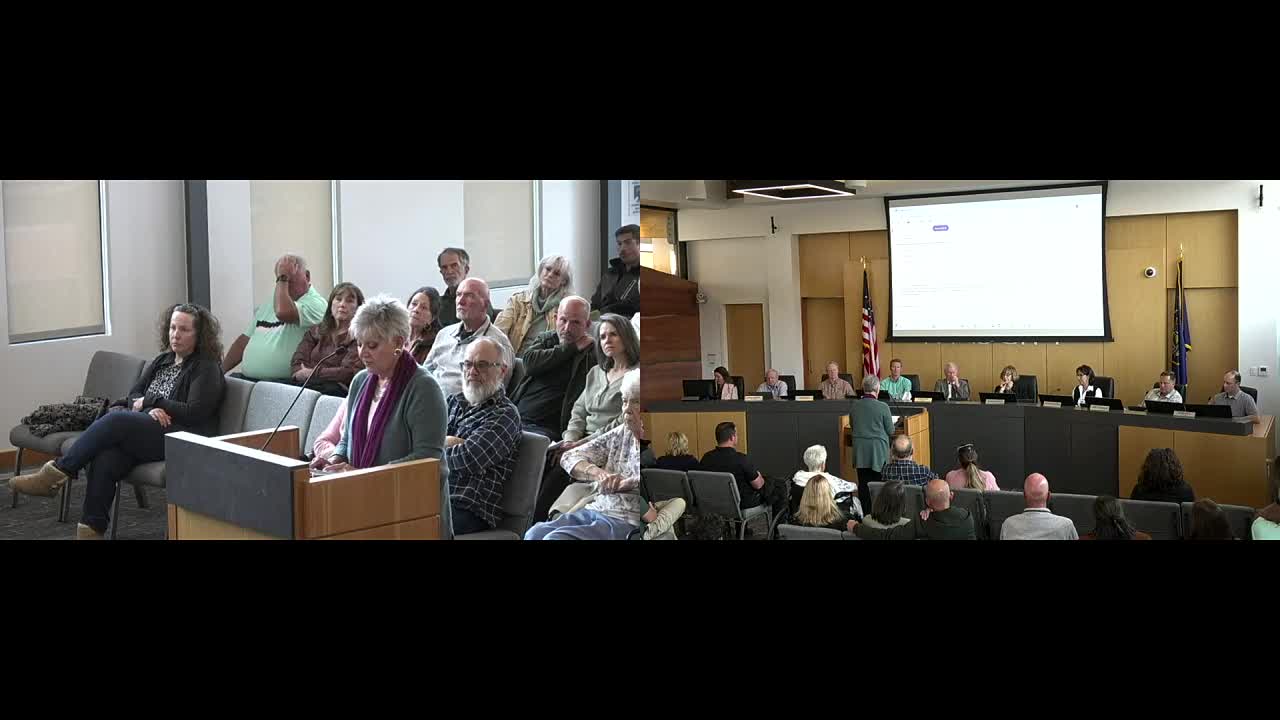
David Lewis, who identified himself as the area manager for U‑Haul dealers in southern Utah, told the council the service is a convenience for local residents and that U‑Haul and its dealers can and will limit the number of trucks staged at a small storage site. "We provide a service to the city of Ivins and Santa Clara," Lewis said, arguing removal of local access would force customers to travel six miles to Saint George.
Representatives of Big Ben's storage (owner Benjamin Godfredson was not present) and employee Callan Webster said the facility typically keeps trucks on private property and that an anomalous dispatch error earlier this year briefly caused several trucks to be placed on public streets while construction on a nearby development coincided with heavy truck activity.
Staff and the city attorney, Brian, advised the council that the proposed use is not currently allowed in the C‑1 zone and that the council has several drafting options. Brian explained that the city could: (1) add the use as a permitted use in C‑1, (2) add it as a conditional use (which would allow site‑specific review of adverse impacts such as parking and fire access), or (3) allow moving‑truck rental only as an accessory use to a storage facility so the change would apply only where a storage business already exists.
Council members and staff leaned toward a narrowly tailored path: draft language that would permit limited rental truck activity only as an accessory to storage uses and include specific standards for on‑site parking, screening, hours of operation, and fire-department access. Councilmember Sharon Barton and others said that approach avoids broadly enabling ineligible uses across multiple C‑1 parcels while still allowing the small local service residents request.
The council voted to continue the zoning-text amendment (a motion to postpone so staff and the applicant can prepare a site‑specific plan and draft ordinance language). Staff and the applicant were asked to prepare a detailed site plan showing where trucks and trailers would be parked, how fire access and customer parking would be preserved, and proposed screening and operational limits. City staff said they would work with the applicant and return proposed text that would likely make the use conditional and, if adopted, require a conditional-use permit with enforceable standards.
Why it matters: The debate balances neighborhood character, public safety and parking against convenience and local business services; staff emphasized the need for enforceable, site‑specific mitigations if the council allows the use.
Ending: The council continued the matter and asked staff, the applicant and the city attorney to return with a drafted amendment that limits moving‑truck rentals to accessory use at qualified storage facilities and addresses parking, fire access and aesthetics.