Get Full Government Meeting Transcripts, Videos, & Alerts Forever!
Get email alerts on the Economic Development topic
No spam. Unsubscribe anytime.
City Council approves Los Angeles Sports and Entertainment District entitlements, with community benefits and monitoring requirements
Summary
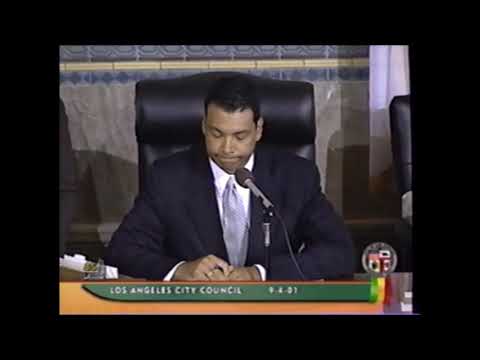
The Los Angeles City Council on Sept. 4 approved the land-use entitlements, specific plan and development agreement for the Los Angeles Sports and Entertainment District, adopting a community benefits package and requiring annual reporting on developer commitments.
The Los Angeles City Council on Sept. 4 approved the land-use entitlements, specific plan and development agreement that establish the Los Angeles Sports and Entertainment District (the proposed expansion around Staples Center), voting to adopt the Planning and Land Use Management Committee report as amended by the council.
The measure clears zoning changes, a new L.A. S.E.D. zone, provisions for up to 3,750,000 square feet of development in the district, a development agreement and a community benefits package negotiated with neighborhood groups, labor and developers. The council adopted an annual reporting requirement so the developer must report on the status of community-benefit commitments.
Why it matters: the project is intended to create new housing, parks, expanded entertainment and retail uses, and an environment intended to support a convention-center hotel that supporters say is needed to make the convention center competitive. Supporters argued the plan will bring construction jobs, permanent jobs and private investment to downtown; critics raised concerns about the environmental review and whether the promised hotel and convention-center expansion will occur.
Public comment at the meeting was extensive. Gene Hale, chairman of the Greater Los Angeles African American Chamber of Commerce, said, "we fully support this project." Stan Moshota of Forest City Residential West and Charlie Wu, chairman of the Los Angeles Area Chamber of Commerce, each urged approval as a catalyst for investment. Carol Schatz, president of the Central City Association and the Downtown Center Business Improvement District, told the council the project "has the promise to really turn on every light in downtown." Madeline Janusz Aparicio of the LA Alliance for a New Economy, who helped negotiate the community benefits plan, told the council the jobs program in the package will be "legally enforceable by the city" and described targets for living-wage and union jobs in the permanent workforce.
City Controller Laura Chick, addressing the full council in her first appearance as controller, said she supported the project and pledged her office would release audits relevant to the convention center that could inform fiscal oversight. City planning staff described provisions in the specific plan including an equivalency table to allow project changes within environmental constraints, standards for alcohol uses negotiated with the community, parking and traffic programs, and a transfer floor-area-ratio mechanism for varying building heights.
Opponents including Lawrence Teeter urged the council not to certify the environmental impact report (EIR), arguing the EIR did not evaluate the convention-center expansion and other related development together and should be revised and recirculated; Susan Fan, assistant city attorney, reported the Department of Transportation had reviewed the comment letter and concluded the traffic conclusions would remain the same and that recirculation was not required.
Council discussion emphasized the coalition backing the plan, the community benefits package (including affordable housing earmarks, local hiring and park funding), and continuing concern about guaranteeing a hotel and protecting the city’s fiscal interests if public financing is ultimately needed. Councilmember Jack Weiss moved that the consultants performing the hotel feasibility study examine how the general fund would be protected, possible negative fiscal impacts and the likely effect on city services under different financing scenarios; the council approved study and reporting requirements on the hotel financing and on dedicating tax-increment revenue feasibility to housing.
Votes and formal actions: the council voted to continue one DDA amendment for one day, approved Garcetti’s request to study dedicating a portion of tax increment to the Housing Trust Fund, required an annual report on developer commitments and then adopted the Planning and Land Use Management Committee report as amended. The final roll call for adoption of the committee report was recorded as 13 ayes.
The council’s action establishes planning approvals and a development framework; several pieces remain unresolved, including a final hotel transaction and any decision on public financing. Staff and the developer said the hotel parcel and the convention-center expansion parcel will be reserved for 20 years for their intended uses to encourage a hotel deal and to prevent other development uses on those parcels in the interim.
The council directed the City Administrative Officer and Chief Legislative Analyst to produce feasibility analysis on using tax-increment revenues for housing, and required annual reporting back to the council on the status of the community benefits program.
The council sent the amended entitlements forthwith for mayoral signature and implementation steps. The developer and city staff said they expect to continue private investment in the district’s amenities while continuing work toward a hotel financing package.
For readers: the entitlements approved are land-use and zoning approvals, a specific plan and a development agreement; the approval does not itself finalize any hotel financing or a convention-center expansion project.