Get Full Government Meeting Transcripts, Videos, & Alerts Forever!
Get email alerts on the Grants And Pro Housing topic
No spam. Unsubscribe anytime.
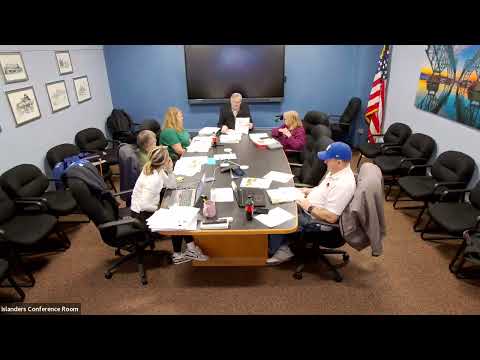
Grand Island committee moves to engage statepro-housing and town-center grant opportunities
Summary
Jim (committee member) opened the discussion saying he wanted the committee to "talk about grants" that had been identified by consultants and state agencies.
Jim (committee member) opened the discussion saying he wanted the committee to "talk about grants" that had been identified by consultants and state agencies. He described a packet that "was submitted to us" and emphasized a program described in state materials as a "pro housing" community initiative that could help the town qualify for Main Street USA-style town-center grant funding.
The committee heard that the pro-housing effort is currently a data-gathering exercise rather than a requirement to adopt specific affordable-housing programs. "It isn't saying that we're going to have, what do they call that, title 8? Section 8," Jim said, noting the materials emphasize high-density housing as a scoring factor. He and other members argued parts of Grand Island already meet the high-density indicator because of projects planned or under way downtown.
Pete (planner) and others described a parallel application process for community centers and park/trail grants administered through programs including DASNY (Design and Construction of State-funded facilities), the state Environmental Protection Fund/CFA, a statewide swimming facilities program, and a recreational trails program. Pete and staff advised the group that some programs were still soliciting feedback to shape scoring criteria and that returning a thoughtful questionnaire or letter of intent would help Grand Island be counted and considered when the state finalizes application materials.
Eric (staff member) and Jim outlined practical hurdles: many state grant tracks require site plans, cost estimates and narratives up front, which can cost thousands of dollars to assemble. Jim said the committee should weigh whether to pause some internal work to pursue short-deadline grants or instead continue the master-plan public outreach that provides the technical narrative grant writers use.
Committee members discussed priorities. Rhonda noted the recreation master plan work creates the narrative and consensus that strengthen grant applications: "Once it's in the master plan, you've got the narrative and you have the consensus and you have the vote," she said. Several speakers urged selective, coordinated pursuit of grants rather than applying to every program that opens.
On the pro-housing effort specifically, Pete confirmed he was preparing a letter of intent so Grand Island could "get in line" for future competitive grant rounds. He and others emphasized the letter does not commit the town to build anything, only to share data and be part of the state's information-gathering process.
The committee asked staff to keep the group updated on deadlines and to begin planning in August for any October application windows that would require materials to be ready by fall. No formal appropriation or binding commitment was made at the meeting.
Ending: The committee agreed to monitor the various state grant timelines closely, prioritize grants that match the town's master-plan goals (town center, trails, parks), and proceed with preparatory work (narratives, scope-of-work documents and site estimates) so the town can respond quickly when application windows open.