Get Full Government Meeting Transcripts, Videos, & Alerts Forever!
Get email alerts on the Appropriations topic
No spam. Unsubscribe anytime.
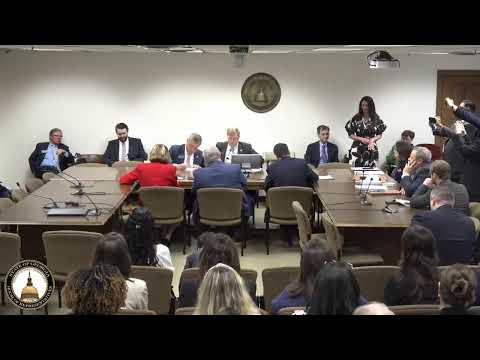
Georgia conferees say they reached compromise on HB 68, highlight $50 million from governor and targeted investments
Summary
Members of the conference committee on HB 68 described a negotiated agreement on the 2026 general budget, saying Gov. Kemp contributed $50 million to bridge differences and that the package emphasizes literacy, foster care and corrections funding while avoiding bond financing.
Conference committee members on HB 68, the 2026 general appropriations measure, said they reached a negotiated compromise and that the governor supplied $50,000,000 to help complete the agreement.
“...the governor did bring $50,000,000 this morning to make this work,” Chairman Hatchett said as the committee opened its final conference meeting. The committee described the agreement as a compromise after earlier differences between the two chambers.
The conferees said the conference committee report returns the Promise Scholarship funding to the governor’s number while shifting mental health and school-security funding more toward the House position. Literacy programs championed by Sen. Billy Hickman and House leadership were left at the House funding levels, the committee said, because the Senate accepted the dollars the House placed for those priorities.
Committee members said the package avoids bond issuances and relies on cash for this year’s capital needs. Among projects and program increases mentioned were funding for the MBT STEM building at the University of North Georgia and additional money for foster-care services and out-of-home care through the Department of Family and Children Services.
The committee also singled out several operational and personnel items: planned raises for the judicial branch timed to begin in January, sustained funding for the Department of Corrections to address long-standing needs, and measures intended to reduce contraband — including cell phones — in correctional facilities. Conferees said they worked with agency officials to verify cost estimates.
Conferees described efforts to address disparities in pharmacy payments to level the playing field between large and small pharmacies when they bill the state. They characterized the budget otherwise as prioritizing necessities rather than discretionary “knickknacks.” One member said the chambers had been “about $383,000,000 apart” during negotiations before reaching a compromise.
Committee members thanked legislative budget staff and the Office of Planning and Budget for technical support during late negotiations and said the final report reflects weeks of work by subcommittee chairs and agency staff. The conferees said they are ready to sign the conference committee report and move the document forward for the next procedural steps.
No formal vote or recorded roll call on adoption of the conference committee report appears in the provided transcript; conferees described the report and their readiness to sign rather than recording a formal floor vote in the excerpt provided.