Get Full Government Meeting Transcripts, Videos, & Alerts Forever!
Get email alerts on the State Operations Budget Savings topic
No spam. Unsubscribe anytime.
Finance outlines state-operations savings; LAO and senators seek department-level detail
Summary
The Department of Finance described projected savings from state-operations reductions and vacancy eliminations under control sections of the 2024 Budget Act; the Legislative Analyst's Office and several senators said the administration's department-level detail remains insufficient and urged earlier, itemized disclosure before the May revision.
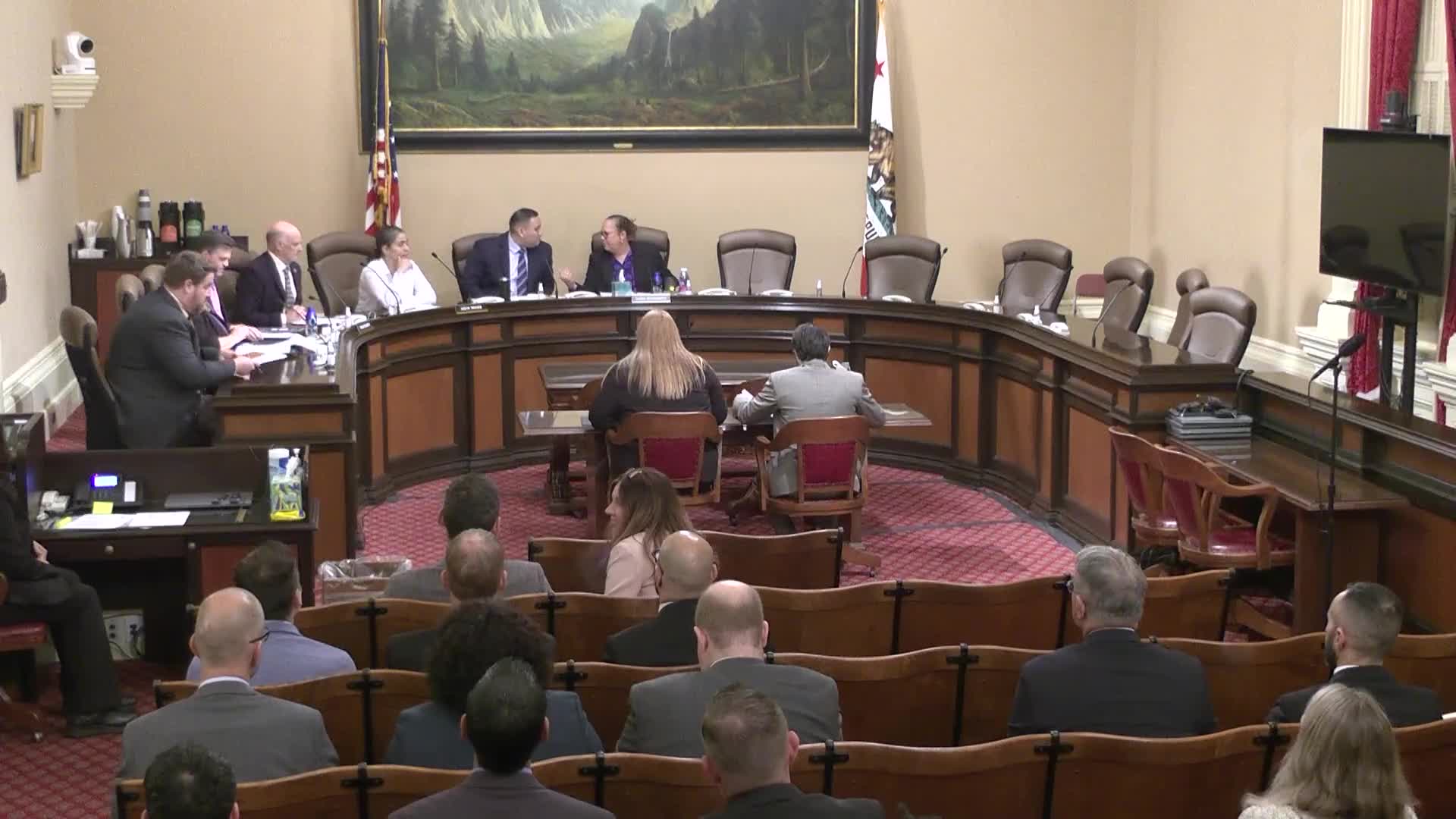
The Senate Budget Subcommittee No. 5 heard a presentation from Department of Finance staff on the administration's planned state-operations reductions and vacancy-sweep savings, and lawmakers and analysts pressed for more department-level detail ahead of the May revision.
Natalie Griswold of the Department of Finance told the subcommittee that the 2024 Budget Act originally estimated roughly $2.2 billion in general fund savings from state-operations reductions and an additional $1.5 billion associated with vacant positions, including an early assumption of eliminating about 10,000 vacant positions. Griswold said the administration revised those estimates after identifying that many of the initially counted positions are tied to mission-critical public safety and health functions. The governor's revised proposal identified lower, targeted savings and proposes eliminating roughly 6,500 vacant positions beginning in 2025-26.
Nick Schroeder of the Legislative Analyst's Office (LAO) said the LAO supports searching for efficiencies but warned that the administration has not provided sufficient detail to evaluate programmatic impacts. "Efficiencies allow government to provide the same level of services, but at a lower level of cost," Schroeder said, and added that "the information that has been provided to date has really been, lacking." He recommended subcommittees request department-level classification and program data so lawmakers can assess operational impacts.
Finance staff said they will provide more detailed information, including the classifications of positions proposed for elimination and the specific items of appropriation affected, in a letter to the Joint Legislative Budget Committee before the May revise. Ryan Weinberg of the Department of Finance described the department-by-department approach: reductions were developed in conversation with each department and were intended to avoid undermining public safety and public health.
Several senators voiced caution. One member argued the state should "guess low rather than guess high" on savings estimates to avoid mid-year cuts and cited skepticism about achieving efficiencies in public-safety functions. Another senator raised the practical concern of operational backlogs, asking whether the administration would propose targeted staffing for offices with service delays, such as the Labor Commissioner's office; Finance deferred operational staffing specifics to the affected departments.
The subcommittee left the item with Finance's commitment to deliver the requested classifications and program-level information prior to the May revision so legislative staff and members have time to review the proposed reductions.
Questions remain about which departments will bear larger shares of reductions and how the vacancy eliminations and state-operations reductions will be phased. The administration's letter to the Joint Legislative Budget Committee is expected to supply the detailed item and position-level information the LAO and several senators requested.