Get Full Government Meeting Transcripts, Videos, & Alerts Forever!
Get email alerts on the Noise Policy topic
No spam. Unsubscribe anytime.
Planning commission approves updates to noise policies, code and CEQA thresholds
Summary
The commission unanimously recommended that the City Council adopt amendments to the general plan public safety element, municipal code chapter 11.16 (noise), and the city’s CEQA thresholds guide to add mixed-use noise guidance, construction and vibration limits, and to standardize measurement procedures.
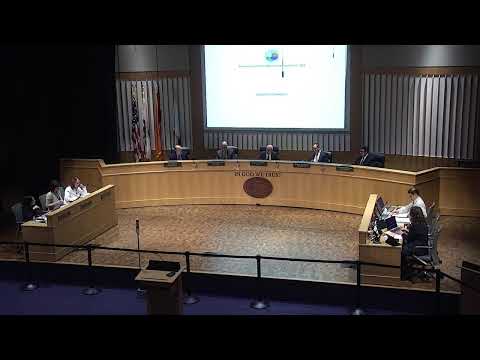
The Lake Forest Planning Commission on April 3 unanimously voted to recommend City Council adoption of coordinated amendments to the general plan public safety element, Lake Forest Municipal Code chapter 11.16 (noise), and the city’s local CEQA thresholds guide. Staff and the city’s consultant told the commission the changes update how the city measures and regulates noise — including for mixed-use development, construction, and vibration — and bring the documents into consistency with recent case law and modern practice.
"The update considered recent legal challenges regarding construction noise and also allowed for a 90 day Native American tribal consultation period," Ron Santos, planning staff, said during a detailed presentation of draft language. Santos said the amendments would simplify code language, create new exterior noise limits (including for mixed-use projects), remove redundant interior standards from the general plan and move them to the municipal code, add construction and vibration thresholds, and replace the existing noise-variance board/variance procedure with a city-manager-managed temporary-exceedance permit.
Bill Vosti, the Rincon consultant who prepared the background report, told commissioners noise standards are commonly structured as two separate tools: land-use compatibility thresholds used in planning and municipal-code standards used for neighbor-to-neighbor or business-to-resident enforcement. "So that's probably where that 65 approximate number comes from... The proposed 1 here is 60 decibels during the daytime and 50 decibels at night," Vosti said, describing typical municipal-code limits and the planning compatibility framework.
The draft code replaces difficult-to-enforce graduated duration standards with an approach that uses the average noise level over 15-minute intervals for continuous sources and a maximum limit for intermittent sounds. The CEQA thresholds guide was revised to remove language that treated existing environmental conditions as CEQA impacts (a change required by recent California Supreme Court decisions) and to supply a set of usable potential mitigation measures (deleting measures that are purely code requirements).
Commissioners asked how the code would address animal noises and enforcement. Staff and the city’s code-enforcement supervisor said animal barking and roosters are handled through the city’s animal-keeping and nuisance provisions (title 10) and, where needed, evidence can include recordings or noise-monitoring equipment; Orange County Animal Care Agency enforces the barking-dog section.
Commissioners voted to adopt the resolutions recommending approval of the three sets of amendments as presented by staff. The motion passed unanimously.