Get Full Government Meeting Transcripts, Videos, & Alerts Forever!
Get email alerts on the Business Permits topic
No spam. Unsubscribe anytime.
Lake Forest planning commission continues Hypnotique Wellness Center use-permit hearing to June 5
Summary
The commission continued a public hearing on a conditional use permit request for Hypnotique Wellness Center, citing code definitions for "massage" and interest in negotiating applicant-proposed restrictions. The item was continued to a June 5, 2025, meeting with re-notice.
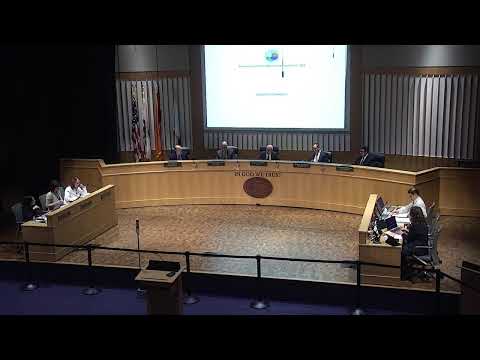
The Lake Forest Planning Commission on April 3 continued the public hearing on a conditional use permit request from Hypnotique Wellness Center to establish a massage-related business at a Bridger Road storefront, directing staff and the applicant to negotiate possible self-imposed conditions and returning the item to the commission on June 5, 2025.
Commissioners said they were constrained by the municipal code’s definition of massage, and staff told the commission the applicant’s proposed services fall within that definition. "Massage means any method of pressure on or friction against or stroking, kneading, rubbing, tapping, pounding, etcetera of the human body," Ron Santos, planning staff, told the commission while citing the municipal-code definition used to determine land-use category.
The applicant asked the commission to distinguish the business as a "wellness center" rather than a traditional massage establishment. At the hearing the applicant said, "we are not a massage establishment as you think we are. It's a wellness center," and described limited operations at opening (the owner, his wife and one uncle) and that services would not involve full-body table massages. Commissioners and staff responded that the code definition includes work done by appliance or device as well as by hands, so the applicant’s description could still qualify as a massage use under the code.
Commissioners discussed options short of denial, including allowing the applicant to amend the pending application to include voluntary, written restrictions (for example, explicitly prohibiting massage tables or certain techniques). Staff said such voluntary restrictions could be considered by the commission and that standard condition language already requires "substantial conformance with the plans and project description approved by the commission." Staff added that a clear, specific condition is preferable if the commission wishes to narrow the permitted activities.
Commissioners and staff also reviewed enforcement and revocation avenues if conditions were violated. Planning staff explained that revocation of a conditional use permit requires a public hearing with notice and supporting findings, and that the revocation timeline — including public notice and drafting resolution findings — could take "a couple months at the very least," with staff estimating a typical exposure of "60 to 90 days." Staff also noted that conditional use permits run with the land and that denying an application "without prejudice" would allow reapplication within the code’s re-application period, which staff said is typically limited to a period such as one or two years depending on the code provision cited.
Given the discussions, the commission voted to continue the public hearing and to re-notice the item for the regular planning commission meeting on June 5, 2025. The motion to continue (to a date certain with re-notice) passed unanimously.
The commission left the public hearing closed for the moment and directed staff to follow up with the applicant to explore narrowly tailored, voluntary conditions and to clarify whether amendments will be processed as amendments to the existing application or as a refiled application. The applicant asked whether additional staff time would generate new fees; staff told the applicant there would not be a duplicate application fee but that there could be staff-time costs to process an amended application.