Get Full Government Meeting Transcripts, Videos, & Alerts Forever!
Get email alerts on the Budget Finance topic
No spam. Unsubscribe anytime.
SCUC ISD budget workshop: fund balance stronger than expected, but legislative changes could cut district gains
Summary
District staff told trustees the district is projecting a larger-than-expected unassigned fund balance but cautioned that pending state legislation — including House Bill 2 and changes to hold‑harmless provisions — could reduce net gains and force difficult local choices on raises, staffing and deferred maintenance.
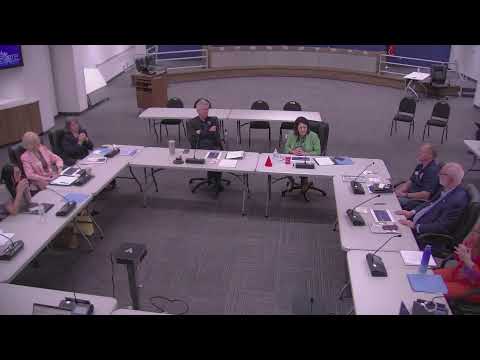
Schertz‑Cibolo‑Universal City Independent School District officials on April 3 presented a budget workshop that projected a higher-than-expected unassigned fund balance for fiscal 2024–25 but warned that pending state legislative changes could materially alter the district's outlook.
CFO Brian Moy told the board the district now expects an unassigned fund balance of roughly $54.5 million at Aug. 31, 2025, equal to about 4.4 months of operations and roughly 37% of revenue. "We think our unassigned fund balance is gonna end up at about $54,500,000," Moy said. The district's board policy CE(LOCAL) sets a 25% target; Moy noted the projected balance would be about $17 million above that target.
The presenters reminded trustees that the district had adopted a deficit budget for 2024–25 (approximately $11 million deficit on a roughly $152 million revenue base and a $163 million expenditure plan) but said updated state property-value information and conservative spending will narrow that gap.
Key cost drivers and pressures cited by district staff included: • Salaries and benefits: roughly $130 million of the district's $160 million general‑fund spending. • Substitute staffing: an estimated $4.7 million this year; the district plans to issue an RFP to seek competition on that contract. • Insurance and retirement costs: insurance premiums and the district's share of Teacher Retirement System (TRS) contributions have risen sharply in recent years; staff described a 40% increase in property/casualty premiums over five years and a roughly 74% increase in health‑plan costs over five years. • Deferred maintenance and capital needs: staff listed four priority items — athletic facilities, bus replacements, painting and classroom furniture — totaling about $3.2 million; longer‑term device replacements (7,000 devices) could cost about $2.9 million in 2026–27.
Staff spent considerable time explaining how several bills under consideration at the Texas Legislature — notably House Bill 2 (school finance) and Senate Bill 2 (a voucher proposal) — could change the district's net position. Moy summarized elements of House Bill 2 as presented in committee documents: a $395 increase in the basic allotment, changes to special‑education funding toward an "intensity of service" model, and reductions in some prior "hold‑harmless" protections that have supported districts in earlier years. Staff emphasized that models circulating among analysts may be based on incomplete county data and that Guadalupe County figures could be corrected only later in the session.
The board also heard how the state intends to require districts to allocate a portion of any net funding gain to staff salary increases: the current draft would require 40% of a district's gain be used for salary increases and would direct a large share of that money to classroom teachers. Moy offered an illustrative distribution to meet the minimums required in the draft language; the district did not adopt any compensation decisions at the workshop.
Trustees discussed local revenue options, including the district's remaining board‑level and voter‑approval pennies under the state tier system. Staff showed that three "gold" enrichment pennies could generate roughly $8.5 million and that 12 discretionary pennies in total would be worth about $17 million; they also translated the per‑penny impact for the average Guadalupe County homeowner as roughly $24 per year per penny (about $70 for three pennies) before state compression or homestead relief effects.
Superintendent Maloney and CFO Moy told trustees the district will continue monitoring Austin hourly, prepare for more detailed compensation discussions if legislative outcomes stabilize, and may schedule a dedicated compensation workshop in May or June if necessary. The presentation also signaled the district's intent to consider a voter authorization (bond/TRE/VADER) process if local revenue and state actions leave gaps that cannot be closed without new local revenue.
No formal board decisions were taken during the workshop; staff presented options and asked trustees for direction on next steps.