Get Full Government Meeting Transcripts, Videos, & Alerts Forever!
Get email alerts on the School Budget topic
No spam. Unsubscribe anytime.
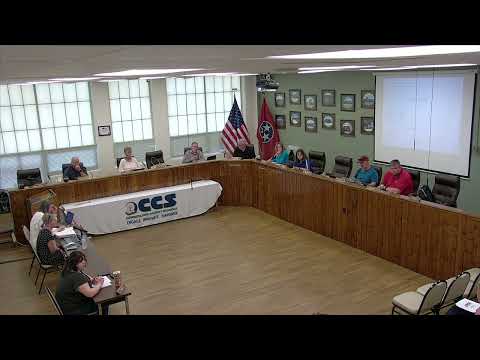
Cumberland County board reviews FY25-26 draft budget, asks county for one-time maintenance allocation and debates pay-scale fixes
Summary
School leaders presented a draft FY25-26 budget showing $75.8 million in expected revenue and $83.4 million in expenses, leaving a multimillion-dollar gap. The board discussed a one-time county allocation to cover maintenance projects, a multi-year budgeting framework and targeted pay-scale changes for classified staff.
Cumberland County Schools officials on Monday presented a draft FY25-26 budget showing $75,800,000 in projected revenue against roughly $83,400,000 in projected expenditures, producing a gap they said could be closed in part by a one-time allocation from the County Commission and by targeted changes to salary scales.
The budget presentation, given by staff working with Mr. Kepp and Mr. King, included a maintenance-rotation plan and a list of major projects identified in a facilities inspection. Board members focused much of their discussion on a request that the commission consider a one-time allocation to address maintenance needs, and on options to narrow long-standing pay disparities between classified employees and higher-paid positions.
Board members said the draft incorporates a roughly $2 million increase in the county's TISA revenue and about 3.6 percent in total raises built into the proposal. Staff told the board projected expenses total about $83.4 million and that, without additional funding, the system faces a structural gap. To address immediate building and plant needs, staff recommended asking the County Commission for a one-time allocation that would fund the year's maintenance rotation and several major projects.
If the commission provided the one-time maintenance allocation proposed by staff, the presenters said, the remaining gap in the draft budget would shrink substantially (staff estimated a reduction of the gap to about $3.3 million if the full maintenance request were funded). The maintenance-rotation envelope in the staff materials totals about $1.7 million and is intended to cover annual items such as flooring, painting and bathroom upgrades on a rotating basis. Staff also presented a list of major projects with a combined estimate of $5.5 million; excluding the tennis-court item the list totaled about $4.3 million.
Specific project examples cited during the meeting included a $550,000 renovation line for a school identified as "North," where the largest single share of that amount would go toward adding an Americans with Disabilities Act bathroom; staff said the school had already received painting and some floor work. Staff said two portables remain in use for before- and after-school programs and that the district had removed other unacceptable units.
Transportation costs in the draft include replacement buses: staff said the transportation line includes funding for five buses in the coming year, and the board discussed the operational impacts of replacing aging vehicles and the role of larger-capacity buses in reducing double-routing.
Facilities planning and procurement
Board members repeatedly invoked a facilities inspection and condition study done for the school system (identified in materials as an Uplands facilities inspection). That study rated building systems on a 1-to-5 scale; staff said they are prioritizing the 4- and 5-rated items. Several members warned that delaying work increases future costs and noted that some projects will still roll into subsequent years even after this round of repairs.
On athletics and outdoor facilities, the draft includes large-cost items such as resurfacing tracks and replacing tennis courts; staff cautioned that quoted prices can rise quickly. The board discussed that some local venues are currently unavailable for meets and that teams must travel to other sites, which has secondary impacts on scheduling and concessions.
Multi-year budgeting and pay-scale discussion
A major portion of the meeting was devoted to how the district should plan beyond a single fiscal year. Staff proposed developing multi-year budget projections to anticipate recurring cost pressures'notably salary increases, insurance and fuel'and to inform any request to the County Commission for a one-time reset.
Board members pressed on pay scales, particularly for classified (noncertified) staff. Multiple trustees said percentage-wide raises over time have widened gaps between lower-paid classified employees (many paid on shorter work-year schedules) and other positions that receive higher starting rates, more days worked and greater benefits. One board member urged action for classified employees paid on schedules below a 260-day baseline and suggested a targeted increase as a corrective measure.
Staff discussed numbers during the meeting: moving classified employees up $1 per hour was cited as costing about $550,000 systemwide; staff also noted examples of starting hourly rates and annualized salaries for various categories. Ms. Frey told the board she would provide the detailed calculations the trustees requested: "I'll send you what I have," she said.
Board members discussed alternatives to an across-the-board percentage raise, including redesigning pay scales (a reset) and phasing changes over multiple years. Trustees referenced earlier consultant work (LeanFrog) and recommended staff provide the historical analyses and a range of offset scenarios so the board and county commissioners can weigh options.
Unfilled positions and near-term offsets
The draft reflects some unfilled positions that create small, temporary budget savings; staff noted vacancies in athletics and therapy positions at various times during the year and said those unfilled lines reduce near-term salary expenses but are not a long-term solution. The board asked staff to identify where those line-item savings exist and how much could realistically be used to offset higher targeted raises.
Votes at a glance
The board opened the session by approving the minutes from its prior meeting by voice vote; the chair declared, "The ayes have it." No other formal votes occurred during the public budget discussion portion of the meeting.
What happens next
Staff will provide detailed cost runs and offset scenarios to the board ahead of a special call or the next work session; trustees said they plan to meet with the County Commission to discuss a potential one-time maintenance allocation and to present options for addressing classified pay inequities. Board members scheduled follow-up work sessions and asked staff to be prepared with itemized figures so the board can consider trade-offs before finalizing any salary action.
The board's discussion drew on facility-condition ratings, transportation replacement timetables and personnel-pay analyses; trustees repeatedly emphasized the desire to retain and attract staff while balancing the district's finite resources.