Get Full Government Meeting Transcripts, Videos, & Alerts Forever!
Get email alerts on the Housing Policy topic
No spam. Unsubscribe anytime.
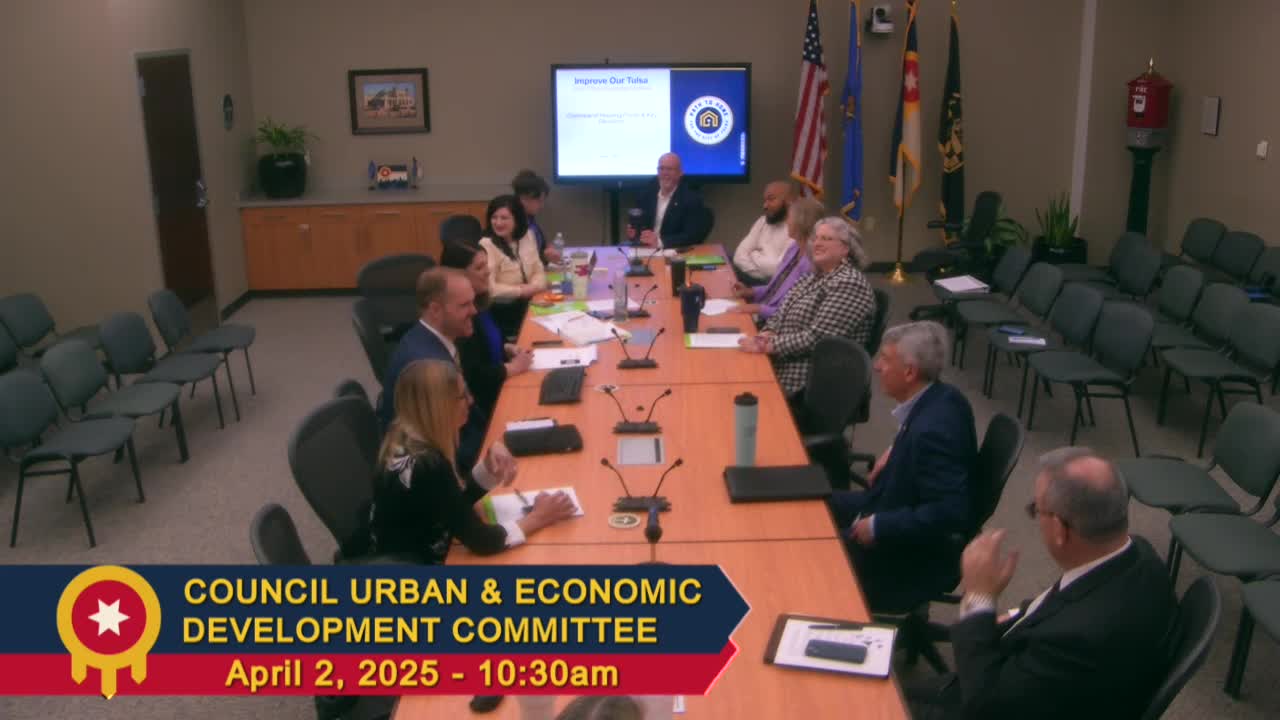
City staff outline implementation priorities for $75 million Improve Our Tulsa 3 housing commitment; study finds need for 12,900 units over 10 years
Summary
City council staff and the housing director briefed the council on studies and early implementation planning for the $75 million housing commitment in the Improve Our Tulsa 3 package, citing a projected need for about 12,900 housing units over 10 years.
City council staff and the housing director briefed the council on two years of housing studies and the first steps in implementing the city's $75 million housing commitment from the Improve Our Tulsa 3 package.
Sarah Davis, council staff, and Travis Hulse, housing director, reviewed the citywide housing assessment and the Tulsa Housing Strategy. The assessment identified a need for approximately 12,900 housing units over the next 10 years and estimated a funding gap of roughly $370 million to meet that need, the presentation said. Staff said the city has committed $75 million and additional federal and local funds and partners would be needed to bridge the gap.
Jean Goldmash, introduced as a senior adviser, summarized the strategy's guiding principles: avoid overconcentration of a single affordability level in any neighborhood; encourage a diversity of housing types and price points across the city; leverage city funds to attract additional private, nonprofit and philanthropic investment; and prioritize use of existing infrastructure where feasible.
Staff presented the planned program buckets for the $75 million, including acquisition and preservation funds, production incentives, a revolving housing acquisition fund, and a proposed infrastructure set-aside (staff discussed $25 million in the presentation) to remove barriers and make projects feasible. The briefing emphasized the need to leverage the city allocation to attract more capital. "We need to figure out a way, obviously, in how we kind of leverage and expand that to meet the overall need of what is $370,000,000 over that 10 year period of time," a staff member said.
Councilors pressed staff on implementation details: how unit sizes will be distributed across income bands (councilors expressed concern that a market of small studios and one-bedrooms won't serve families), how affordability will be administered (pricing targets versus resident eligibility), and how infrastructure needs (water, sewer, streets) will be financed or prioritized. Several councilors asked for more granular data on unit size needs and geographic distribution and asked that staff show how investments would avoid concentrating poverty.
Staff said further public engagement and program design work will follow; they also noted that the Improve Our Tulsa 3 ordinance and the city's economic incentive policy ordinance (which establishes procedures and minimum requirements for funds derived from sales tax packages) frame how the administration will bring specific program policies to the council for resolution and appropriation. "Part of the reason why we're having these conversations ... is to help inform how do we want to administer funds," a staff member said. The presentation closed with a timeline for further briefings on bonding, policy details and program-level incentives.