Get Full Government Meeting Transcripts, Videos, & Alerts Forever!
Get email alerts on the Transportation Planning topic
No spam. Unsubscribe anytime.
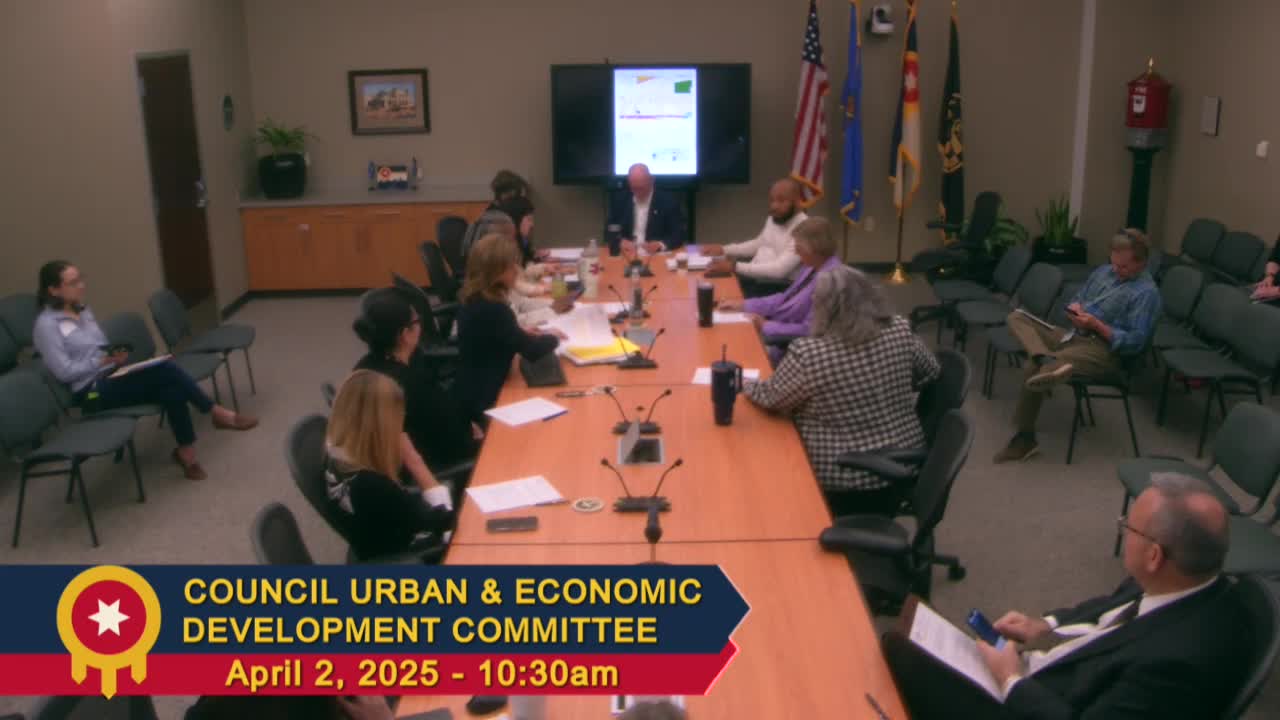
Council hears staff brief on proposed amendments to Tulsa Metropolitan Area major street and highway plan
Summary
City planning and public works staff briefed the council on proposed amendments to the Tulsa Metropolitan Area Major Street and Highway Plan that reduce prescribed right-of-way widths along several corridors to support infill and pedestrian-oriented development.
City planning and public works staff briefed the council on a package of amendments to the Tulsa Metropolitan Area Major Street and Highway Plan that would reduce prescribed right-of-way widths along several corridors and adjust a planned South Tulsa bridge alignment.
A planning staff member explained the plan is part of the comprehensive plan and provides an “ultimate width” or hierarchical street classification; she emphasized that changing the plan’s prescribed right-of-way widths does not remove existing lanes on the ground. “When we talk about the amendments in reducing some of that, there's no project on the ground that's gonna take lanes away,” she said.
Public Works and planning staff described four grouped amendment areas: a central set that includes a segment on Charles Page Boulevard and parts of Route 66 around Eleventh Street and Admiral Boulevard; far‑east projects including the Robson Ranch/Anthem area; amendments along Route 666/Riverside to encourage more developable space and walkable infill (cited as benefiting projects such as Crybaby Hill and OSU Medical Center); and a South Tulsa bridge alignment change that would extend Riverside Parkway rather than routing traffic on Yale.
Staff said they reviewed historic annual average daily traffic back to the 1990s and found a long-term downtrend on several segments; one presenter said, “the chart is interesting because it spikes, it goes down,” and noted multiple factors such as project openings or closures and pandemic impacts. Public Works staff said technical review by the city engineer and INCOG’s Transportation Technical Advisory and Policy Committees preceded the TMAPC review. The presentation noted the TMAPC unanimously adopted the amendments at its March 19 meeting.
Public Works staff explained the amendments are intended to reduce barriers to infill, protect historic buildings from being removed for larger right-of-way dedications, and support transit, pedestrian-oriented development and economic activity along the corridors. The council took questions about traffic forecasting and whether the reduced classifications would limit future widening if traffic increased; Public Works said long-range plans to 2045 and 2050 show existing capacity or manageable margin for forecasted demand and that the amendments could be revisited.
No council vote on the amendments appears in this transcript excerpt; staff recommended the council consider the package and noted a statutory 45-day period for comprehensive plan amendments: if the council takes no action within 45 days the amendments are deemed approved under state law, staff explained.