Get Full Government Meeting Transcripts, Videos, & Alerts Forever!
Get email alerts on the Cemeteries topic
No spam. Unsubscribe anytime.
Clay County board pushes inventory, zoning and grant pursuit for abandoned and historic cemeteries
Summary
Board members discussed compiling a countywide cemetery inventory, submitting records to the Florida Master Site File, using zoning to protect cemetery parcels and pursuing maintenance grants for abandoned African American cemeteries; FPAN’s heritage monitoring scout program was highlighted as a free volunteer tool.
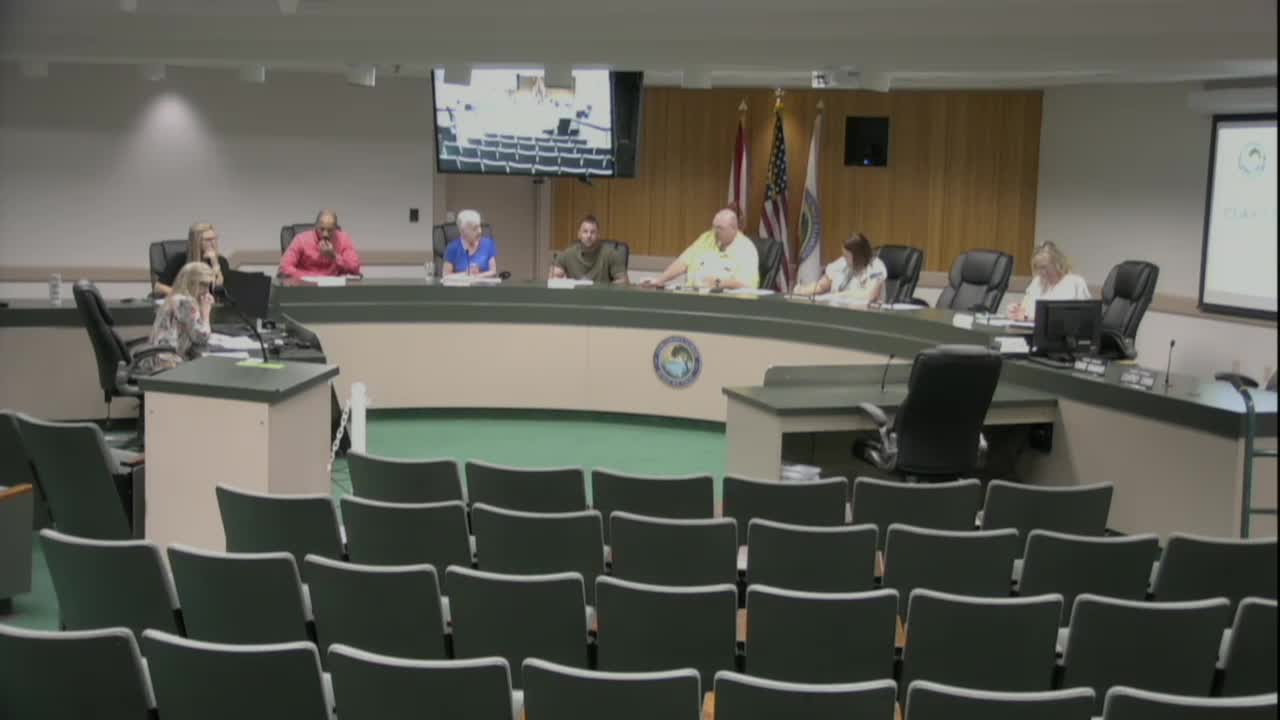
Members of the Clay County Historical Preservation Board discussed steps to better identify and protect historic and abandoned cemeteries, including site visits, state registration, zoning designations and pursuing maintenance grants.
Board member Cathy (first name only in transcript) said she has compiled about 78 or 79 cemetery entries on her personal list; the county’s public records show roughly 50-some cemeteries. Cathy asked staff to share contact information for the county GIS office so the two lists can be reconciled and unrecorded sites mapped.
Beth (identified in the meeting as the staff member who provided a statute) told the board she had distributed a Florida statute that enables county involvement in abandoned cemetery maintenance but does not obligate the county to take ownership or provide ongoing maintenance. Beth said the statute could support a one-time county cleanup of an abandoned cemetery.
Board members discussed zoning as a long-term protection tool. Staff explained the county can rezone parcels or use administrative processes so a cemetery parcel is identified and flagged in land records; that designation makes it clearer to future buyers and developers that the parcel contains burials and should be preserved.
Members called attention to a particular site, Pleasant Point, an abandoned African American cemetery where volunteers have cleared brush but face barriers to larger-scale cleanup because the site lacks a clear owner and county-funded removal of debris can be restricted. Beth said a grant window for abandoned African American cemeteries has opened at the state level; she noted those grants are typically for maintenance and cleanup rather than full restoration and advised the board to check application windows and requirements.
The board also described a partnership opportunity with the Florida Public Archaeology Network (FPAN). A member reported attending an FPAN webinar about the heritage monitoring scout program; the program’s web training takes about five hours and allows volunteers to record conditions, take photos and submit monitoring forms to help track sites and post-disaster conditions.
Members agreed on the following near-term steps: staff will share GIS contacts so the board’s cemetery list can be added to the county database; board volunteers will conduct site visits for unrecorded cemeteries and submit new entries to the Florida Master Site File; and staff will investigate grant eligibility for maintenance funding for abandoned African American cemeteries.
No formal action or vote was taken on zoning changes or grant applications during the meeting; staff indicated further investigation and follow-up would occur.