Get Full Government Meeting Transcripts, Videos, & Alerts Forever!
Get email alerts on the Human Rights Gaza West Bank topic
No spam. Unsubscribe anytime.
U.N. human rights chief warns of possible atrocity crimes in Gaza, urges ceasefire and aid access
Summary
The United Nations High Commissioner for Human Rights told the council that Gaza faces catastrophic suffering, called for independent investigations into killings of aid workers and medical personnel, and urged restoration of the ceasefire and unimpeded humanitarian access; the briefing also highlighted violence and displacement in the West Bank.
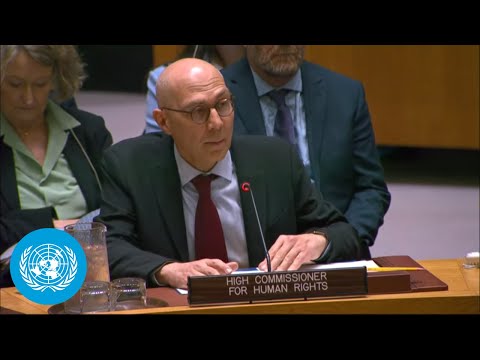
The United Nations High Commissioner for Human Rights told the Human Rights Council that people in Gaza are suffering “catastrophic” harm and urged an immediate restoration of the ceasefire and unimpeded humanitarian access.
In a briefing to the council, the high commissioner said the temporary pause in hostilities had been shattered and that ‘‘since January, Israeli military operations have killed more than 1,200 Palestinians, including at least 320 children, according to the Ministry of Health in Gaza.’’ He said bombardments continue against residential buildings, tents, hospitals and schools and that displacement and mandatory evacuation orders now affect roughly half of Gaza.
The high commissioner also highlighted attacks on humanitarian personnel, saying he was ‘‘appalled by the recent killings of 15 medical personnel and humanitarian aid workers’’ and called for ‘‘an independent, prompt, and thorough investigation’’ and for those responsible to be held to account. He warned that the blockade on food, water, electricity, fuel and medicines imposed since the complete siege began is harming Gaza’s population and ‘‘amount to collective punishment’’ and may amount to the use of starvation as a method of war.
The briefing drew on international humanitarian law and U.N. practice. The high commissioner cited the Geneva Conventions and the Convention on the Prevention and Punishment of the Crime of Genocide when warning that states have an obligation to act if serious violations or risks of atrocity crimes are apparent. He also referenced a council resolution (noted in the briefing as resolution 27/35 adopted in June) rejecting demographic or territorial change in the Gaza Strip.
The high commissioner described sharp deterioration across the occupied Palestinian territory beyond Gaza. He said Israeli operations in the West Bank, including East Jerusalem, have killed ‘‘hundreds of people,’’ destroyed refugee camps and makeshift medical sites, and displaced more than 40,000 Palestinians. He also said his office had verified that, since July 2023, state and settler violence had killed 909 Palestinians in the West Bank, including 191 children and five people with disabilities, and that, in the same period, 51 Israelis were killed in alleged Palestinian attacks or clashes.
On humanitarian logistics, the high commissioner noted the World Food Programme had shut 25 bakeries in Gaza as of April 1, leaving many families without access to bread, and described growing social tensions over food shortages. He warned of a ‘‘high and increasing risk that atrocity crimes are being committed in the occupied Palestinian territory.’’
The high commissioner reiterated calls for the immediate and unconditional release of all hostages and for the release of people arbitrarily detained, and urged that Israel refrain from any acts amounting to forcible transfer of Gaza’s population. He closed by saying ‘‘the only way forward is a political settlement based on two states living side by side in equal dignity and rights in line with United Nations resolutions and international law.’’
The briefing did not include a formal vote or motion by the council; it was a speaking update by the high commissioner and a record of his assessment and requests to council members and other states.