Get Full Government Meeting Transcripts, Videos, & Alerts Forever!
Get email alerts on the Industrial Siting And Environmental Health topic
No spam. Unsubscribe anytime.
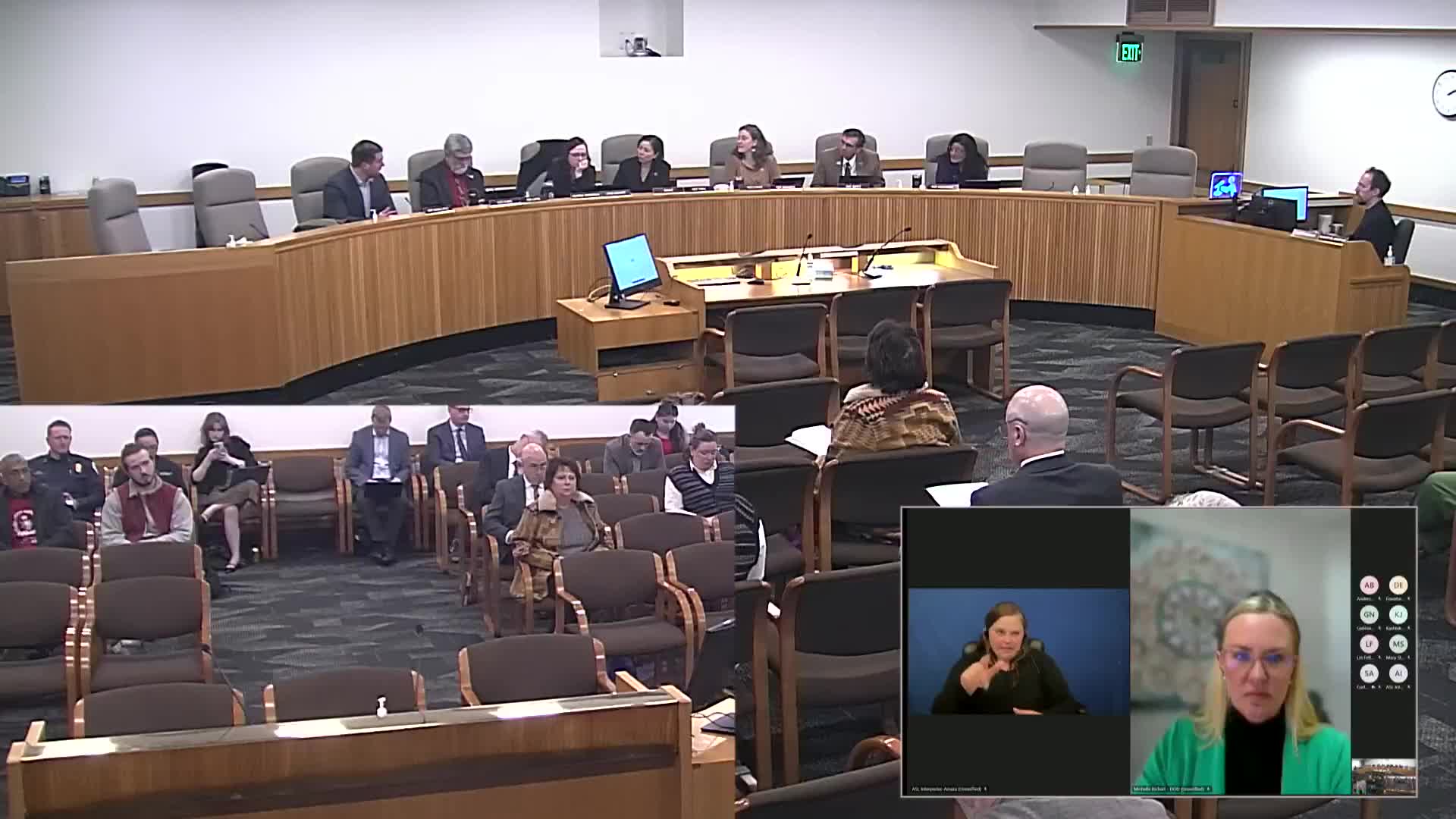
Debate in Salem over bill to require local impact assessments for warehouses and distribution centers
Summary
House Bill 3062, as amended in dash-3, would require local governments to identify sensitive uses and consider air, noise, light and traffic impacts when permitting warehouses and distribution centers; the amendment references DEQ’s Cleaner Air Oregon level‑1 risk assessment tool.
House Bill 3062 — as amended in a dash-3 version discussed April 3 — would require local governments to map sensitive uses (homes, schools, childcare and residential care facilities) in comprehensive plans and to consider off-site impacts such as air pollution, noise, light and traffic when permitting warehouses and distribution centers. The dash-3 amendment referenced use of a DEQ Level 1 risk assessment (Cleaner Air Oregon) as an analytical tool in some local reviews.
Proponents described the bill as a narrowly targeted response to recent siting decisions, particularly the Parkrose case in Portland where a 37-truck-bay distribution center was permitted adjacent to Parkrose High School and a 200-unit multifamily complex. Students, neighbors and community groups testified they experienced construction noise, nighttime lighting, traffic safety problems and air-quality concerns; they urged statewide standards because local codes were applied inconsistently.
Neighbors and environmental groups (Neighbors for Clean Air, Beyond Toxics, Verde) urged adoption of the dash-3 amendment, saying it codifies existing assessment tools and creates predictability so cities do not permit industrial uses without considering community health and safety.
Opponents included the Port of Portland, Oregon Business & Industry (OBI), the League of Oregon Cities and chambers of commerce. They said the amendment would expand DEQ responsibilities, create uncertainty and add cost and delay to approvals for an industry that supports supply chains and jobs. OBI's testimony warned the dash-3 could expand Cleaner Air Oregon beyond current statutory scope and that the bill lacked thresholds and implementation detail.
Port of Portland testimony said the amendment could be read to apply broadly (including to building permits or modifications of existing facilities), would add time and cost to approvals, and might be interpreted inconsistently across jurisdictions.
The Northwest Environmental Defense Center (NEDC) and community witnesses said the dash-3 was the result of negotiations and represented a workable compromise focused on protecting sensitive uses.
Committee members asked multiple clarifying questions about definitions (what constitutes a warehouse or distribution center), thresholds (number of loading bays or truck trips that would trigger a review), and the role DEQ would play. Several witnesses said the dash-3 still needs clearer implementation language; proponents urged the committee to move forward to set a statewide floor for protection of schools, residences and childcare.
No committee vote occurred on April 3; testimony concluded with stakeholders on opposing sides requesting further negotiation.
Quotes
"This will not change history. Dash 3 brings this bill home to the original reason where we started this conversation," Mary Pivoto of Neighbors for Clean Air said in support.
"Warehouse and distribution centers are a vital component of Oregon's economy. It doesn't require being targeted for haphazard backdoor expansion of Cleaner Air Oregon," Duke Shepherd of Oregon Business & Industry said in opposition.
Ending
Committee closed the public hearing with no vote; the record shows a sharply divided stakeholder field and requests for additional drafting and clarifications should the bill move forward.