Get Full Government Meeting Transcripts, Videos, & Alerts Forever!
Get email alerts on the Oregon Eligibility Partnership topic
No spam. Unsubscribe anytime.
Eligibility workers say understaffing and complex rules slow benefit access
Summary
Eligibility staff for the Oregon Eligibility Partnership told the Joint Ways and Means Human Services Subcommittee that chronic understaffing, complex procedures and insufficient lead‑worker support are delaying benefit decisions and that the unit is currently funded at roughly 46% of needed staff levels, according to testimony
Multiple eligibility workers and supervisors testified at the public hearing on Senate Bill 5526 about the workload and training pressures facing the Oregon Eligibility Partnership (OEP), which handles public‑benefit eligibility determinations.
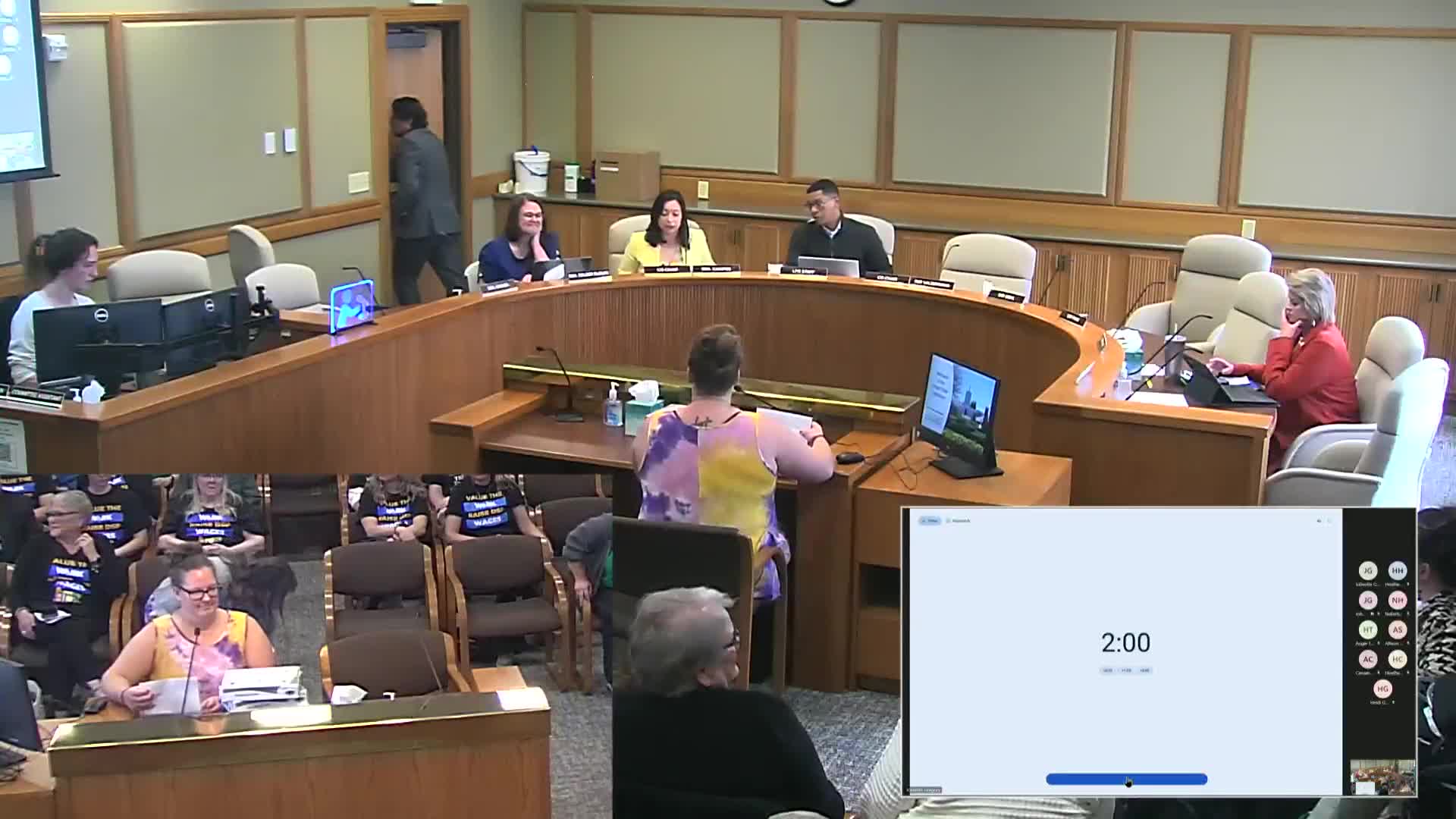
Jennifer Cranmer, a conservation worker (VEC) for OEP, told the committee she brought “this stack of papers” to illustrate the program’s complexity and said the OEP procedure manual is about 1,300 pages. Cranmer said OEP uses “200 resource guides” and multiple external systems, and that workers are expected to interpret trusts, annuities and tax documents after only a few hours of training. “We are currently funded at 46% of the staff,” she said, and described lengthy casework when unfamiliar issues arise.
Rachel Kinnemer, an eligibility worker who said she had previously been a benefits recipient, told the subcommittee that recent training improvements paired new staff with leads and provided better oversight, but that the unit needs many more leads to maintain accuracy and speed. “I would really love to see that moving forward; I don't know that that's possible if we don't have the leads available to help people who are actually on the phone,” she said.
Witnesses urged the subcommittee to fund additional staffing and sustained training time so eligibility workers can provide accurate, timely decisions that determine access to SNAP, TANF, medical coverage and other benefits. They said current understaffing lengthens time to resolve complex files and can delay lifesaving assistance.
Ending: Eligibility witnesses asked the subcommittee to exceed the governor’s recommendation for OEP staffing and to invest in leads and training to reduce backlogs and maintain accuracy in benefit determinations.