Get Full Government Meeting Transcripts, Videos, & Alerts Forever!
Public hearing on SB 80 spotlights nitrate contamination in Lower Umatilla Basin; advocates and industry clash
Summary
A lengthy public hearing on Senate Bill 80 brought dozens of testifiers for and against a proposal to bar new or expanding large confined animal feeding operations (CAFOs) from Oregon's groundwater management areas. Environmental and public‑health advocates cited rising nitrate levels and personal impacts in the Lower Umatilla Basin; industry and
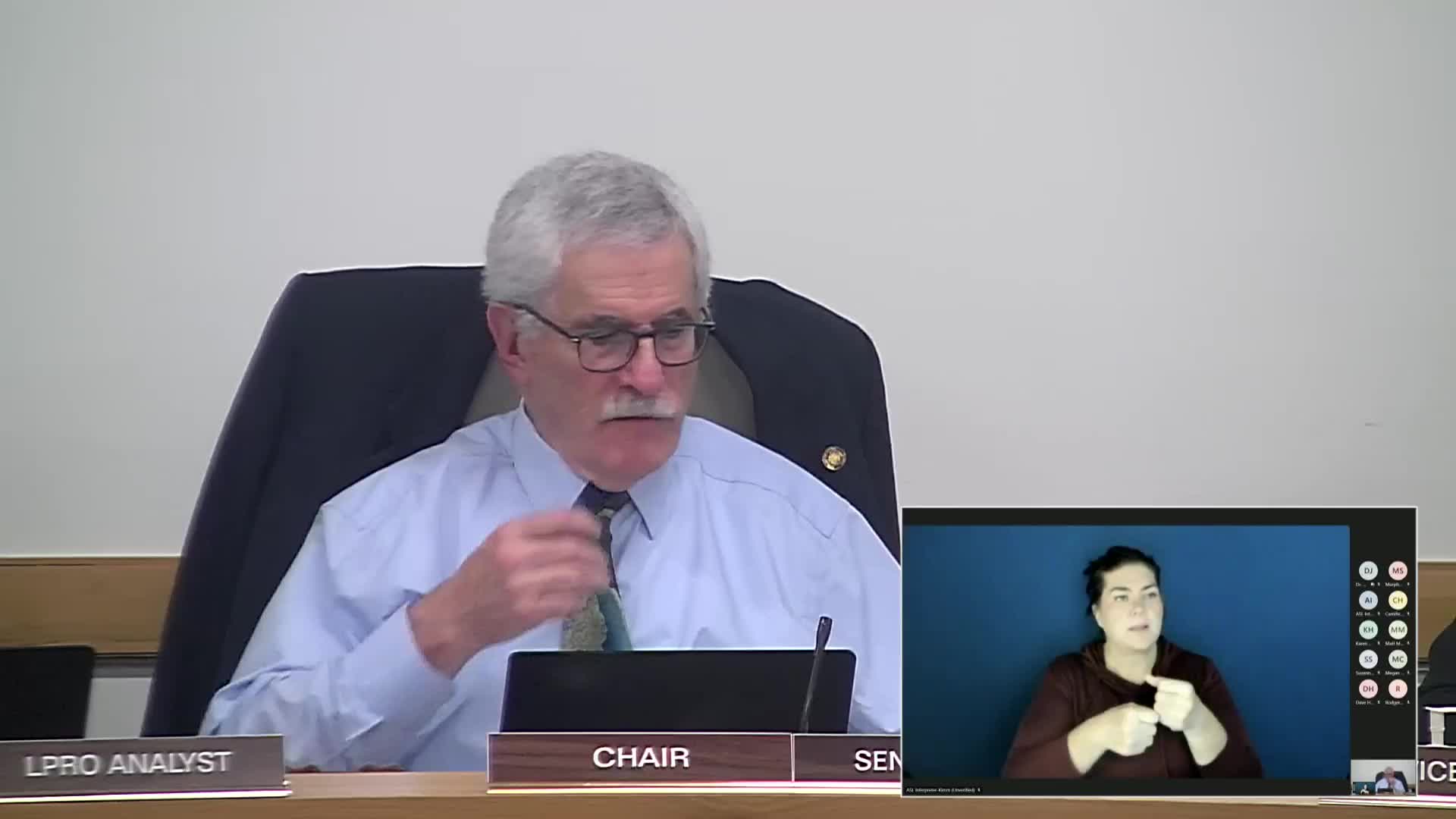
The Senate Committee on Natural Resources and Wildfire held a public hearing April 3 on Senate Bill 80, a measure that would prohibit the Oregon Department of Environmental Quality (DEQ) and the Oregon Department of Agriculture (ODA) from issuing National Pollutant Discharge Elimination System (NPDES) permits or Water Pollution Control Facilities (WPCF) permits to new or expanding large confined animal feeding operations (CAFOs) located in designated groundwater management areas. SB 80 also declared an emergency effective upon passage.
Dozens of witnesses testified for and against the bill. Supporters, including local residents and environmental and animal‑welfare groups, urged the committee to stop new or expanded large CAFOs in groundwater management areas—most prominently the Lower Umatilla Basin Groundwater Management Area—citing years of nitrate contamination, documented health concerns and what they described as regulatory failure.
Alice Morrison, representing more than 1,600 small and mid‑sized local market farmers across Oregon, told the committee, "Farmers are stewards of the land and need clean soil, air, and water to be able to continue to produce food and farm products for the future." She also related a personal cost: a December 2023 failure of her home well filtration system that required about $5,000 in immediate remediation.
Caleb Lay, director of policy and research with Oregon Rural Action, said state responses have not solved the problem in the Lower Umatilla Basin: "At my last glance, as of about a month ago, the state was providing either water deliveries or filtration systems to around 750 households. And we still have around a thousand wells left to test." He cited DEQ analysis showing nitrate levels continuing to increase in the basin and raised monitoring data from 3 Mile Canyon Farms' reports showing…
Already have an account? Log in
Subscribe to keep reading
Unlock the rest of this article — and every article on Citizen Portal.
- Unlimited articles
- AI-powered breakdowns of topics, speakers, decisions, and budgets
- Instant alerts when your location has a new meeting
- Follow topics and more locations
- 1,000 AI Insights / month, plus AI Chat