Get Full Government Meeting Transcripts, Videos, & Alerts Forever!
Get email alerts on the Agriculture Water Pollution topic
No spam. Unsubscribe anytime.
Public hearing on SB 80 spotlights nitrate contamination in Lower Umatilla Basin; advocates and industry clash
Summary
A lengthy public hearing on Senate Bill 80 brought dozens of testifiers for and against a proposal to bar new or expanding large confined animal feeding operations (CAFOs) from Oregon's groundwater management areas. Environmental and public‑health advocates cited rising nitrate levels and personal impacts in the Lower Umatilla Basin; industry and
The Senate Committee on Natural Resources and Wildfire held a public hearing April 3 on Senate Bill 80, a measure that would prohibit the Oregon Department of Environmental Quality (DEQ) and the Oregon Department of Agriculture (ODA) from issuing National Pollutant Discharge Elimination System (NPDES) permits or Water Pollution Control Facilities (WPCF) permits to new or expanding large confined animal feeding operations (CAFOs) located in designated groundwater management areas. SB 80 also declared an emergency effective upon passage.
Dozens of witnesses testified for and against the bill. Supporters, including local residents and environmental and animal‑welfare groups, urged the committee to stop new or expanded large CAFOs in groundwater management areas—most prominently the Lower Umatilla Basin Groundwater Management Area—citing years of nitrate contamination, documented health concerns and what they described as regulatory failure.
Alice Morrison, representing more than 1,600 small and mid‑sized local market farmers across Oregon, told the committee, "Farmers are stewards of the land and need clean soil, air, and water to be able to continue to produce food and farm products for the future." She also related a personal cost: a December 2023 failure of her home well filtration system that required about $5,000 in immediate remediation.
Caleb Lay, director of policy and research with Oregon Rural Action, said state responses have not solved the problem in the Lower Umatilla Basin: "At my last glance, as of about a month ago, the state was providing either water deliveries or filtration systems to around 750 households. And we still have around a thousand wells left to test." He cited DEQ analysis showing nitrate levels continuing to increase in the basin and raised monitoring data from 3 Mile Canyon Farms' reports showing near‑doubling of nitrate at a downstream monitoring well over two decades.
Advocacy organizations framed SB 80 as a precautionary step: Amy Van Saan, senior attorney with the Center for Food Safety, said SB 85 (2023) did not prohibit new large CAFOs from opening or existing CAFOs from expanding in groundwater management areas and "an individual permit is not enough of a deterrent." The Stand Up to Factory Farms Coalition, Friends of the Columbia Gorge, the ASPCA, Food & Water Watch and other groups argued that stopping new and expanding large operations is necessary while remediation and nutrient‑management work continues.
Industry, producer associations and some farmers testified in opposition. Mike Frias, speaking for Beef Northwest and 3 Mile Canyon Farms, said stakeholders spent weeks negotiating outcomes that became SB 85 and cautioned against moving too quickly to restrict operations: "We're upset that that tree hasn't grown and we pluck it out, and plant a new tree," he said in reference to undoing recent reforms. Multiple industry witnesses noted that SB 85 revised permitting, water rights and siting rules and that several elements of that law only began implementation in 2024.
Producers and associations argued existing permits require a zero‑discharge standard. Mike Frias stated in the hearing, "To remind the committee, CAFOs have a 0 discharge permit. Meaning, it doesn't matter if you're a groundwater management area or not, there's 0 discharge." Industry groups warned that a prohibition on new or expanding CAFOs in groundwater management areas would threaten family farms, intergenerational operations and local food supply.
Agency officials described the current regulatory status. Jonathan Sandow, deputy director at ODA, and Isaac Stapleton, ODA's Natural Resources Division director, told the committee that ODA completed rulemaking implementing many SB 85 requirements last fall and that the agency has been conducting education and outreach and processing new WPCF applications. Stapleton said ODA currently oversees about 85 permitted facilities and has "currently 6 compliance folks on staff that visit those facilities within every 10 months," and that the agency is recruiting a CAFO program manager.
Committee members pressed agency staff on resources for inspections and complaint response. Sandow and Stapleton said the CAFO program is funded from a mix of permit fees and general fund / lottery fund appropriations; staff said the program is meeting current demand for routine inspections and complaint response but noted ongoing recruitment and workload concerns.
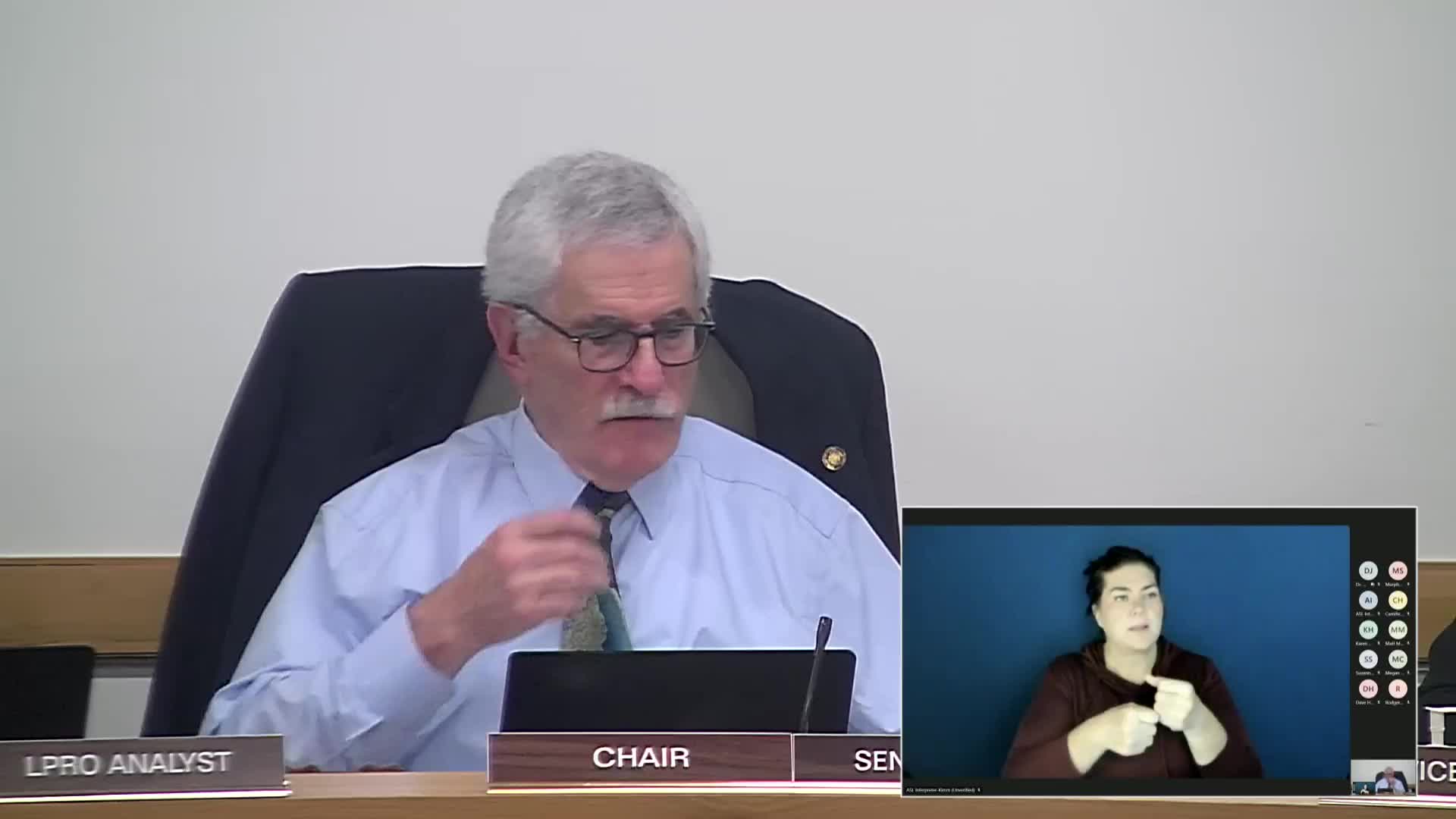
After hours of testimony and questioning, Chair Derek Golden said the committee would not move SB 80 out during the current session: "We will not be moving this bill out of this committee. This is obviously an explosive issue. There is absolutely no chance that there'd be enough alignment to pass this legislation this session," he said, and described plans for interim stakeholder work focused on actionable steps to address nitrate contamination in the Lower Umatilla Basin.
What supporters said - Public‑health and advocacy groups urged a moratorium on new and expanding large CAFOs in groundwater management areas, citing long runs of nitrate contamination in the Lower Umatilla Basin and personal testimony about medical and financial impacts on residents. - Several presenters pointed to monitoring data showing persistent or worsening nitrate levels in some wells and urged prevention of additional sources of contamination while remediation continues.
What opponents said - Producer groups and family farmers said SB 85 (2023) already overhauled permitting and that the new rules in many cases only began implementation in 2024; they warned that SB 80 would be duplicative and punitive and would harm family farms and local food production. - Industry witnesses emphasized existing permit standards and enforcement mechanisms, and they pressed for time for SB 85 implementation to take effect before new prohibitions are considered.
Committee action and next steps - The committee held the public hearing; no committee vote on SB 80 occurred. - Chair Golden said he intends to pursue interim stakeholder work on the Lower Umatilla Basin rather than advance SB 80 in the current session. - The committee accepted written testimony on OLIS for 48 hours following the hearing.
Speakers and testimony in brief Supporters included Alice Morrison (representing more than 1,600 small and mid‑sized local market farmers), Caleb Lay (Oregon Rural Action), Alan Journay (Southern Oregon Climate Action Now), Jan Stevenson (volunteer advocate), Marl Kavner (ASPCA), Amy Van Saan (Center for Food Safety), Madison Kenny (Friends of the Columbia Gorge), Lindsay Verheilig (Stand Up to Factory Farms Coalition), Amy Stone (Food & Water Watch) and others. Opponents and industry speakers included Mike Frias (Beef Northwest, 3 Mile Canyon Farms), Matt McElligot (president, Oregon Cattlemen's Association), Rocky Dahl (representing multiple producer associations), Lauren Kenzie (Oregon Farm Bureau), Charlotte Moffett (Oregon Business and Industry) and several family farmers and youth speakers who testified about generational farm operations.
The hearing record includes numerous numeric claims and monitoring data offered by witnesses; committee staff and agency witnesses were asked to follow up on specific data points. Chair Golden said he intends to convene interagency and stakeholder work in the interim to identify "actionable steps" for addressing groundwater contamination in the Lower Umatilla Basin.