Get Full Government Meeting Transcripts, Videos, & Alerts Forever!
Get email alerts on the Intellectual Developmental Disabilities topic
No spam. Unsubscribe anytime.
Providers, families urge Legislature to close $558 million IDD funding gap
Summary
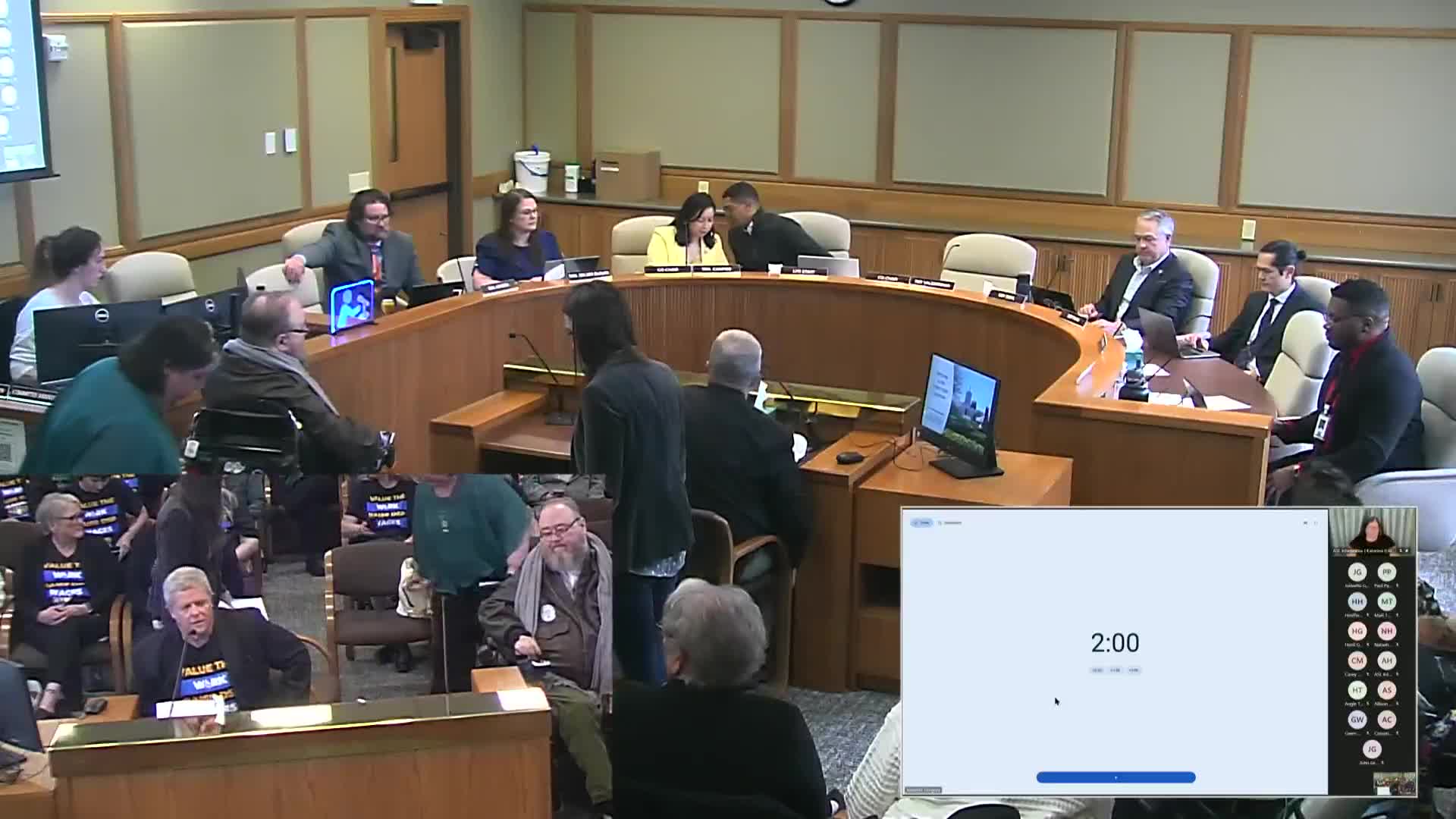
Members of the Joint Ways and Means Human Services Subcommittee opened a public hearing on Senate Bill 5526 and heard providers, DSPs, family‑network leaders and self‑advocates urge full funding for community intellectual and developmental disability services to address a $558 million shortfall identified by a 2024 rate study.
Members of the Joint Ways and Means Human Services Subcommittee opened a public hearing on Senate Bill 5526 and heard sweeping testimony that Oregon’s community-based intellectual and developmental disability (IDD) system lacks sufficient funding to sustain providers and the workforce that supports tens of thousands of people with IDD.
“By now, you've no doubt aware of the $558,000,000 gap in DD services funding,” said Alan Kress, executive director of Edwards Center, at the hearing. Kress and other nonprofit providers said the difference between current reimbursement rates and the legislatively directed 2024 rate study is forcing agencies to subsidize services, squeeze reserves and struggle to retain staff.
The funding gap has immediate workforce consequences, witnesses said. Multiple providers described direct support professional (DSP) turnover and hiring pressures: the state’s rate model assumes an average DSP wage of $18.77 an hour, speakers said, while agencies are paying $2 to $4 more per hour to retain staff. “We must raise that wage,” Kress said, noting his agency keeps administrative expenses low so the bulk of revenue goes to programs.
Community providers, self-advocates and family-network leaders pressed the subcommittee for three types of investments: (1) targeted funding to close the rate-model gap identified in the 2024 study, (2) annual cost‑of‑living adjustments for contracts, and (3) sustained support for family networks and self-advocacy programs that help families and people with disabilities navigate services. Amber Meer, representing the Oregon Developmental Disabilities Coalition, asked for “a $3,500,000 investment in fully funding the existing family networks” and for support of Policy Option Package 117, “which includes the $600,000 to support the groundwork of expanding the family networks.”
Parents and self-advocates urged attention to specific policy changes. Callie Ross, a parent, urged the legislature to prioritize funding for Tenzi’s Law, SB 538, and to ensure the children’s extraordinary needs (CEN) waiver provides access to paid parent caregivers for eligible families. Advocates said recent workforce shortages in home and community‑based services disproportionately harm children with complex medical and developmental needs.
Providers asked the subcommittee to consider House Bill 2150‑2, a bill they said would provide an annual cost‑of‑living adjustment. “Our survivalism approach is only sustainable for so long,” Anna Keenan Mudrick, representing the Community Providers Association of Oregon, told the committee. Several CEOs and long‑time DSPs described organizations drawing on reserves, taking on debt or subsidizing state contracts to keep homes and services open.
Speakers also tied funding to service stability across the state. Alexis Alberti, division director for Multnomah County IDD, said case management in Multnomah County is increasingly complex and that case management services are funded at roughly 86% of need; she urged 100% funding to reduce caseloads and wait times.
The hearing focused on budget priorities rather than votes; committee members closed the public record with an announcement that written testimony would remain open until the date provided by staff. Providers and family‑network leaders urged the legislature to prioritize the DHS IDD budget within SB 5526 to prevent service reductions and to stabilize a workforce they described as essential to keeping people with IDD safe and connected to their communities.
Ending: Testimony at the public hearing repeatedly framed the $558 million figure as the immediate shortfall driving turnover, unfilled shifts and provider insolvency; witnesses asked the subcommittee to phase investments that include closing the rate‑model gap, instituting COLAs and sustaining family networks and self‑advocacy supports.