Get Full Government Meeting Transcripts, Videos, & Alerts Forever!
Get email alerts on the Data Privacy Children Geolocation topic
No spam. Unsubscribe anytime.
House committee hears bill to ban sale of children’s location data, restrict precise geolocation sales
Summary
Lawmakers and privacy advocates told the House Committee on Commerce and Consumer Protection that House Bill 2,008 (dash 2) would bar profiling and selling data for people 16 or younger and restrict sale of precise geolocation data; work session carried over to the committee’s next meeting.
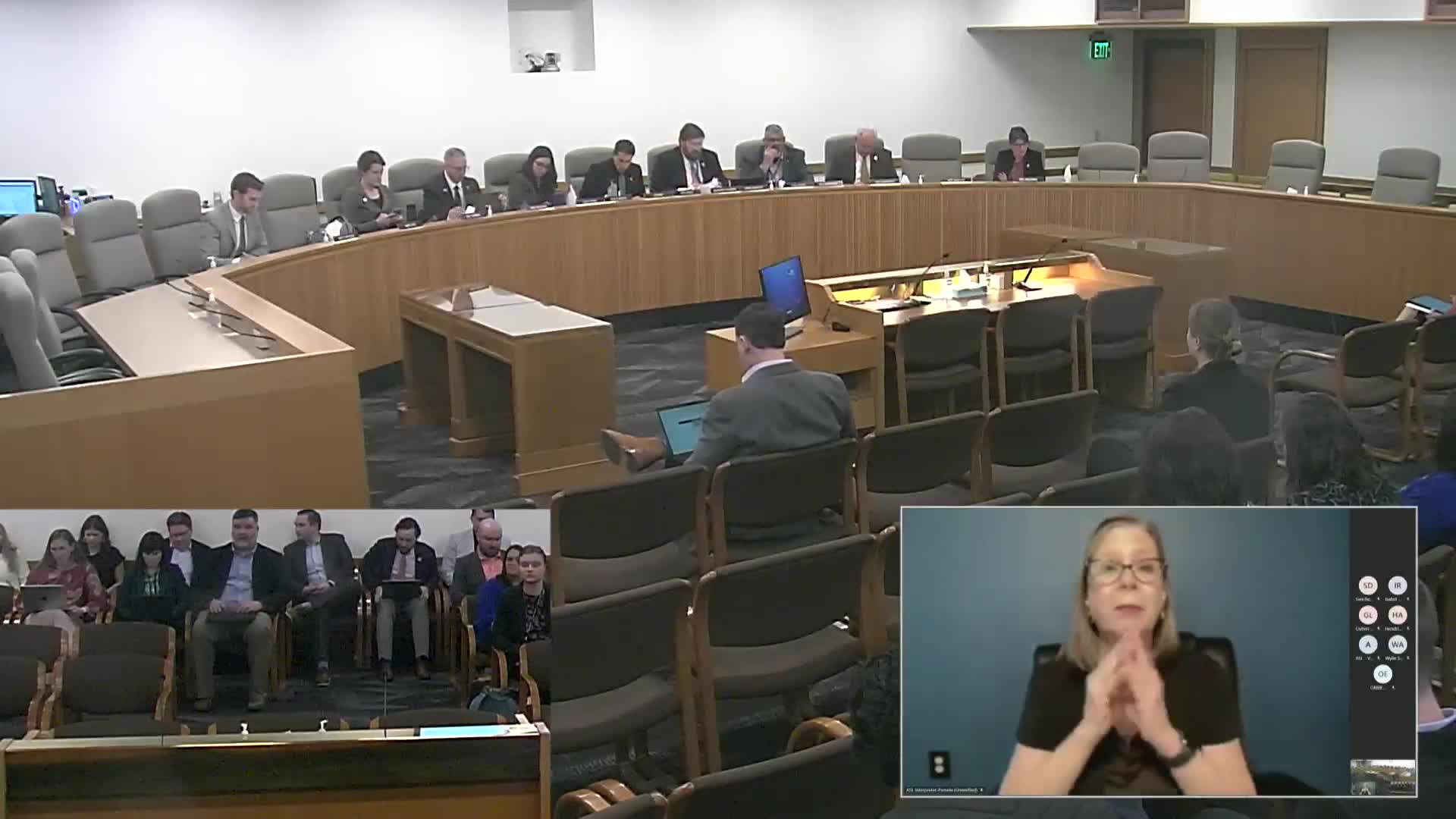
House Committee on Commerce and Consumer Protection Chair Sosa opened a public hearing April 3 on House Bill 2,008 (dash 2), a measure that would require the Department of Consumer and Business Services to study consumer protection and would: prohibit processing or profiling of a consumer when the controller has actual knowledge that the consumer is 16 years of age or younger; and prohibit selling the data of a person 16 years of age or younger and the sale of precise geolocation data within a 1,750-foot radius.
The bill’s sponsor, Representative Willie Choetzen, said the narrower dash-2 version focuses on two core aims: “To protect the data of our kids who are 16 years old, and to protect the data of Oregonians’ precise location.” Choetzen said the changes come after stakeholder negotiations and efforts to refine definitional and implementation questions raised during prior hearings.
Why it matters: supporters and privacy groups told the committee that precise, real-time location data has become a lucrative commodity and can be used in ways that put Oregonians — and children in particular — at risk. “This precise location data is being sold, sold to advertisers, government agencies, military contractors, or even foreign entities,” said Speaker Julie Fahey, who testified in support of the bill. Fahey described the bill as a targeted step to strengthen protections for children and to limit sales of Oregonians’ precise whereabouts.
Chris Coughlin of Oregon Consumer Justice said stakeholders worked intensively with the sponsor and that the narrower approach was intended to balance enforceability with stronger consumer protections. “We might feel that this policy could go further, but we truly believe in balancing the need for stronger consumer privacy protections with the need for enforceable laws,” Coughlin said.
Committee members asked how businesses would determine whether a consumer is under 16 and how the bill’s standard would be applied in practice. Choetzen said the dash-2 language uses an "actual knowledge or willful disregard" standard similar to current Oregon law, not a broader “should have known” test, and that the intent was not to require businesses to seek additional data beyond what they already hold. “If you know that somebody is under the age of 16 and at that point in time you’re not able to profit off of selling their personal data,” Choetzen said.
Industry and stakeholder witnesses generally praised the negotiation process but flagged technical drafting issues. Amanda Dalton of the Oregon Privacy Coalition said stakeholders agreed the bill should not change existing definitions and asked for a technical fix to the draft’s use of the precise geolocation definition. Rachel Wiggins Emery of the Technology Association of Oregon said the sponsor was receptive to feedback.
The committee closed the public hearing and carried over the bill’s work session to the committee’s next meeting on Tuesday for further consideration.
Ending: No final action or vote was taken on HB 2,008 on April 3; committee staff and the sponsor indicated a revised dash-3 amendment was expected before the next meeting.