Get Full Government Meeting Transcripts, Videos, & Alerts Forever!
Get email alerts on the Maternal Health topic
No spam. Unsubscribe anytime.
Senate bill would license doulas, allow Medicaid coverage; stakeholders back amended licensing bill
Summary
Senate Bill 319 (amended) would establish licensing for doulas in Montana and permit DPHHS to allow Medicaid coverage for licensed doula services; proponents argued licensure would improve access and maternal outcomes, while the Department of Labor and Industry offered technical amendments and withdrew objection if the amendments were adopted.
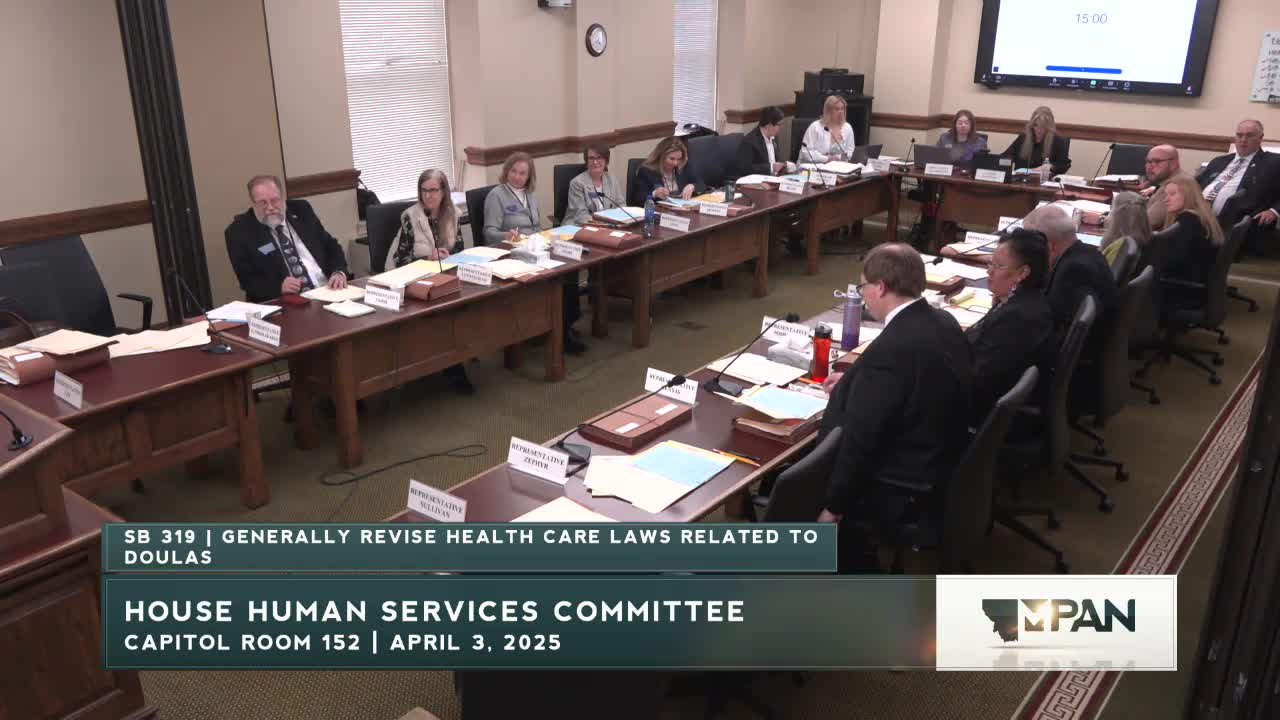
Senator Cora Newman opened the hearing on Senate Bill 319, an amended bill that would establish a licensing framework for doulas and authorize the Department of Public Health and Human Services to provide Medicaid coverage for licensed doula services. Newman — who said she is a trained postpartum doula — told the committee doula care is associated with reductions in preterm birth, cesarean rates and postpartum anxiety and depression.
Healthy Mothers, Healthy Babies’ Stephanie Morton testified that doulas help bridge gaps in perinatal care, especially in rural areas designated as maternity care deserts. "Doulas provide an essential bridge to care that can steward families to this vulnerable point in their lives," Morton said, and added that licensure is the pathway to Medicaid and private-payer reimbursement.
The Department of Labor and Industry (DLI) raised a soft objection but presented an amendment negotiated with stakeholders; Commissioner Sarah Swanson said DLI would withdraw its objection with the amendment in place. Legal counsel for DLI described technical cleanups in the amendment, including fixing a drafting issue that could have inadvertently given unlicensed practitioners supervisory authority over licensed providers.
Many doulas, clinicians and tribal representatives testified in support. Sherry Walker, an RN and founding member of the Montana Doula Collaborative, and a range of tribal and clinical representatives described doula care’s potential to improve maternal and infant outcomes, especially in rural and tribal communities where travel distances for prenatal care can be long. Dr. Amy Stiffarm, director of Native American Initiatives at Healthy Mothers, Healthy Babies, said licensure could help Tribal communities by making doula work paid and sustainable rather than fully volunteer-based. Several organizations, including the Women's Foundation of Montana, Montana Primary Care Association and urban Indian health centers, filed letters or offered brief support on the record.
The committee heard that the bill as amended removes voluntary certification language in favor of licensure and provides DPHHS rulemaking authority to set training and practice standards; the amendment also includes express protection so the statute does not reach traditional indigenous healers. Sponsor Newman said she supports the negotiated amendment and asked the committee to move the bill forward. The hearing closed with broad bipartisan backing and no committee vote recorded in the transcript. The Department of Public Health and Human Services staff attended as informational witnesses to answer technical questions.