Get Full Government Meeting Transcripts, Videos, & Alerts Forever!
Get email alerts on the Aquatic Invasive Species topic
No spam. Unsubscribe anytime.
Montana committee hears bill to raise fines for bypassing aquatic invasive species checks
Summary
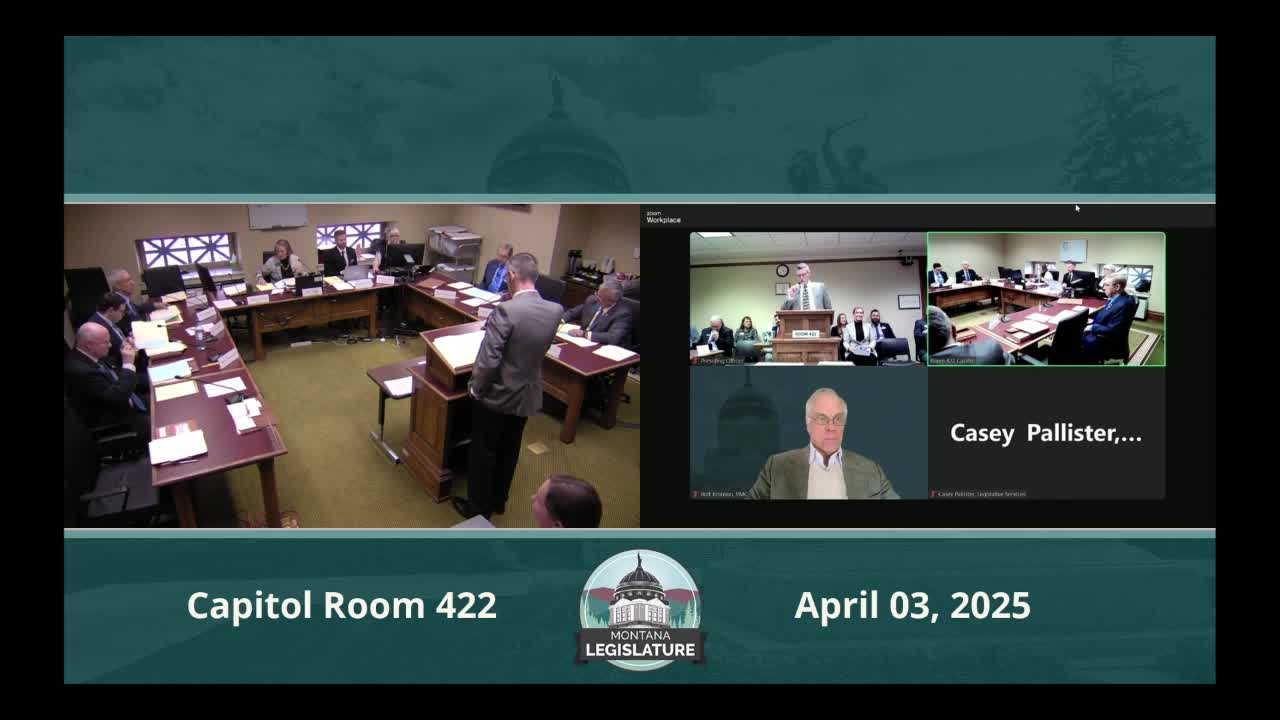
A Senate Fish and Game Committee hearing featured proponents and FWP officials supporting House Bill 242, which would increase penalties for skipping aquatic invasive species (AIS) inspection stations and for knowingly introducing AIS into Montana waters.
Representative Tom Millett, sponsor of House Bill 242, told the Senate Fish and Game Committee the bill aims to increase fines for people who bypass aquatic invasive species (AIS) check stations or knowingly introduce AIS into Montana waterways. Millett said the measure updates penalties that "have not changed in 15 years" since the Montana AIS Act passed in 2009.
Millett summarized the measure’s key provisions and the committee work that produced them. He said the bill raises monetary penalties, reinstates a previously removed section, and adds a new requirement that no penalty be issued when a check station lacks clear signage set a reasonable distance from the station. Millett told the committee the bill passed the House nearly unanimously and carried bipartisan support in committee and on the House floor.
Why it matters: AIS such as zebra and quagga mussels, milfoil and other nonnative species can cause ecological and economic damage to fisheries, hydro infrastructure and water systems. Proponents told the committee that higher penalties will help deter behavior that risks introducing those species into Montana waters.
Supporters at the hearing included representatives of outfitting, conservation and agriculture organizations. Clayton Elliott of Montana Charter Unlimited told the committee his organization "rises as proponents" and supports adjusting fines to reflect inflation. Tom Jacobson of the Montana Wildlife Federation said the federation "supports anything that's going to reduce the risk of the spread of AIS," and Matt Leo, representing the Montana chapter of Backcountry Hunters and Anglers, urged support as well. Rebecca Boslough King, representing the Montana Association of Conservation Districts, said conservation districts run some AIS inspection stations and supported inflation-adjusted fines.
Informational witnesses from state agencies described enforcement and inspection activity. Phil Kilbreath of the Law Enforcement Division at Montana Fish, Wildlife & Parks (FWP) said enforcement data are split among citation issuance and court collections: he reported counts of citations issued in 2024 but said the courts handle fine collection so FWP could not provide total collected fine dollars. Kilbreath said the agency issued citations in 2024 for failing to have a nonresident AIS prevention pass, for violating AIS area rules (for example, failing to drain equipment or bait violations), and for failing to stop at a check station. Liz Lodman of the Montana Invasive Species Council was present as an informational witness for questions.
Committee discussion covered the size and calculation of the increases and practical enforcement. Senator Morgeau asked about the adjustment amounts; Millett said committee members moderated initial proposals to reach a compromise. Committee members asked FWP staff where inspection stations are located and how many operate; Kilbreath said the agency tries to place about 20 inspection stations with partners at main corridors into the state and at key travelways, and that additional stations aim to intercept high-risk boats coming from infested states. Kilbreath acknowledged enforcement resources are limited and said the agency coordinates with highway patrol and other officers when a vehicle bypass is reported so troopers or game wardens can intercept vehicles down the road when feasible.
Millett closed by asking senators to support the bill, saying it is intended to protect Montana’s fisheries, tourism and water infrastructure and to send a message that the state is serious about keeping its waters mussel-free. The hearing record shows broad stakeholder support but also included committee questions about enforcement, citation counts and signage requirements.
Ending: The committee concluded the hearing without a recorded vote at this session; the bill will move forward to committee work and possible executive action where members may consider amendments and next steps.