Get Full Government Meeting Transcripts, Videos, & Alerts Forever!
Get email alerts on the Transmission And Grid topic
No spam. Unsubscribe anytime.
Panel approves study of interstate transmission and grid interconnection
Summary
The committee approved Senate Joint Resolution 21 to study interstate power grid development after proponents from renewable and industry groups outlined potential reliability, economic and national‑security benefits and the sponsor emphasized preserving state sovereignty in any interstate arrangements.
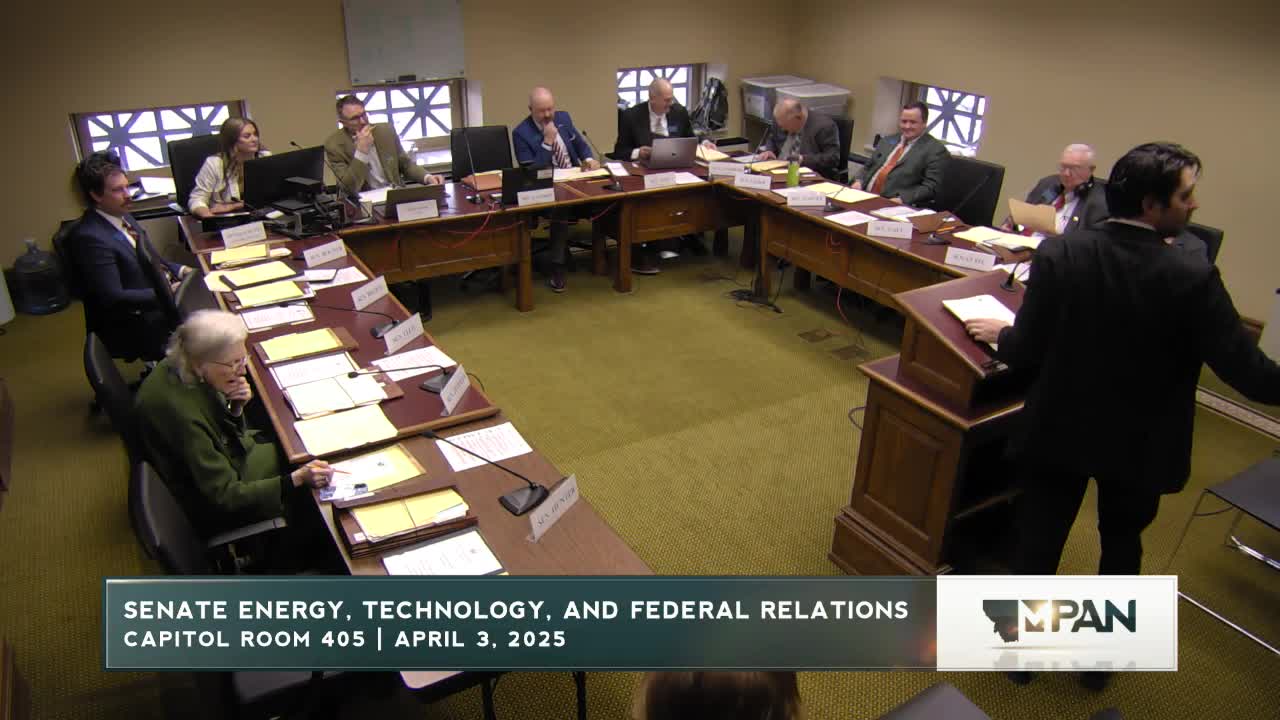
The Senate Natural Resources Committee voted to advance Senate Joint Resolution 21, a proposal to study interstate transmission development and the implications of greater interregional grid interconnection.
Sponsor Senator Daniel Zolnikov said the interim study would examine interconnection in northeastern Montana, regional transmission organization arrangements and the costs and benefits of potential interstate compacts, with attention to preserving state authority. Zolnikov told committee members the study would allow legislators to ‘‘be more educated’’ about tradeoffs before supporting any interstate agreement.
Proponents urged the study. David Herbst of American Powerplay said better interstate connections could let Montana export electricity and provide market flexibility. Anne Hedges of the Montana Environmental Information Center and speakers from Renewable Northwest and the Montana Renewable Energy Association argued interconnection could improve reliability and lower costs for ratepayers. Daryl James, representing an independent transmission developer, described projects that could more than double existing east–west transfer capacity and said private developers can build lines that would be turned over to local utilities.
Zolnikov and witnesses discussed potential costs, federal regulatory requirements and the option of interstate compacts. The sponsor emphasized ‘‘state sovereignty’’ as a study focus so the legislature could weigh benefits and limits of any future regional arrangements.
Senator Usher moved that SJR 21 do pass; the committee approved the motion by voice vote.
Committee members did not record a roll‑call tally in the excerpted transcript; the clerk announced the motion passed after a voice vote.