Get Full Government Meeting Transcripts, Videos, & Alerts Forever!
Get email alerts on the Student Data Privacy topic
No spam. Unsubscribe anytime.
Privacy experts and educators spar over proposal to allow pre‑approved vendor contracts for student data
Summary
House Bill 255 would let school districts rely on a preapproved contract or a vetted consortium contract for certain student-data agreements; supporters said it would speed approvals, opponents warned it could weaken privacy protections.
Representative Bob Carter introduced House Bill 255 as a measure to protect student privacy by allowing school districts to use a legally preapproved contract (a model or consortium contract) when contracting with software vendors. Carter said the intent is to reduce long delays while preserving protections.
Proponents — including Lance Melton (Montana School Boards Association), Rick Duncan (School Administrators of Montana), Carol Phillips (district technology director and former Montana Educational Technologists president) and others — described the current review process as time consuming. "By allowing us to use a legally approved DPA, the procedures will be refined," Phillips said, adding that one review for a free application took two months under current practice.
Opponents raised constitutional and statutory privacy concerns. Don Cape, representing the Coalition for Safety and Justice and identifying himself as a privacy professional, argued HB255 could violate student privacy rights and federal protections (including FERPA and COPPA) by exposing records to parties outside the school-district contract. Cape warned that processors and subcontractors weaved into vendor contracts can change policies and that student data can be transferred and stored offshore, increasing legal and security risk.
Committee members asked technical questions about how preapproved contracts would be vetted and whether consortia already exist. Lance Melton, who counsels districts on contracts, said the change would give school counsel another tool by vetting consortium contracts and maintaining a communication stream to monitor contract changes; he said the office does not itself operate a consortium but sometimes vets vendor contract terms on behalf of districts.
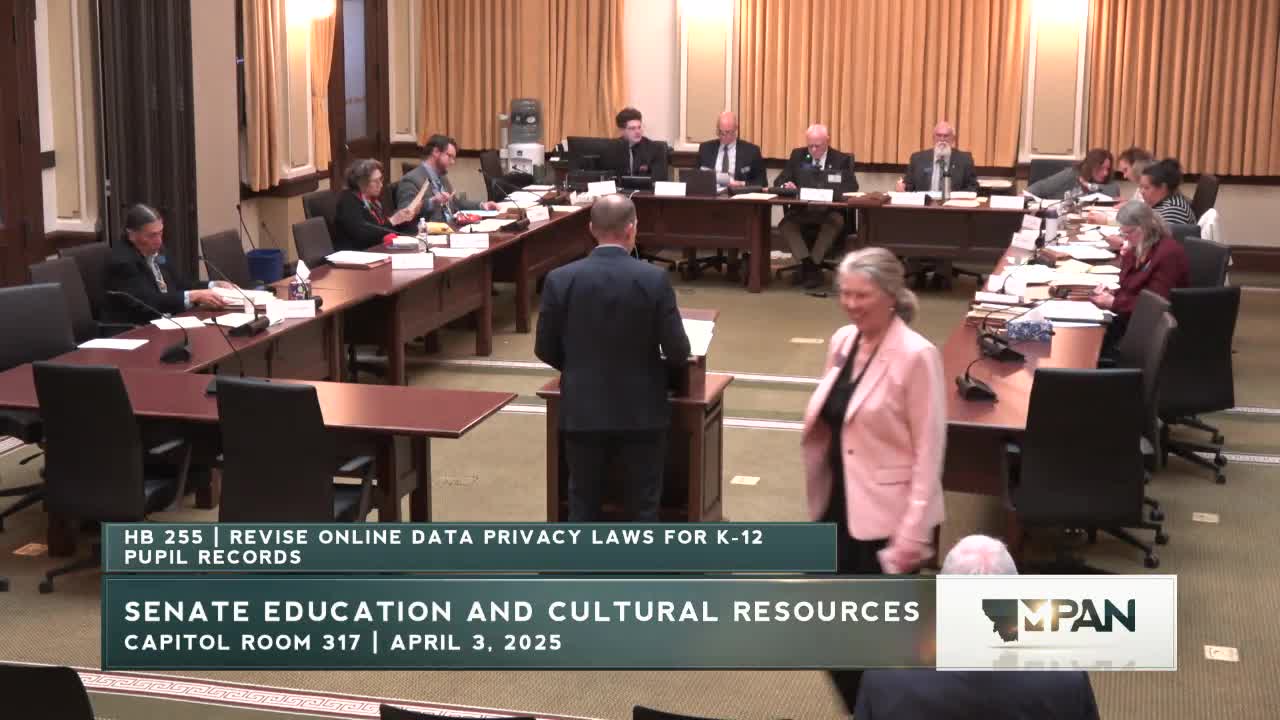
Representative Carter said the bill is optional for school boards — districts could still negotiate with vendors or use their own attorneys — but the model contract option would reduce lengthy "ping-pong" negotiations. The committee closed the hearing; no executive action was taken during this session.