Get Full Government Meeting Transcripts, Videos, & Alerts Forever!
Get email alerts on the Education Steam Pilot topic
No spam. Unsubscribe anytime.
House approves 14-school STEAM pilot after debate over funding and oversight
Summary
The Puerto Rico House on April 3 approved House Bill 334 to create a 14-school STEAM pilot program (two schools per education region). Supporters said the measure will prepare students for high-demand fields; critics pressed for a public hearing and clearer funding sources. The bill passed 51-0.
The Puerto Rico House of Representatives approved House Bill 334 on April 3, 2025, establishing a pilot program to create 14 STEAM (science, technology, engineering, arts and mathematics) schools across the island, with two schools planned per each education region. The final vote on the floor was 51 in favor, zero against.
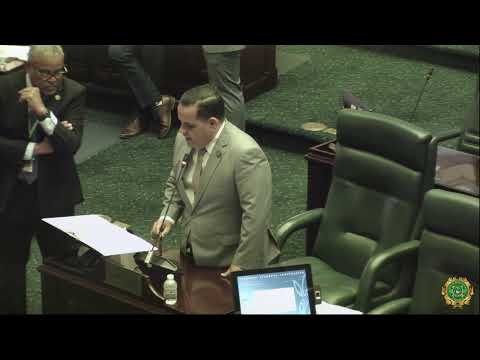
Supporters described the bill as an investment in workforce development and educational equity. "Este proyecto es una inversión en nuestra gente," said Representative Tatiana Pérez Ramírez, the bill sponsor and president of the House Education Commission, during her remarks advocating for the measure. She and other backers said the pilot would include curriculum aligned with labor-market needs and partnerships with universities and private employers for internships and hands-on learning.
Opponents and some members of the minority caucus did not dispute the concept but pressed for more procedural safeguards and fiscal clarity. Representative Figueroa Acevedo, describing himself as an educator, requested a public hearing and asked for explicit answers about funding, student continuity between elementary and high-school placements, and whether the department had performed a study of local demand. "La continuidad ... es una de mis preocupaciones," he said, noting how a student who begins in an elementary specialized program might not be able to access corresponding middle- or high-school courses if the schools are in different municipalities.
Representative Jamón Torres Cruz moved to return the bill to committee until those written questions were answered, citing the chamber's rules and the need for a fiscal picture from the legislative budget office. That motion was put to a voice vote and defeated on the floor. After further debate and assurances from the bill sponsor that written questions would be answered by the Education Commission president, the House proceeded to final passage.
Key details discussed on the floor included: - Scale and selection: The bill authorizes a pilot of 14 schools, described in debate as two STEAM schools per education region; the text of the bill is the authoritative source for selection criteria. - Funding: Members repeatedly asked whether federal funds would be the primary source; speakers on the floor noted the project text and a ponencia (commission report) signed by the Secretary of Education, Eliezer Ramos, and said federal funds could be limited. Several representatives requested a clearer statement of recurring state budget commitments if the pilot becomes permanent. - Continuity for students and staff: Members raised concerns about students who would need to travel between municipalities to remain in a STEAM track and about how teacher assignments for participating schools would be handled under existing department rules for placement of surplus teachers. - Process: Minority members requested a public hearing with agency witnesses; the bill sponsor and others said the Education Commission held an executive meeting in March that included commission members and agency representatives and pledged to provide written answers to outstanding questions.
Quotes from the record that reflect the tenor of debate include Representative Pérez Ramírez: "Les pido con su voto, pensemos en ese niño o en esa niña ... Votar a favor de esta medida es votar a favor del progreso, la equidad y de un Puerto Rico con oportunidades reales para todos." Representative Figueroa Acevedo pressed procedural and fiscal concerns: "Yo lo que quería era una vista pública ... ¿de dónde se van a sacar los fondos?" Representative Rodríguez (member and former commission visitor) and others emphasized existing STEAM models on the island and urged moving forward with a pilot.
Outcome and next steps: The House approved the bill on the floor; the tally recorded later in the proceeding was 51-0. The Education Commission president, Representative Tatiana Pérez Ramírez, indicated outstanding technical questions would be answered in writing for members of the body. The bill text and any implementing regulations will determine the timeline, selection process for the 14 pilot sites, and whether and how recurring state funds must be appropriated if the pilot moves to a permanent program.
The session record shows both substantive support for expanding STEAM programming and sustained requests from members for fiscal and implementation detail before large-scale deployment.