Get Full Government Meeting Transcripts, Videos, & Alerts Forever!
Get email alerts on the Wild Rice Act Sf1247 topic
No spam. Unsubscribe anytime.
Committee hears extended testimony on Wild Rice Act; bill laid over after extensive tribal, scientific and agency input
Summary
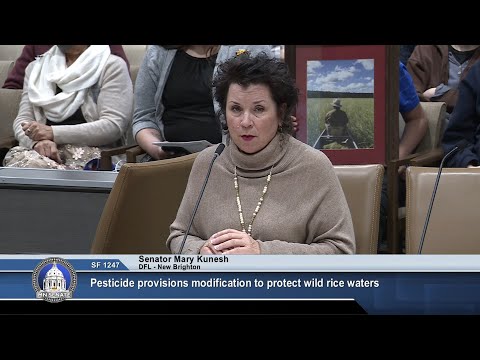
Senate File 12 47, the Wild Rice Act, would establish state protections and mapping for uncultivated wild rice and generated extended testimony from tribal leaders, scientists and agency officials.
Senate File 12 47, commonly described in committee as the Wild Rice Act, generated a lengthy record of testimony from tribal leaders, scientists, faith leaders and agency staff about the cultural, ecological and economic importance of wild rice (manoomin). The author and supporters sought statutory protections and mapping to monitor and protect uncultivated wild rice beds statewide.
Lede facts - Sponsor: Senator Kunish introduced the bill (A2 author amendment narrowed the bill's scope to wild rice policy and mapping). - Proponents: Tribal harvesters, indigenous organizations and environmental groups testified the bill would protect a culturally and ecologically significant native plant and improve protections against threats such as pollution, wake boats, invasive species and drought. - Agency view: DNR expressed support for wild rice protection but raised concerns about provisions that could affect riparian property rights, navigation and the practicality of statewide wild-rice mapping.
Key testimony - Tribal and indigenous witnesses, including Deborah Topping (Fond du Lac), Leanna Goose (Leech Lake), Allison Del Hoyer, Gina Peltier and others, described wild rice as culturally central and as a "life way." Several witnesses connected treaty obligations and cultural survival to legal protections for manoomin.
- Joshua Preston, legal counsel with the RISE Coalition, cited treaty obligations and argued treaties preserve the right to hunt, fish and gather, which includes wild rice on ceded lands, and urged state action to uphold those commitments.
- Scientists and technical witnesses, including Annette Drews (coauthor of a prior DNR wild-rice mapping report) and Evan Mulholland (Minnesota Center for Environmental Advocacy), supported mapping and stronger protections while noting gaps in current ecological knowledge and the need for improved monitoring.
DNR cautions and specifics - Bob Meyer, DNR assistant commissioner, said the department supports protecting wild rice and tribal interests but raised drafting concerns about language that grants an "inherent right" to uncultivated wild rice; he cautioned the language could raise legal issues and affect private riparian rights such as the ability to create a navigable access corridor from shore.
- DNR also noted a prior 2008 inventory that identified roughly 1,200 lakes and rivers in 54 counties with current or historic wild rice and about 64,000 acres of wild rice; DNR said the proposed mapping requirement could end up designating large parts of northern Minnesota and would require periodic updates.
Policy and legal discussion - Several speakers argued that the policy language recognizing the "inherent right" of uncultivated wild rice reflects Indigenous cultural values and treaty obligations; others, including some committee members, expressed concern about drafting implications and the precedent of giving a plant a statutory right.
Committee action - The committee adopted an author amendment (A2) to narrow the bill's scope and accepted a drafting change to clarify the bill would not apply to cultivated (farm) rice. A separate amendment suggestion to replace "inherent right" with a weaker phrase was withdrawn after discussion and the author agreed to continue consultations.
- The committee laid SF 12 47 over for possible inclusion and asked DNR and authors to continue technical work on mapping definitions, riparian exceptions, and enforcement language.
Ending: The hearing produced extensive oral testimony on cultural, environmental and legal dimensions; the committee left the bill for additional drafting and consultation with tribes, DNR and other stakeholders.