Get Full Government Meeting Transcripts, Videos, & Alerts Forever!
Get email alerts on the Confined Aquatic Disposal Cad Moratorium topic
No spam. Unsubscribe anytime.
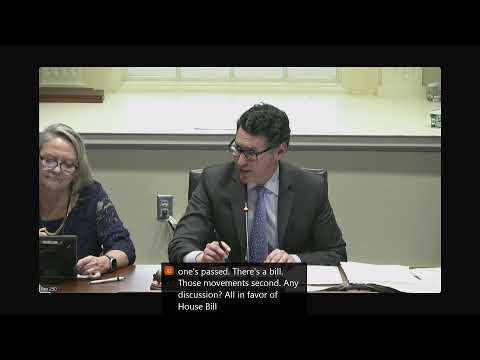
House committee holds moratorium bill on confined aquatic disposal cells for follow-up
Summary
The House Environment and Transportation Committee postponed action on SB 168, a bill to impose a four-year moratorium on construction of confined aquatic disposal (CAD) cells, after members requested clarifications about the bill's scope and potential impacts on existing dredging practices.
The House Environment and Transportation Committee on Thursday postponed consideration of SB 168, a bill that would impose a four-year moratorium on construction of confined aquatic disposal cells in Maryland, saying members wanted additional information about the proposal's scope and potential impacts on existing dredging operations.
The delay follows questions from committee members about whether the bill would broadly prohibit other dredging activities or only prohibit future approvals of a specific disposal method. “This bill establishes a 4 year moratorium on the construction of confined aquatic disposal cells in the state,” Delegate Stein said when presenting the bill to the committee.
Why it matters: confined aquatic disposal (CAD) is a method of placing dredged material into engineered cells; it has been controversial because of concerns about where and how dredged material is placed in the bay and other waterways. Committee members said they wanted assurances the bill would not unintentionally prevent thin‑layer or other dredging methods currently in use.
Discussion highlights: Delegate Jacobs asked whether the measure would outlaw redepositing dredged material from Baltimore Harbor or other ports into the Chesapeake Bay, citing concerns about specific sites such as TradePoint Atlantic. Committee counsel Kristen responded that the bill applies to a particular disposal option and “just applies to this particular management option for disposal of dredge material,” not to all dredging methods. A representative of the Maryland Department of the Environment (MDE) told the committee the bill would not affect thin‑layer dredge activity currently occurring in the Wicomico River.
Several members pressed for more detail. “I just wanna make sure I'm getting this one right,” Delegate Jacobs said, citing language in the bill and the bill analysis that appeared to describe both prohibitions on future authorizations and on specific redeposit activities. Delegate Delgado emphasized the committee had “fought hard” to secure thin‑layer dredge options for the Wicomico River and sought confirmation those efforts would not be undone.
Outcome and next steps: The committee chair postponed the bill to the next day to allow members to seek more information from the sponsor, MDE and other stakeholders. The committee asked staff to provide clarifying analysis and invited members to consult with the sponsor and agency staff before reconvening.
The committee did not take a final vote on SB 168 at the April 3 meeting.