Get Full Government Meeting Transcripts, Videos, & Alerts Forever!
Get email alerts on the Sanitary District Debt topic
No spam. Unsubscribe anytime.
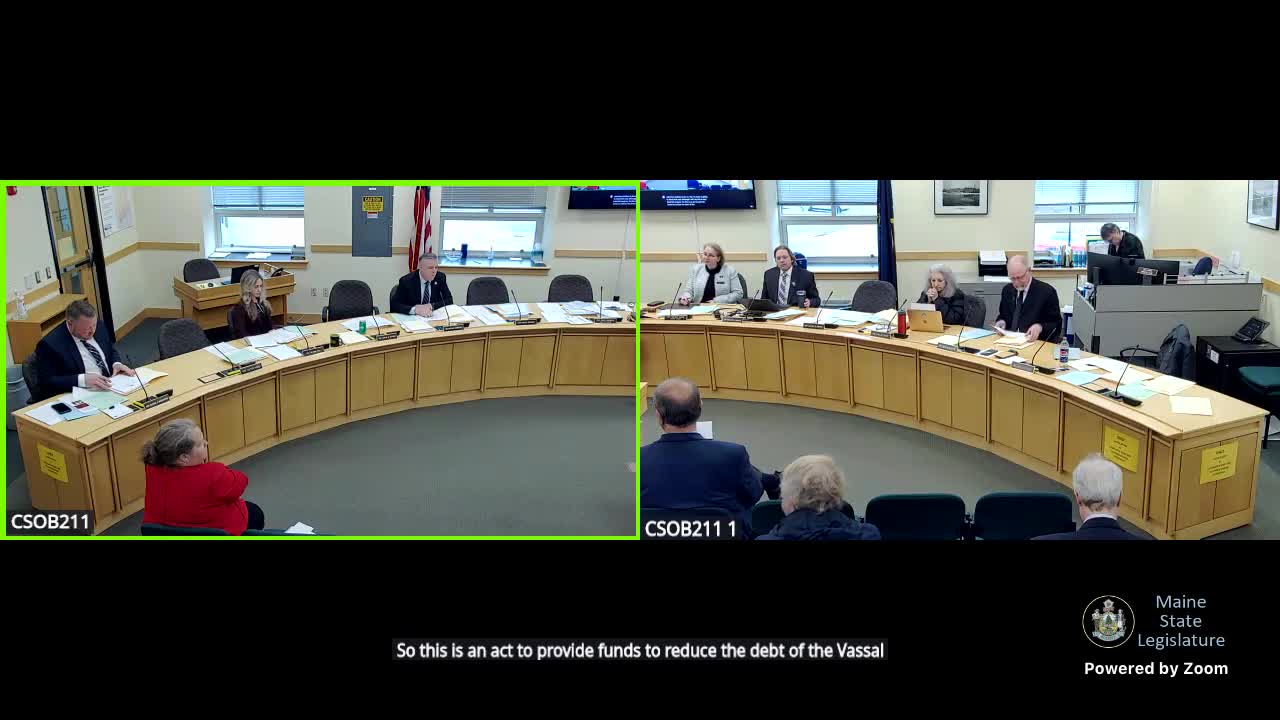
Committee declines bill to directly fund Vassalboro sanitary district; minority proposal would create competitive grant program
Summary
Senator Brett Bradstreet asked the committee for a one‑time $2 million appropriation to reduce the debt burden on the Vassalboro Sanitary District; the committee recommended 'Ought Not to Pass' and a minority proposed a targeted competitive grant alternative.
Senator Brett Bradstreet asked the Energy, Utilities and Technology Committee for a one‑time $2,000,000 appropriation to reduce the debt of the Vassalboro Sanitary District, arguing the town’s sewer customers faced unusually large annual assessments that threaten household finances.
Why this matters: The sanitary district serves roughly 200 properties; testimony described average annual charges to district ratepayers of about $2,600, compared with a statewide average of around $900. Witnesses told the committee the district had exhausted available principal forgiveness and state grant funds and that the district had already received state assistance and some local support but remained under severe financial strain.
Key testimony and numbers
Senator Bradstreet (sponsor) explained the request and said the town and district have already contributed significant resources: the town’s assistance and prior state funds total roughly $1.78 million plus about $2.7 million in earlier DEP grants and principal forgiveness. Brian Kavanaugh, Director of the DEP Bureau of Water Quality, confirmed earlier state assistance came from the Clean Water State Revolving Fund and a 2018 wastewater bond program; he told the committee those grant accounts are largely committed and noted the department’s statutory program authority generally funds planning and construction — not debt service.
Deb Hart, speaking for Maine’s municipal electric and water utilities (the COUs), and other witnesses urged careful consideration of precedent and program structure but acknowledged the district’s hardship. Committee members noted the district’s small customer base and asked whether other federal or state relief options remained; witnesses said the district applied for available programs but remained with unmet obligations.
Committee action
After hearing testimony and discussing options, the committee voted on an internal recommendation. The chair moved the committee recommendation “Ought Not to Pass.” Representative McIntyre seconded the motion. Committee roll call in the transcript shows the majority supported the motion (recorded as 8 in favor and 3 opposed among members present) and the oral record concludes with that recommendation. The committee report assigned no direct appropriation.
Minority position and next steps
Members who opposed the recommendation suggested an alternative: a narrowly targeted, one‑time, competitive grant program for sanitary (and wastewater) districts with clear eligibility criteria and administrative rules, to be administered by DEP. That minority report language would create an emergency, competitive grant program for distressed sanitary districts rather than a single appropriation to Vassalboro; sponsors asked staff to draft language for the work session. Committee members also requested the department and sponsor provide additional financial detail and a list of other districts in comparable distress.
Ending
The committee concluded the work session by recommending “Ought Not to Pass” on LD 832 as submitted and capturing a minority proposal to explore a competitive emergency grant program for sanitary districts. The transcript records requests for additional fiscal information and for staff to draft a narrowly targeted alternative for consideration.