Get Full Government Meeting Transcripts, Videos, & Alerts Forever!
Get email alerts on the Nutrition Assistance topic
No spam. Unsubscribe anytime.
Opponents tell committee proposed SNAP local‑spend rule would conflict with federal program rules
Summary
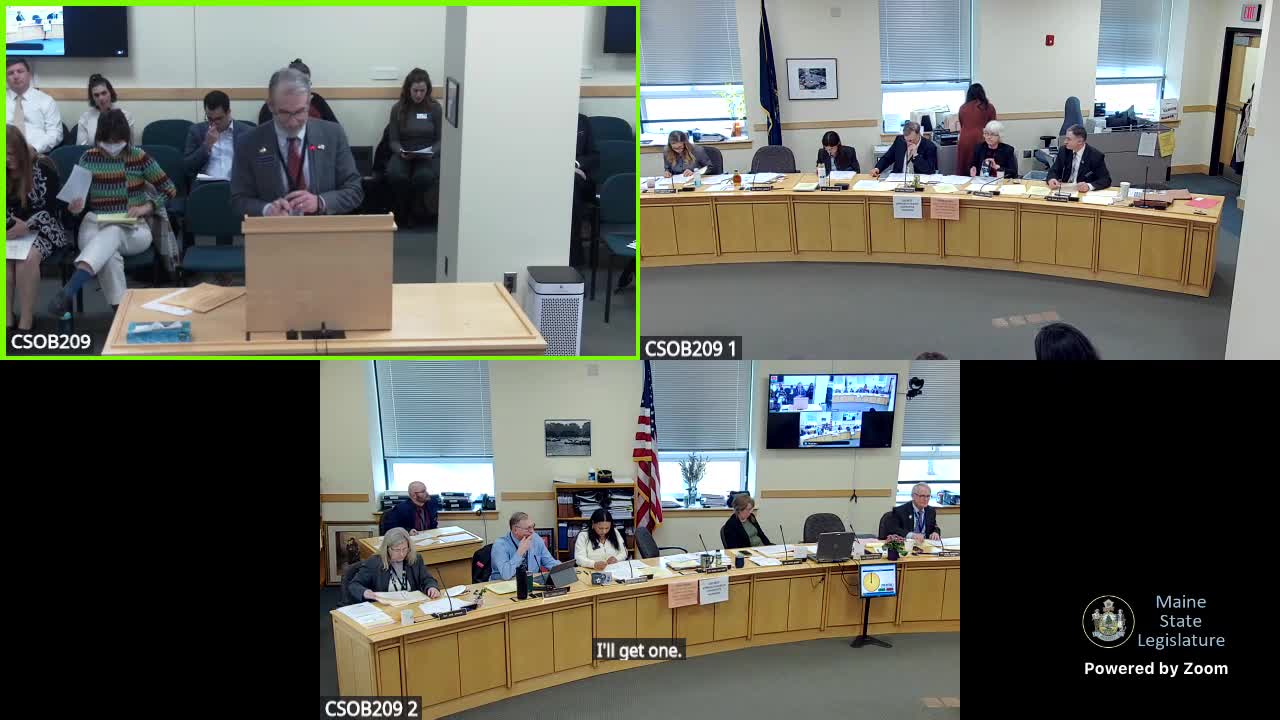
Representative Paul Flynn proposed LD 938, a bill aimed at boosting rural retail and local agricultural sales by requiring SNAP recipients to spend a portion of benefits locally and asking retailers to source more perishables from local producers.
Representative Paul Flynn introduced LD 938, an act that would require some SNAP recipients to spend a set portion of monthly benefits in geographically local stores and would ask participating retailers to source a share of perishable inventory from local producers.
Flynn told the committee the idea grew from his experience operating a small town general store and from a long‑standing concern about keeping federal food purchasing power circulating in rural communities. He described a proposed rule that would require recipients to spend, for example, 10 percent of their monthly benefits at qualifying stores within a geographic domain tied to their address, and he proposed that participating retailers carry a minimum share of locally sourced perishable goods.
Alex Carter, policy advocate at Maine Equal Justice, testified in opposition, saying "states do not have the authority to restrict where people redeem their benefits." Carter noted SNAP is 100 percent federally funded, that participant choice is a core SNAP principle, and that imposing residence‑based spending requirements would present administrative, equity and access problems for rural residents, who sometimes travel outside their ZIP code for groceries, for work or to reach affordable retailers. Carter also said a 10 percent local sourcing requirement for perishable inventory would be impractical for many small stores and might discourage retailer participation.
Committee members asked for information about incentive programs that increase purchases of local produce and promote healthier shopping—Carter pointed to programs such as Maine Harvest Bucks, which doubles SNAP dollars at participating farmers markets and CSAs as a model of incentive‑based approaches.
Ending: Committee did not take an immediate vote; members asked for additional data for the work session, including information on SNAP incentive programs and the federal authorities governing SNAP redemption and retailer eligibility.