Get Full Government Meeting Transcripts, Videos, & Alerts Forever!
Get email alerts on the Gorham Connector topic
No spam. Unsubscribe anytime.
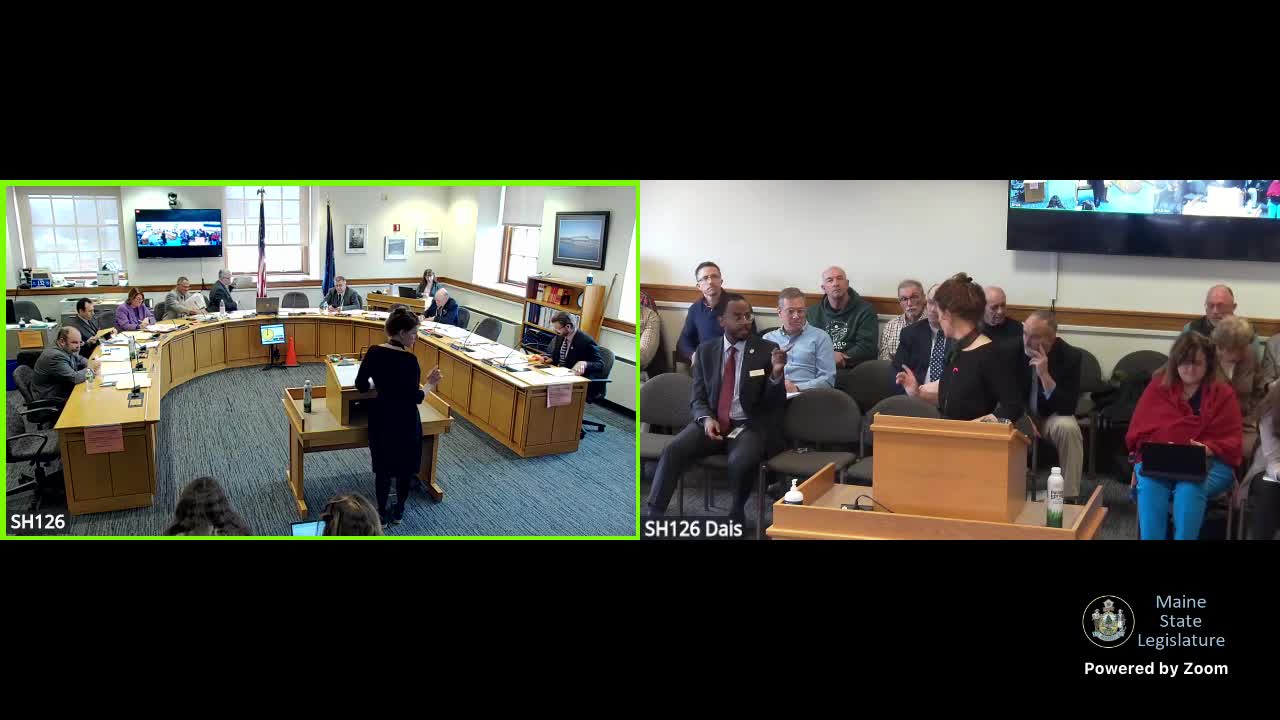
Broad public opposition and agency split presented as committee hears bill to repeal Gorham Connector authorization
Summary
LD 1020 would repeal the Maine Turnpike Authority’s authorization to build a Gorham connector and require resale of land; proponents cited environmental harm, farmland loss and induced demand, while MDOT and MTA opposed repeal as premature pending a multiyear study and warned of legal and fiscal consequences.
Senator Stacy Brenner and a coalition of local residents and organizations urged the Joint Standing Committee on Transportation on April 3 to repeal state statutes that authorize construction of the proposed Gorham Connector and to return acquired land to prior owners (LD 1020). Brenner and dozens of public commenters argued the five‑mile, limited‑access connector would cut through wetlands and prime farmland, increase greenhouse gas emissions and induce sprawl rather than solve congestion.
"The proposed Gorham connector is a costly and outdated solution to our region's transportation challenges," said Senator Stacy Brenner, who cited the Maine Climate Council’s findings that transportation is the state's largest emissions source. Testimony submitted to the committee described potential permanent impacts to Smiling Hill Farm and the Red Brook watershed and warned of long-term maintenance liabilities for municipalities.
Speakers against the connector included conservation and community groups (Trout Unlimited, Vision Zero Maine, Mainers for Smarter Transportation), local officials (Gorham Town Council members and the town manager) and dozens of residents who said the Turnpike Authority had failed to engage the public adequately. Thomas Mui Roberts, a landowner near Smiling Hill Farm, told the committee the project would "destroy my home" and estimated a 2023 MTA cost update put construction at roughly $650 million and nearly $1 billion after financing.
Maine Turnpike Authority (MTA) and Maine Department of Transportation (MDOT) witnesses opposed immediate repeal. Dale Dowdy, MDOT deputy commissioner, said the department plans a two‑year, modal‑balanced study of mobility and safety west of Portland and that removing the statutory authorization would prematurely eliminate an option and hinder a “suite of tools” analysis. Erin Courtney, representing the MTA, told the committee that forcing resale of land acquired for the connector would have legal and financial consequences for the toll‑funded authority and said most parcels were negotiated with willing sellers; she warned forced divestiture could amount to an unconstitutional taking.
Municipal leaders were split on remedies: Gorham officials stressed the need to keep options on the table and to remain partners with MDOT and the Turnpike, while other testifiers urged immediate repeal so local planning and conservation could proceed without the project looming. Multiple witnesses and municipal officials asked MDOT to prioritize shorter‑term, lower‑cost alternatives — smarter signal timing, targeted intersection improvements, roundabouts, transit and land‑use changes — during the upcoming study.
Committee members did not take a formal vote on LD 1020 during the hearing. MDOT said it will begin stakeholder engagement and a purpose‑and‑need update and expected the planning effort to extend roughly two years; several municipal speakers asked the committee to consider legislative changes only after MDOT completes its study or to craft amendments that preserve flexibility for local reuse of any acquired parcels.
The hearing included dozens of individuals and organizations on both sides; the committee asked staff to assemble materials cited in testimony for later consideration and work sessions.