Get Full Government Meeting Transcripts, Videos, & Alerts Forever!
Get email alerts on the Nutrition topic
No spam. Unsubscribe anytime.
Budget Hearing Highlights Nutrition Investments: Growth Funding for Universal Meals and $150M for Kitchen Upgrades and Training
Summary
Officials described an administration proposal to cover a current-year shortfall and fund anticipated growth in the Universal Meals program ($31.5M backfill, $84.1M growth) plus a 2.43% COLA and a $150M one‑time kitchen infrastructure and training package. CDE reported robust meal growth and said infrastructure grants
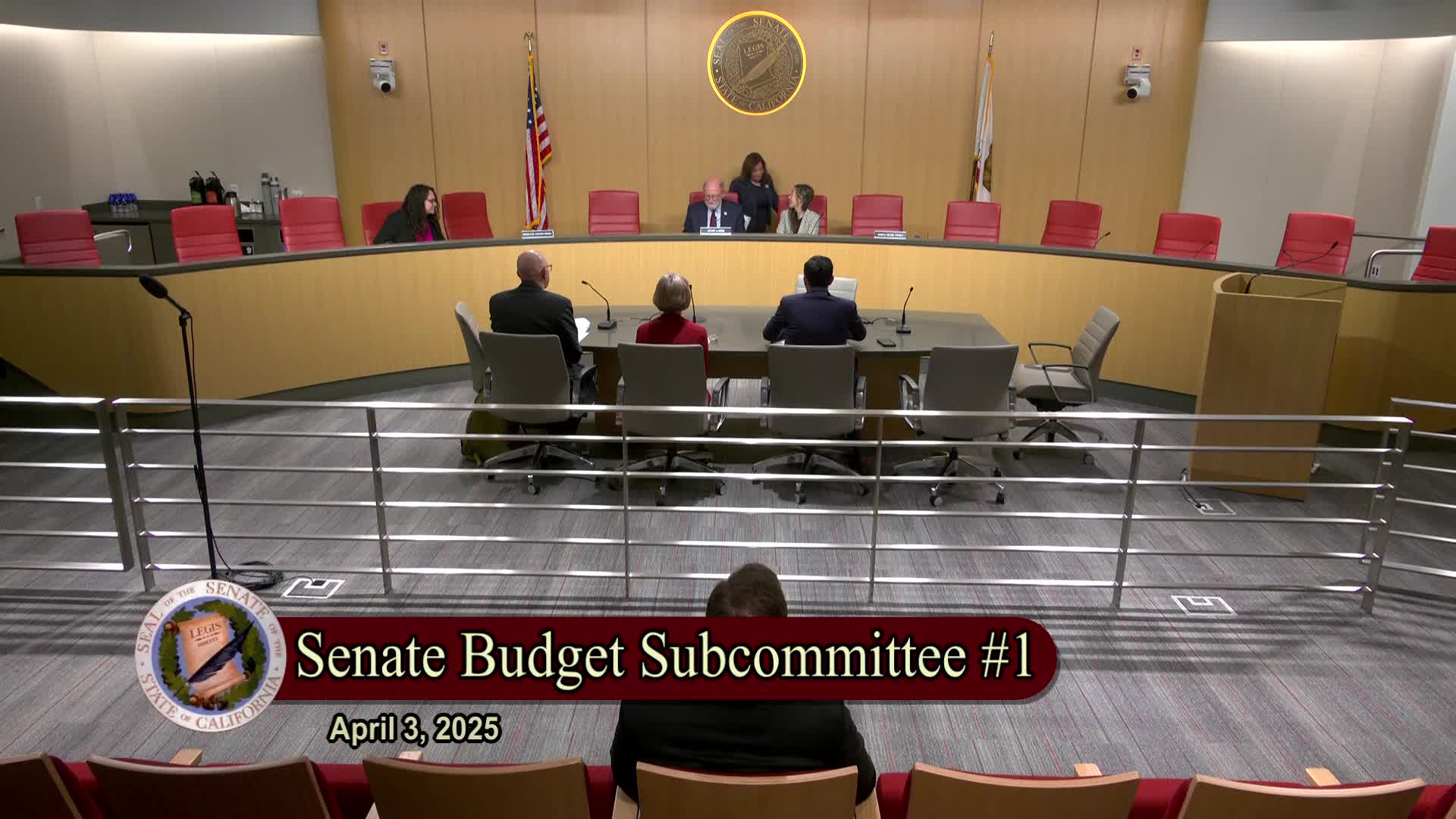
The subcommittee examined the governor's proposals to support the Universal School Meals program and to invest in kitchen infrastructure and culinary training to expand freshly prepared meals in schools.
Nate Williams of the Department of Finance outlined four nutrition items in the governor's budget: a $31,500,000 one-time Proposition 98 General Fund backfill for a current‑year shortfall driven by higher-than-projected meal counts; an $84,100,000 Proposition 98 General Fund increase to fund anticipated growth in 2025-26; a $22,200,000 Proposition 98 General Fund increase to reflect a 2.43% cost‑of‑living adjustment (raising the state per‑meal reimbursement to just over $1.00), and a $150,000,000 one‑time Proposition 98 General Fund package for kitchen infrastructure and training (split as $100,000,000 competitive infrastructure grants and $50,000,000 formula training funds).
Department of Education witnesses and external speakers reported sharp growth in meal participation since Universal Meals launched. Kim Frenzel of CDE's Nutrition Services Division said California served more than 845 million school meals in the program's first year, about 888 million the next year, and was on track for more than 927 million meals in the current year. CDE staff argued the kitchen investments enable schools to offer more freshly prepared, locally sourced foods and help increase participation and local economic benefits.
The Legislative Analyst's Office urged caution on the additional kitchen infrastructure funding. Edward Cabral of the LAO said the State lacks comprehensive reporting on the effectiveness and use of prior kitchen-infrastructure awards; reports from earlier rounds are due June 30, so the LAO recommended rejecting new funding until those reports are available and the State can demonstrate need and outcomes. The LAO also estimated the administration's 2025-26 meal count projection may be low and calculated a potential additional $32,000,000 cost if meal growth mirrors recent trends.
CDE and food-service stakeholders told the committee the earlier infrastructure rounds generated valuable equipment and culinary training and that projects often involve large facility upgrades, increased refrigeration and more points of service. CDE said midyear reporting from 2021 grantees showed investments in refrigeration, ranges and staff culinary training, with many districts reporting plans for kitchen remodels and storage expansion.
Witnesses also discussed Summer EBT ("Sunbucks"). CDE said it is preparing translations and outreach for a Summer EBT plan but noted final federal approval and an approved USDA plan remain outstanding; program implementation depends on USDA approvals. Witnesses and public commenters urged a robust statewide Universal Benefits Application and accessible translations so eligible families can claim federal benefits.
Next steps: the subcommittee asked for documentation on prior infrastructure awards as they become available and for updated meal‑count estimates before final budget decisions. Lawmakers expressed broad support for Universal Meals and asked that kitchen infrastructure investments be targeted with measurable goals if additional funding is considered.