Get Full Government Meeting Transcripts, Videos, & Alerts Forever!
Get email alerts on the Municipal Finance topic
No spam. Unsubscribe anytime.
Maine lawmaker urges 15% excise rebate to help towns process vehicle violations
Summary
Representative Mark Bleier presented LD 290, proposing that 15% of fines from motor vehicle violations be remitted to the municipality where the violation occurred to offset administrative costs; no public testimony was offered and the hearing closed without committee action.
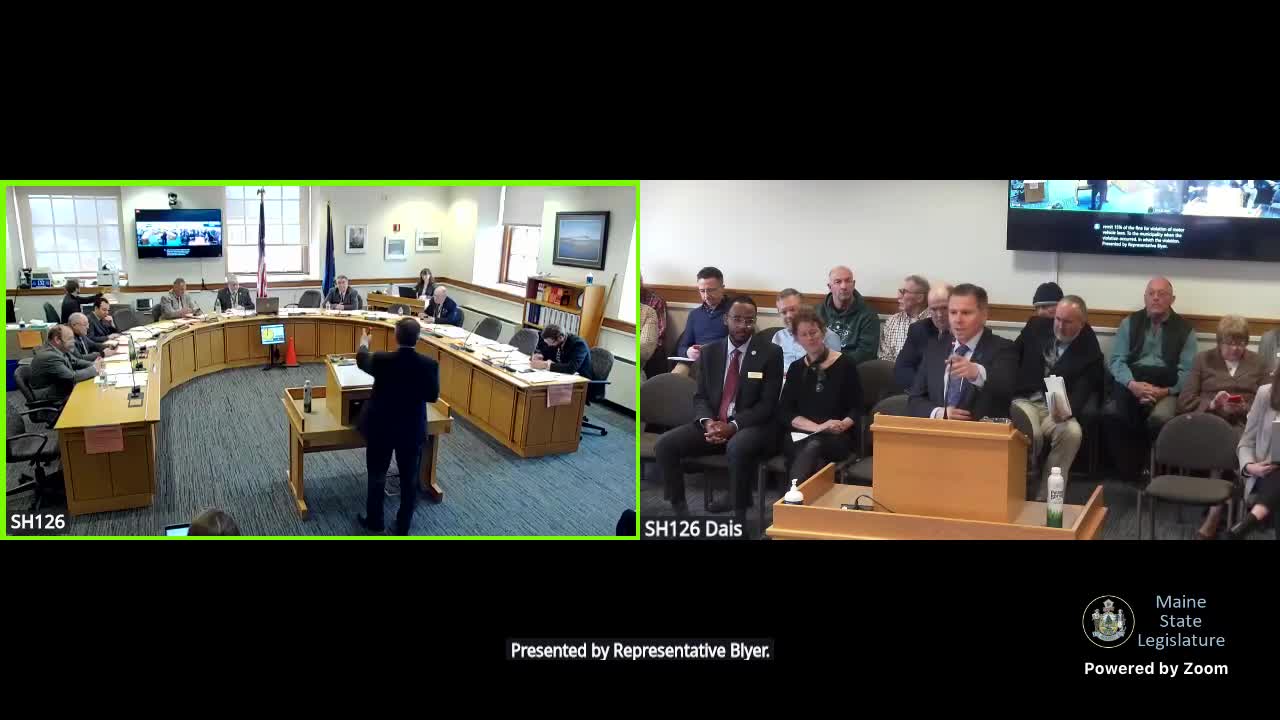
Representative Mark Bleier, presenting LD 290 on April 3, told the Joint Standing Committee on Transportation the bill responds to municipal burdens for processing vehicle violations. “Municipalities throughout our state are responsible for paperwork, seizures, holdings of seizures, and all other aspects that come along with vehicle violations. Municipalities are not reimbursed in any way if individuals are found guilty,” he said.
Bleier said municipalities sometimes absorb long-term storage and administrative costs, and he framed the bill as relief: a 15% reimbursement of fines linked to motor vehicle violations paid back to the municipality where the violation occurred. He said one local example involved a vehicle that required creation of a long-term storage facility for three to four years.
No cosponsors took the chair before the public hearing, and the committee recorded no members of the public testifying for or against LD 290 during the session. The chair closed the public hearing with no questions recorded from committee members.
The bill as presented focuses on altering the distribution of fine revenue; the transcript did not provide drafting details such as the precise statutory target or fiscal notes. Bleier said similar proposals had been before the committee in earlier sessions but had died without passage.
Because the hearing produced no public testimony and the committee did not take a formal vote on LD 290 during the session, committee staff will schedule any next steps for a later work session if the sponsor pursues them.