Get Full Government Meeting Transcripts, Videos, & Alerts Forever!
Get email alerts on the Foster Care Tiered Rate topic
No spam. Unsubscribe anytime.
CDSS outlines tiered foster-care rate structure, immediate needs and strength-building programs and implementation work groups
Summary
CDSS described implementation work for the tiered rate structure for foster care (implementation date July 1, 2027), related immediate needs and strength-building programs, and coordination with DHCS on BH Connect activity funds.
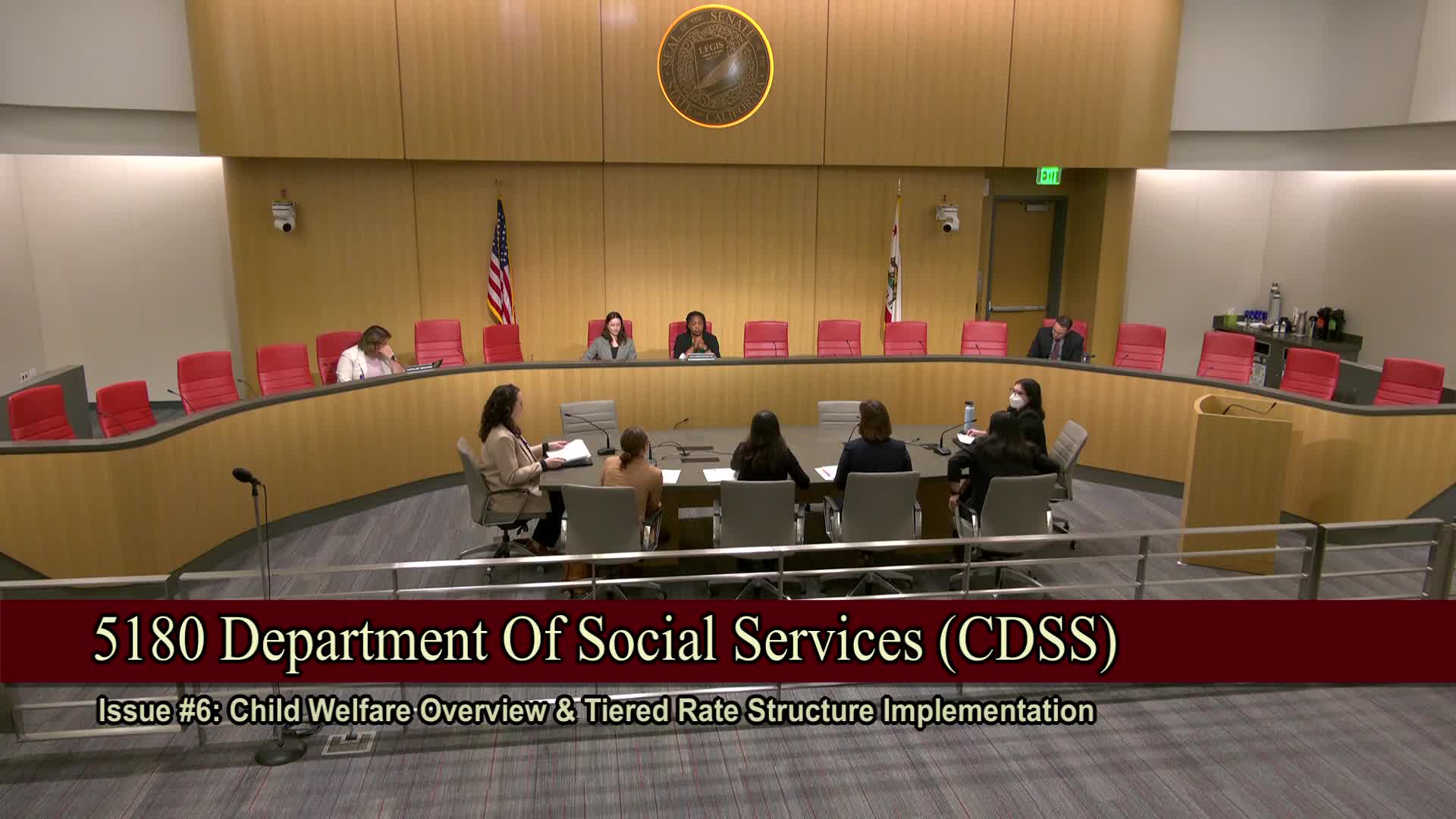
The Department of Social Services briefed the Senate Budget Subcommittee No. 3 on implementation progress for the foster-care tiered rate structure enacted last year and related programs.
Jennifer Troia and Angie Schwartz of CDSS said the governor's 2025'26 budget includes $10.8 billion for children and family services programs and that the child welfare caseload is projected at about 111,000 children with a foster-care caseload of roughly 42,300 for 2025'26. The department said the tiered rate structure will be phased in with an implementation date for the rate payments on July 1, 2027.
CDSS described new components of the reform: the strengths-building program (a self-determination model to fund youth and caregiver-selected supports and enrichment) and an immediate-needs program tied to functional assessments (CANS) for children in tiers 2, 3 and 3-plus. CDSS said it has conducted 28 listening sessions and working groups with over 1,000 participants and that it is coordinating closely with the Department of Health Care Services (DHCS) on the relationship between BH Connect activity funds (which are medically assessed and tied to Medicaid eligibility) and the strengths-building funds under the tiered model.
CDSS said it has contracted a vendor to analyze immediate needs and the reasonable administrative and operational activities providers would require; that analysis will inform cost estimates. The department said guidance on BH Connect activity funds is expected in July 2025, while the tiered-rate strengths-building program will not implement until July 1, 2027.
The Legislative Analyst's Office recommended the Legislature request a more detailed implementation roadmap and milestones for the multiple program components and suggested closer oversight of funding intended for training, fidelity tools and county supports. LAO also said the governor's budget likely will show some timing savings in the May revision for BH Connect elements because the administration previously assumed partial January 2025 implementation but is now more likely to start in July.
Why this matters: The tiered rate structure is intended to align payments with assessed needs, expand community-based immediate-needs supports and reduce reliance on restrictive placements, but it requires a multi-year implementation and coordination with counties, tribes and DHCS.
Next steps: CDSS will continue stakeholder engagement, provide quarterly reports to the Legislature and post draft standards and technical assistance materials; LAO recommended the Legislature require a more granular implementation roadmap for oversight.