Get Full Government Meeting Transcripts, Videos, & Alerts Forever!
Get email alerts on the Project Charges topic
No spam. Unsubscribe anytime.
Council members criticize MNCPPC project-charge administration as inconsistent; staff defend process and say reforms are underway
Summary
A lengthy committee exchange over project charges erupted during the parks budget briefing, with council members alleging inconsistent enforcement and discrimination in approvals and MNCPPC staff and budget analysts saying rules and long-standing awards complicated uniform application.
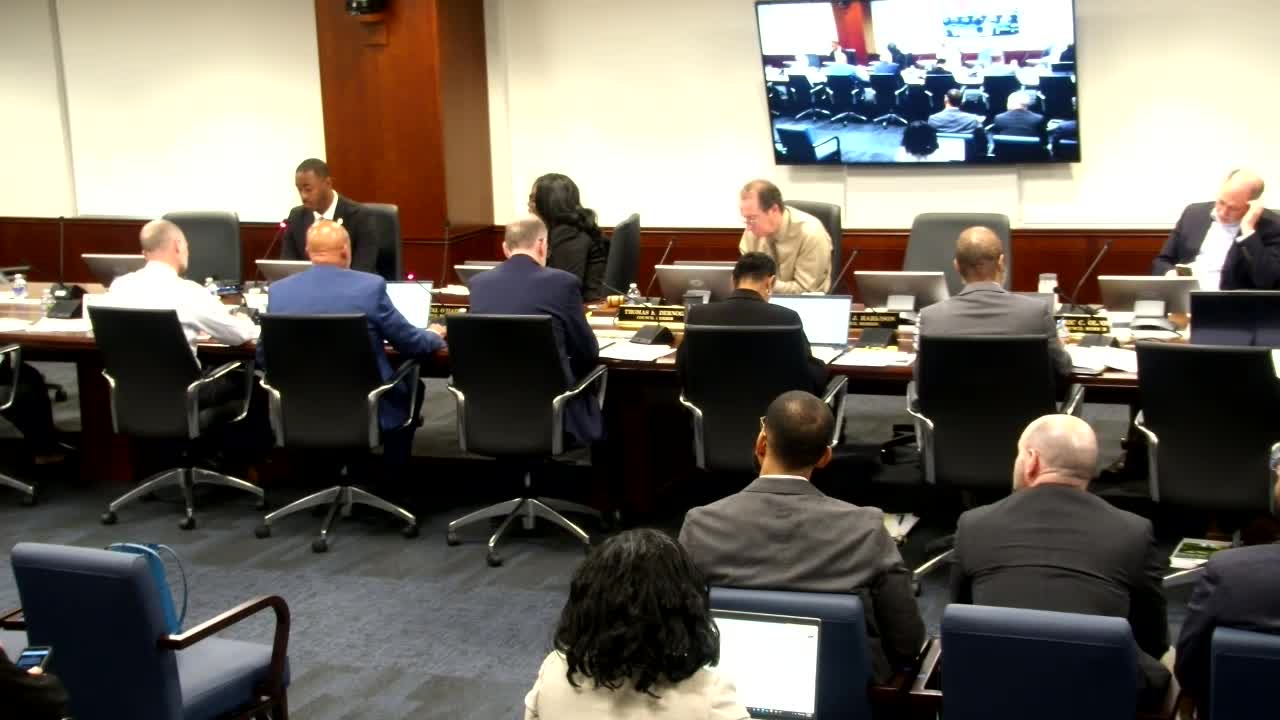
A major policy dispute emerged during the PHED committee’s April 3 session when several County Council members sharply criticized how MNCPPC’s Department of Parks and Recreation administers “project charge” reimbursements to community organizations.
Council Chair Burrows and other members said they found inconsistent decisions — including denials or rejections for organizations with similar program descriptions — and described a pattern they said left some council districts underserved. “It just seems that they’re arbitrarily picking and choosing which organizations,” said one council member during a prolonged exchange with MNCPPC staff. Council members pressed officials for a plan to make affected organizations whole and to ensure consistent, transparent application of project-charge criteria.
MNCPPC staff and budget office representatives described inherited complexity and a mix of legal, administrative and historical factors that have produced uneven outcomes. David Alexander, acting assistant budget manager, said the department has pushed staff to work collaboratively with applicants and avoid outright denial where scopes can be revised to fit the department’s recreation-focused eligibility. “One of the things that we've definitely put forward to our team is we do not deny project charges,” Alexander said on the record, adding that teams will work with nonprofits to bring applications into alignment with eligibility criteria.
Council staff analysis and MNCPPC’s own budget team acknowledged the appearance of inconsistent treatment in some 2024 scopes. Josh Allen, a council budget analyst who reviewed a sample of contracts, said he found instances where similar program offerings were treated differently and recommended clearer guidelines and documented decision rules. “There did appear to be circumstances where there was not a uniform application or even a real clear articulation of what consistency with the core mission… meant,” Allen told the committee.
Council members raised specific examples (provided in committee exhibits) where they said organizations were denied funding on residency or scope-of-service grounds while other contracts with similar language were approved. MNCPPC staff said some differences reflect long-standing, grandfathered awards in which previously approved project charges were carried forward, and a decision made this budget cycle to treat legacy recipients differently as the department transitions to clarified guidance. Staff also described legal and accounting constraints that have tended to require project-charge reimbursements to be tied to verifiable, program-specific costs rather than open-ended grants.
Council members demanded near-term fixes and asked MNCPPC to produce a corrective plan and an audit trail showing why approvals and denials differed. MNCPPC Chair Peter Shapiro and Department Director Bill Tyler said they would work with the Council to improve clarity, but several council members said the department needs to demonstrate actionable changes quickly to restore confidence.
Why it matters: Project charges are a discretionary, Council-approved mechanism that routes county funds to community organizations for recreation and related public-service activities. Council members said inconsistent administration has concrete consequences for constituents — fewer services, delayed programs and missed opportunities for youth, seniors and neighborhood groups.
Next steps: Committee members sought written explanations for specific denials and requested updated guidance and a corrective plan. MNCPPC staff indicated they will supply the requested scopes, a process audit, and options to standardize review criteria and decision documentation in the coming weeks.