Get Full Government Meeting Transcripts, Videos, & Alerts Forever!
Get email alerts on the Courts Budget topic
No spam. Unsubscribe anytime.
Orphans Court asks for restored administrative and ADR staffing as caseloads rise
Summary
Judges from Prince George’s County Orphans Court requested funding for an administrative assistant/ADR coordinator and noted long‑standing vacancies including a law clerk position. Officials said the court’s caseload is high and that the alternative dispute resolution program helps resolve probate matters without costly litigation.
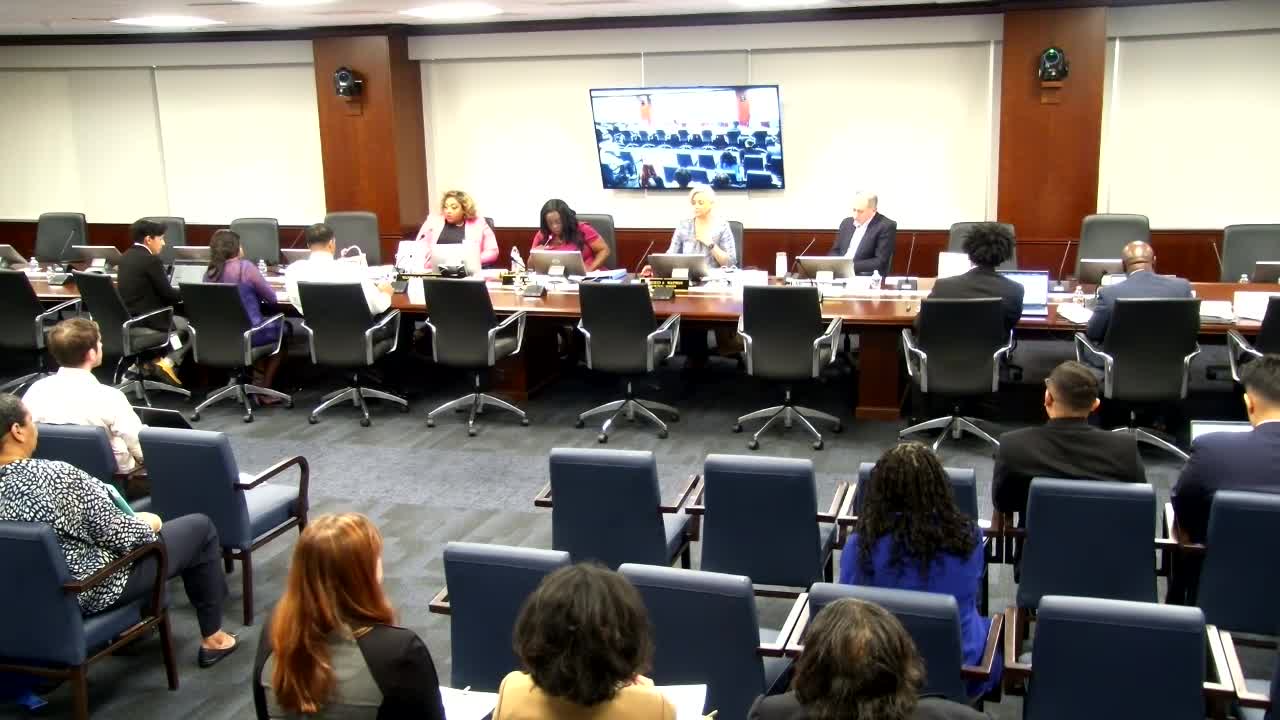
Judges from the Prince George’s County Orphans Court urged the county’s Health, Human Services and Public Safety Committee to restore funding for an administrative assistant who also serves as the court’s alternative dispute resolution (ADR) coordinator, saying the court’s small staff is stretched thin amid a growing caseload.
Chief Judge Wendy Cartwright and colleagues described a court that handles probate and guardianship matters and faces the highest probate workload in Maryland. Budget staff told the committee the Orphans Court’s proposed general-fund budget for fiscal year 2026 is $610,500, a 3.4% decrease from the prior year, with operating expenditures increasing due to higher technology and supply allocations but overall a slight net reduction.
Why it matters: Judges said the court’s work involves administering estates and protecting children's assets, often for family members without legal counsel. The Orphans Court manages complex and sensitive matters that directly affect residents handling the estates of deceased relatives. Chief Judge Cartwright emphasized the human dimension of probate work: “In those files are the lives of those people. And in those files include the people that they left behind.”
Staffing and programs: County budget staff reported that, as of March 13, 2025, the court was funded for 8 full-time positions but had two vacancies — a long-unfunded law clerk position and a community developer position — representing a 25% vacancy rate among the court’s general-fund positions. Judges asked the committee to prioritize funding the administrative assistant/ADR coordinator over the law clerk if only one position can be restored immediately, saying ADR helps settle probate disputes and reduces the need for contested hearings.
Caseload metrics and operations: Budget presentation materials indicated that as of March 14, 2025, there were 3,698 open estate cases (with 1,198 of those open in fiscal year 2025), and across fiscal years 2022–2025 more than 13,000 estate cases were opened with about 8,079 closed to date. Guardianship caseloads were smaller but steadily active: 301 guardianship cases were open as of March 18, 2025. Judges said the ADR program — funded in part by a prior MACRO grant and later by the county — is an effective tool and that the court was one of the early adopters of mediation for probate matters in the state.
Budget request and timing: Court representatives asked that, if immediate funding for fiscal 2025 is not possible, the county consider partial or phased funding effective July 1 to fill the ADR/administrative role for fiscal 2026. County staff acknowledged the request and said they will balance priorities across departments as they finalize recommendations.
Other items: Judges also noted they have not received pay increases comparable to judges in some other Maryland jurisdictions, and asked the committee to consider judicial compensation in future budget cycles; county staff indicated those compensation changes would be for implementation after the next election cycle.
Next steps: Committee members thanked the judges and said they would review the requests “judiciously” as the budget process continues. Budget staff will carry forward the staffing requests and caseload data into the county’s budget deliberations.
Details to watch: whether the county funds the ADR/administrative position for July 1 and whether the long-unfunded law clerk post returns to the authorized complement. The outcome will affect the court’s ability to move dockets, maintain records and expand mediation services.