Get Full Government Meeting Transcripts, Videos, & Alerts Forever!
Get email alerts on the Reproductive Justice topic
No spam. Unsubscribe anytime.
San Antonio Council approves $100,000 expansion of reproductive-justice fund to support out-of-state travel
Summary
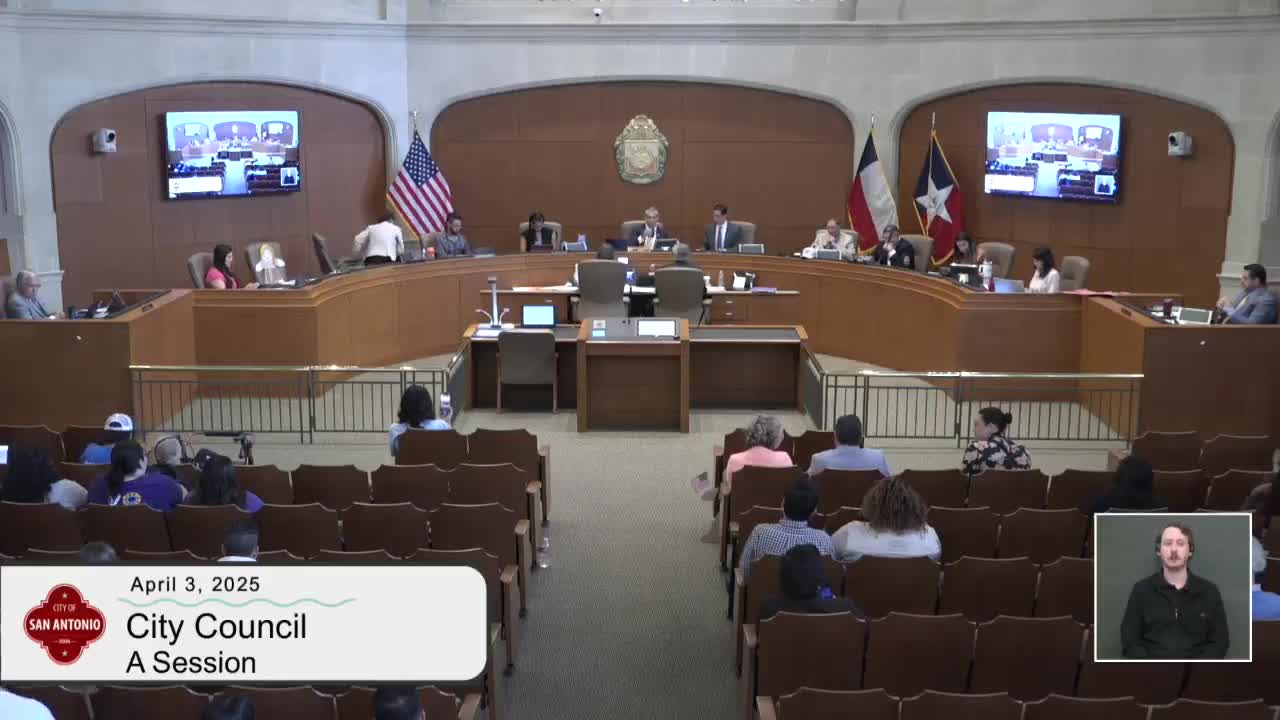
San Antonio City Council voted April 3 to authorize expedited procurement for reproductive-justice health services and to expand the city's Reproductive Justice Fund, including funding that may be used to support logistical out-of-state travel for abortion care.
San Antonio City Council voted April 3 to authorize expedited procurement for reproductive-justice health services and to expand the city's Reproductive Justice Fund, including funding that may be used to support logistical out-of-state travel for abortion care. The ordinance was approved after public comment and extended council debate; the motion carried, and council directed staff to return with proposed contracts and implementation details.
The expansion carries an immediate authorization to begin an expedited procurement process and a funding allocation of $100,000. City manager staff said the money would be reallocated from non-personnel accounts within the Metro Health budget and that any contracts would return to council for formal approval and execution.
Council members and dozens of speakers framed the vote as a response to state-level restrictions on abortion access. "The fight for reproductive healthcare is a fight for women's lives," Councilmember Jalen Cabello Haverda said during council discussion. Advocates and nonprofit representatives urged the council to act quickly to help residents who now must travel for care; opponents urged fiscal restraint and asked the council not to use taxpayer dollars for abortion-related services.
Public testimony was extensive and sharply divided. Marcus Dovolina, a constituent who identified himself as a former Marine, told the council, "As a taxpayer, I request to be on the hook for this fund." Jane's Due Process representative Ariana Rodriguez and Planned Parenthood South Texas senior manager Kate Sanchez detailed logistical barriers residents face when traveling out of state and said funds reduce delays and harm. Several speakers cited studies or reports they said show increases in maternal mortality and sepsis since Texas' 2021 restrictions; the transcript records those claims as testimony rather than as findings of the council.
Opponents included speakers who called the allocation a misuse of public funds. "If people believe that this is an important service that needs to be provided, there are many nonprofit organizations that can do that," mayoral candidate Rolando Pablos said in public comment. Others described moral objections to publicly funded abortion access.
Council debate ranged from support for immediate local action to caution about the legal and financial consequences of a state challenge. Councilmember Mark White and others warned the measure could prompt litigation; the city attorney's office told council the legal landscape is fluid and that the office would advise as matters develop. City staff said contracts would be structured so payments are tied to deliverables and reimbursements rather than large up-front disbursements.
Councilmember Cabello Haverda, who led the discussion in favor of the item, referenced specific cases cited by advocates: "Jocely Barnaca, a 28-year-old woman, died after being denied care following stillbirth. Her death was preventable," she said, describing examples raised in testimony as the impetus for action. Council members who opposed the measure framed the decision as outside the appropriate scope of municipal government or a poor fiscal choice given pending state legislation.
Councilmembers also discussed pending state legislation (identified in testimony and council remarks as Senate Bill 33 or related measures) that would prohibit cities from using taxpayer funds for logistical abortion support. City staff said the bill's status was uncertain and that the effective date, if enacted, would determine legal risks; staff also said the $100,000 allocation would be administered through contracts that likely use reimbursement or activity-based payment structures to limit immediate outflows.
The council approved the motion; the transcript records "motion carries" but does not include a roll-call vote tally in the public record excerpt. Council directed staff to return with contract proposals as part of an expedited procurement timeline and to structure payments in line with proposed services and applicable law. The council meeting minutes and subsequent contract proposals will provide further implementation details.
Votes at a glance: Ordinance authorizing an expedited procurement for reproductive-justice healthcare (Item 5) ' Motion carried (no roll-call tally provided in the transcript).