Get Full Government Meeting Transcripts, Videos, & Alerts Forever!
Get email alerts on the Reproductive Health topic
No spam. Unsubscribe anytime.
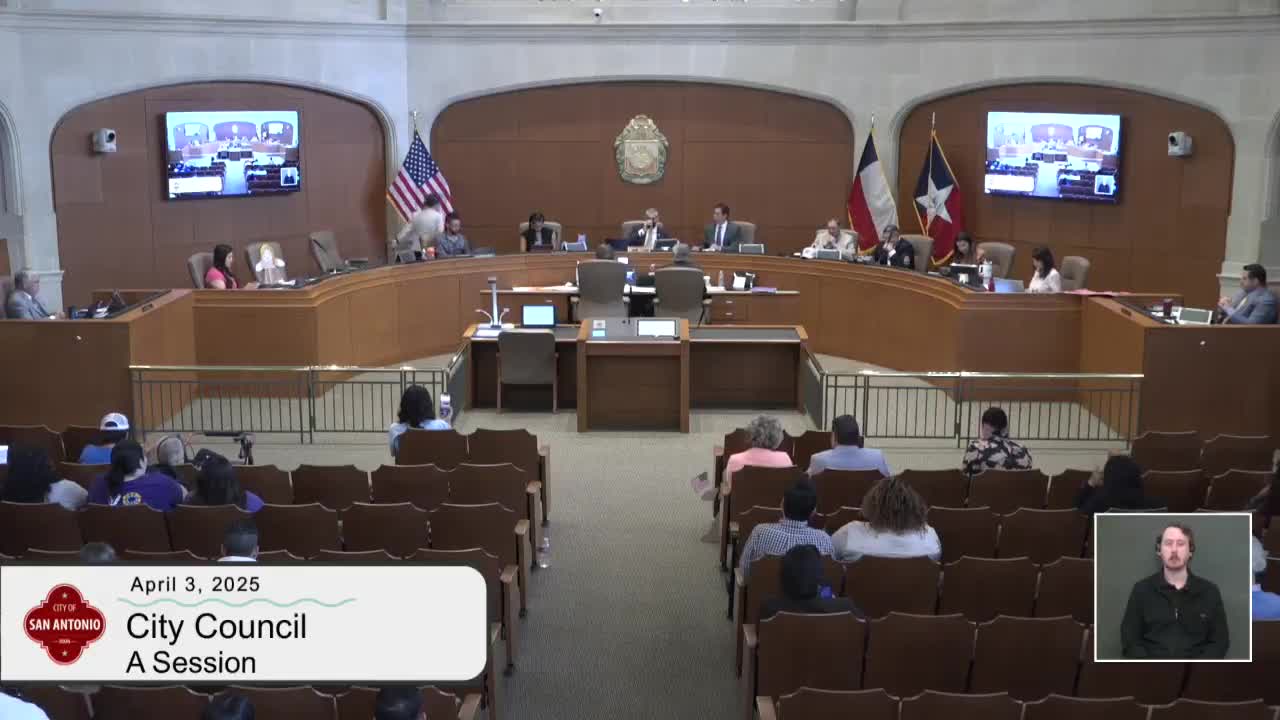
San Antonio council approves $100,000 reproductive‑justice services fund after heated public debate
Summary
The San Antonio City Council on April 3 approved an ordinance authorizing expedited contracting for reproductive‑justice health services, including reimbursement mechanisms that could cover travel to receive out‑of‑state care, and allocated $100,000 to a reproductive‑justice services fund.
The San Antonio City Council on April 3 approved an ordinance authorizing expedited contracting for reproductive‑justice health services, including reimbursement mechanisms that could cover travel to receive out‑of‑state care, and allocated $100,000 to a reproductive‑justice services fund.
The vote followed more than three hours of public comment, during which dozens of residents, advocacy groups and opponents urged the council either to fund the measure now to help people who cannot otherwise travel for care or to reject it because of legal risks and the moral objections of many constituents. Council members debated the legal exposure and budget tradeoffs before approving the item; the motion passed, and staff said contracts would return to council for approval.
Supporters framed the allocation as an urgent public‑health and equity measure for people who face barriers to care. Laura Molinar, one of the first speakers, said the city had a chance “to act with compassion and strategically” and described how $100,000 would help residents avoid dangerous travel or financial hardship. Kate Sánchez, who identified herself as an organizer for Planned Parenthood, cited rising demand and scarcity of funds: “This city has the opportunity to use these resources to offer reproductive freedom,” she told the council.
Organizers and clinicians described recent local cases they said reflected harm after access narrowed at the state level. Adriana Rodríguez, who said her group helps clients navigate care, said the fund would “remove some of the stress” for people who otherwise face long, dangerous journeys. Several speakers referenced maternal and pregnancy‑related deaths they attributed to restricted access.
Opponents called the allocation inappropriate uses of taxpayer dollars and warned of legal challenges. Multiple speakers described the proposal as morally objectionable and urged council members to direct private fundraising instead. Robert González, a lifelong San Antonio resident, said city leaders should prioritize homelessness and other needs, and called the proposal a poor use of public funds.
Council debate focused on two recurring themes: (1) whether the city is the appropriate payer for travel or services that state law touches, and (2) the fiscal and legal risk of litigation if statewide restrictions are codified. Councilmember Mark White, who was sworn in earlier as mayor pro tem during the meeting, said the measure would likely pass but signaled opposition: “Este, definitivamente se aprobará, pero no va a aprobarse con mi voto.” Several members urged caution about spending limited city dollars while listing pressing infrastructure and public‑safety needs.
City staff and legal advisers briefed councilors about pending state legislation that could bar municipal expenditures for services tied to abortion care. Jeff Cueva, staff who advised on legislative risk, said a Senate bill (discussed in committee as SB 33) had language that, if enacted, would prohibit cities from spending tax receipts on activities like those contemplated; he cautioned the council that the legislative outcome was uncertain but that litigation and defense costs were a real possibility. The city’s legal office said it would provide advice and defend the municipality as needed.
Council members who supported the item stressed the local consequences of restricted care. One sponsor said the fund is “about dignity, autonomy and ensuring all residents have access,” and framed the $100,000 as a targeted, limited allocation to be managed through contracts and reimbursements rather than a blanket entitlement. Staff told councilors that contracts or agreements would be presented to the council for final authorization and that typical payment mechanisms could include reimbursements based on submitted receipts or provider invoices.
The motion to approve the ordinance and the $100,000 allocation passed; the council directed staff to return with contract recommendations and implementation details. The vote passed without a roll‑call tally recorded in the transcript; staff said procurement steps and provider proposals would return to the council for consideration.
The item drew continuing questions about implementation if state law changes, whether payments would be structured as reimbursements, and how the city would limit use to eligible services. Staff said proposals would define scope, include invoicing or reimbursement controls, and be brought back to council for contract approval. The council did not adopt an implementation schedule at the meeting beyond directing staff to pursue expedited procurement and return with recommended contracts and terms.
The item concluded as the council moved on to other agenda business. Supporters hailed the vote as a local action to protect access; opponents warned of litigation and fiscal consequences.