Get Full Government Meeting Transcripts, Videos, & Alerts Forever!
Get email alerts on the Braille Institute Library topic
No spam. Unsubscribe anytime.
Braille Institute patrons and leaders urge restoration of state support after budget cut
Summary
Multiple patrons, veterans, and Braille Institute staff testified at the Assembly subcommittee hearing about the impact of a proposed or enacted loss of state funding for the Braille Institute Library, describing services for blind and visually impaired Californians and requesting restoration of an $800,000 appropriation.
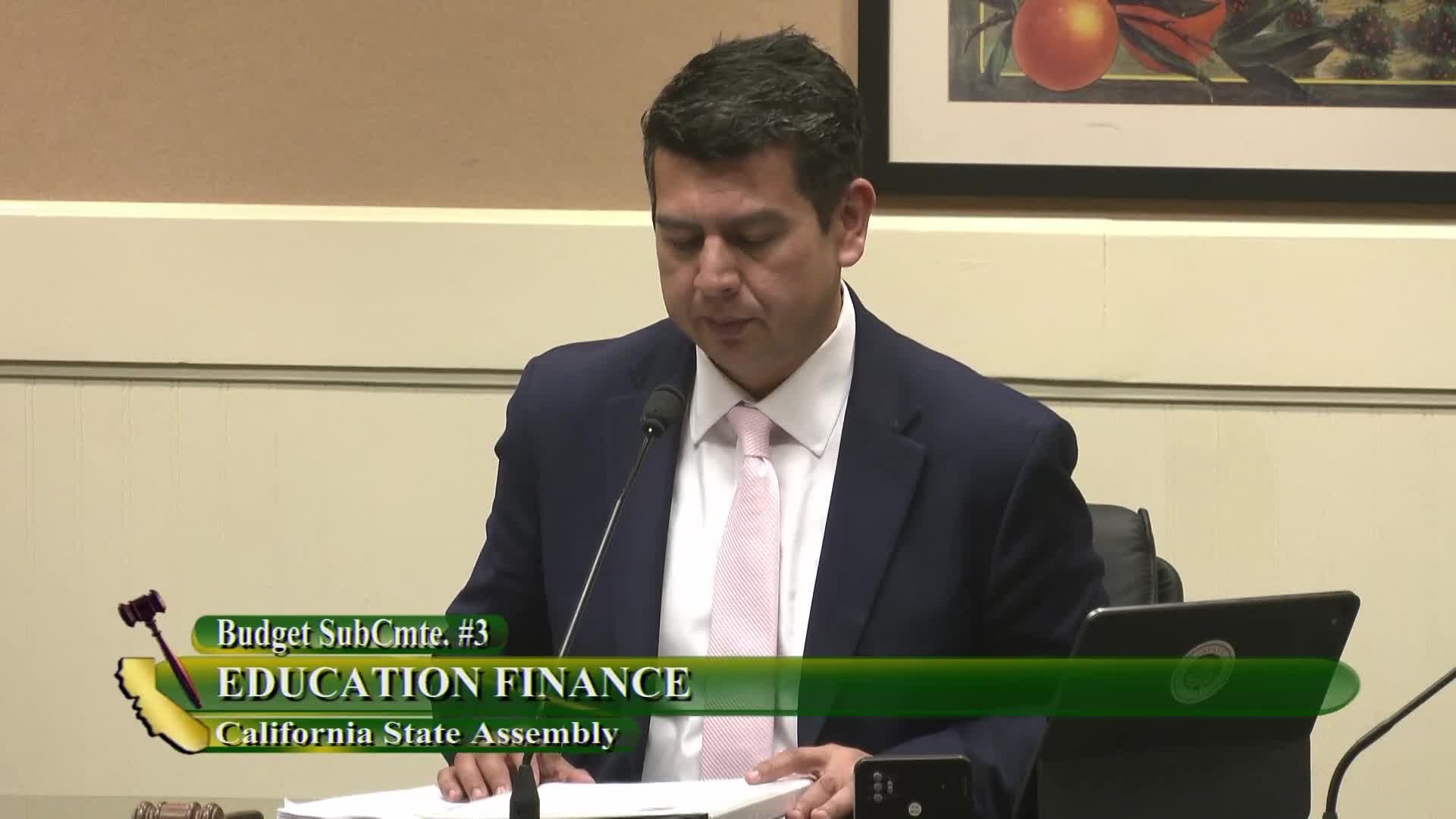
At the start of public comment during the Assembly Budget Subcommittee No. 3 hearing, several patrons and leaders of the Braille Institute of America described the practical consequences of reductions in state support for the institute’s library services in Southern California.
Jim Dimitri Kales, identified in the record as chief executive officer of the Braille Institute of America, told the committee, “Our funding has been completely cut from the state of California budget.” Lisa Lepore, the Braille Institute Library director, explained the service model: “Unlike a public library where patrons will go in, our patrons for the most part we serve from home,” and described braille books, audiobooks and large print services that are delivered to users who are often homebound.
Multiple patrons — including veterans and volunteers who run low‑vision book clubs — described the library as a lifeline that supports literacy, social connection and independence. Sandy Shin of the Braille Institute asked the committee to restore funding, specifying a request for $800,000 to be returned to the upcoming budget.
State Library officials and committee staff later discussed the administration’s statewide reduction requirements and the State Library’s contracting relationships. Rebecca Wendt, deputy state librarian, told the subcommittee the Braille Institute is a longstanding nonprofit partner that serves 10 Southern California counties and that the State Library has historically supported the Institute but has at times been unable to continue funding when state general fund levels tightened. Wendt described the Institute’s services — braille books, audiobooks and assistive technology — and said the State Library partners when possible but must prioritize core statutory functions during statewide cuts.
Clarifying context offered in the hearing: the Braille Institute receives state funds under a longstanding arrangement dating back decades, but the State Library’s testimony noted that federal programs (National Library Service) provide some core audio content and that partnerships and philanthropic funding have helped sustain the Institute in prior shortfalls. Committee members asked the State Library to provide specific follow‑up on what service impacts the proposed state reduction would cause in Southern California and to coordinate with the Braille Institute on mitigation.
Ending: Committee staff left the matter open for follow‑up; the subcommittee requested more detailed, itemized information about the expected operational impacts to Braille Institute users and whether services could be maintained through other funding sources.