Get Full Government Meeting Transcripts, Videos, & Alerts Forever!
Get email alerts on the Term Limits topic
No spam. Unsubscribe anytime.
Williamsport council adopts amended term-limits ordinance, adds solicitor's clarifying language and extends controller/treasurer terms
Summary
On Oct. 16 the Williamsport City Council approved an ordinance imposing term limits for elected city offices, adding solicitor-recommended language to prevent election loopholes and amending controller and treasurer limits from two to three consecutive terms. The vote was 6-0 on second reading.
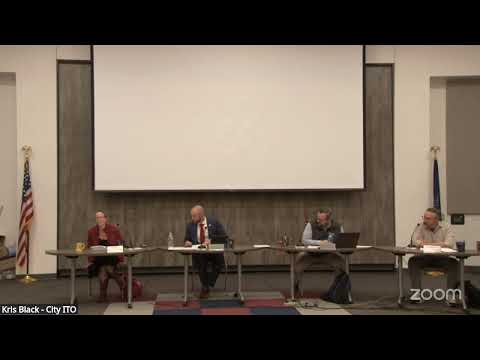
Williamsport City Council adopted an amended ordinance setting term limits for elected city officials on the second reading Thursday, Oct. 16, after the city solicitor recommended clarifying language to avoid legal ambiguity and the council approved a separate amendment increasing the maximum terms for the controller and treasurer.
The solicitor recommended two technical edits that the council adopted. The first adds the words "or be elected to" in the core prohibition so the ordinance reads in part, "No person shall serve or be elected to more than [X] consecutive terms...," a change the solicitor said closes a gap that could otherwise allow a candidate to be elected but later be found ineligible to serve. The second addition provides a limited grandfathering clause allowing any person holding an office on the ordinance’s effective date to "serve the remainder of their current term and one additional term," a change intended to avoid a post-election legal challenge.
City Solicitor Austin explained the rationale for the first change: the board of elections "would likely defer to the petition challenge process" and, in practice, "the prohibition was actually against serving as opposed to being elected to," which could leave a candidate on a ballot and then later subject to removal. He said adding "or be elected to" creates a timely legal controversy that a court can address before an election is finalized.
Council members debated the second change. Some members said the additional clause preserves continuity for sitting officeholders and avoids immediate disruption; others voiced concern about limiting local authority and expressed interest in more aggressive home-rule changes in the future. The council also approved an amendment to Sections 131.04(a) (city controller) and 129.04(a) (city treasurer), changing those offices from two consecutive terms to three.
Amendments and final votes occurred during the same meeting. The key motions and outcomes were: - Amendment to change controller and treasurer limits from two to three consecutive terms: approved 6-0. - Amendment to add the words "or be elected to" in the core prohibition across the ordinance sections and the grandfathering clause allowing current officeholders an additional term: approved 6-0. - Second reading and final passage of the ordinance, as amended: approved 6-0.
Council members asked whether the ordinance would prevent an officeholder from serving nonconsecutive terms; the solicitor noted the ordinance addresses consecutive terms, so a person could step away and later run again unless the council specifically adopts cumulative limits. The solicitor also referenced a Pennsylvania Supreme Court precedent arising from a challenge in Bethlehem (1986) as background for the recommended language.
The ordinance amends multiple sections of the city code; council directed staff and the solicitor to prepare the finalized text for publication and enforcement.
Ending: The council adopted the amendments and the ordinance on second reading, with the solicitor advising that the adopted language reduces the risk of pre- or post-election legal disputes while the council continues broader discussions about local government structure and potential home-rule changes.