Get Full Government Meeting Transcripts, Videos, & Alerts Forever!
Get email alerts on the Management Review topic
No spam. Unsubscribe anytime.
Consultants tell Williamsport council police facilities are "inefficient and insufficient," flag codes data gaps and levee funding as priorities
Summary
PFM presented a management review to Williamsport City Council on Oct. 16, highlighting strained police facilities, rising EMS and traffic-related calls, under-resourced codes enforcement and a need to pursue borrowing and regional partnerships to address capital needs.
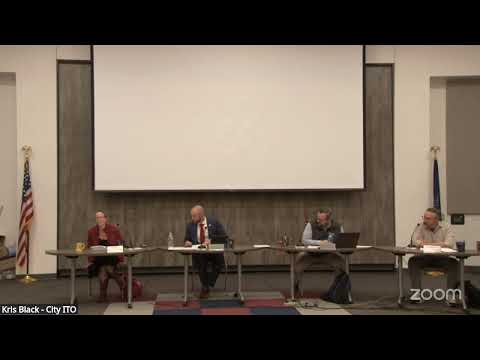
PFM consultants presented a management review to Williamsport City Council on Thursday, Oct. 16, summarizing department budgets, call-volume trends and operational issues and offering areas for follow-up as the city prepares its 2026 budget.
The consultants said the police department’s facilities present both operational and safety challenges and recommended the city plan to borrow to fund a long-term facilities solution. They also flagged the Williamsport levee as a regional asset whose upkeep may be better funded through a regional authority, and noted that the Bureau of Codes does not currently keep data comparable to the computer-aided dispatch records the police and fire departments maintain.
“The police facilities are inefficient and insufficient,” the lead consultant told the council, urging members to review the photos and assessments provided in the report. The consultants also noted that while total call volumes can be misleading, some call types—traffic incidents for police and emergency medical services for fire—are driving significant operational demand.
PFM’s Bob McDermott, director, summarized department-level findings: police calls are dominated by traffic incidents and follow-up/service calls, which the firm said are increasingly handled as phone or follow-up contacts to preserve resources. He also described deficiencies at the police operations building including makeshift lockers, limited evidence and records space and the proximity of holding areas to critical infrastructure.
“Even if call volumes are declining, that doesn't mean the nature of calls is consistent,” McDermott said, noting that some incidents tie up officers for hours. On fire services, the review found that EMS accounted for roughly half the department’s calls and is growing faster than other categories. False alarms were also identified as a substantial share of fire responses.
Council members pressed for more detail on the codes bureau, which the consultants said has seen staff reductions and has weaker operational data than public safety bureaus. Councilman Mackey asked whether PFM’s team had compared code response data with police and fire data; the consultants said codes had fewer systematic records and recommended improving the department’s data collection so staffing needs and productivity can be assessed.
PFM presented several cross-cutting themes it intends to quantify in a follow-up report: a data-driven police staffing analysis, options for police facility solutions, regionalization opportunities for fire and the levee system, and operational improvements for codes and recreation. The consultants said they will combine their financial assessment with these operational recommendations in the final phase of the management review and will return to council later in the process to discuss which suggestions are appropriate to include in the 2026 budget.
Council members and staff discussed next steps and timing: PFM said it will deliver a plan document that quantifies options and will present again as the finance office completes the city’s draft 2026 budget so the council can consider which ideas to adopt.
Among specific items PFM raised for council consideration were: - Police facilities: PFM described the existing operations as functionally strained and noted the city will likely need to borrow to build or renovate sufficient facilities. - Fire services and EMS: EMS comprises the majority of fire calls; the firm encouraged evaluating regional partnerships to manage EMS demand and costs. - Levee system: The levee protects a regional area but is funded by the city; PFM recommended exploring a regional authority to share costs. - Codes enforcement: The department’s staffing and productivity data are limited; PFM recommended improving internal tracking and warned that reduced budgets have hampered enforcement effectiveness. - Recreation and planning: PFM suggested rethinking cost recovery vs. access priorities for recreation and stressed the planning department’s role in driving tax-base growth.
Council members thanked the consultants and asked staff to include viable PFM recommendations in the 2026 budget where appropriate. PFM and city staff said the firm will return with quantified recommendations and that those recommendations will be considered alongside the draft budget.
Ending: PFM’s management review is the second of multiple presentations in the firm’s engagement with Williamsport. The firm will complete a final report that combines the operational findings with budget options and present those recommendations to council ahead of final 2026 budget decisions.