Get Full Government Meeting Transcripts, Videos, & Alerts Forever!
Get email alerts on the Data Center topic
No spam. Unsubscribe anytime.
Residents raise water, noise and tax concerns as Cannon Falls debates large data center
Summary
Dozens of Cannon Falls residents urged the City Council to slow or tighten terms for a proposed data center, citing water use caps, noise, potential light pollution and tax benefits; city staff said a development agreement with caps and requirements is in negotiation and more details will be shared at a joint work session.
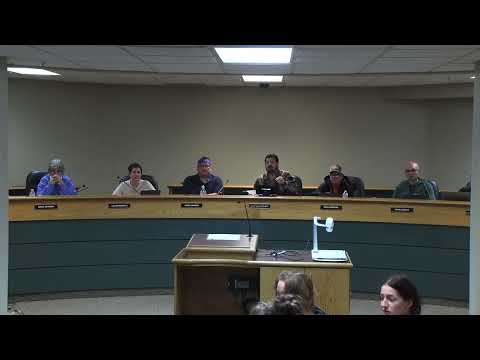
Dozens of residents pressed the Cannon Falls City Council on Oct. 7 to limit water use, require financial guarantees and impose noise and light controls as the city considers a proposed data center development.
The public input period opened with resident Kari Lundin saying she understood data centers are "a necessity" but that "they're in it for them," not the town. She warned that tax revenue from a data center could flow elsewhere and that local housing and utility systems could be stressed.
Nut graf: The council and city staff spent the meeting answering detailed questions about water and sewer caps, surety and mitigation measures after multiple speakers expressed environmental, fiscal and community-character concerns. City staff said a development agreement with numerical caps and guarantees is being finalized and will be explained at a public joint work session with the planning commission on Thursday evening.
City staff member John told the council the development agreement currently includes a water cap of 43,000,000 gallons per year at the end of a 10-year buildout and an average sewer collection cap of 50,000 gallons per day. "There is a cap within the…development agreement for water and sewer," John said. He added the property includes an irrigation well with an existing appropriation of about 41,000,000 gallons per year that would require DNR approval to repurpose and would only be allowed for emergency use under the annexation terms.
Speakers at the mic urged stronger protections and independent review. Anne Busselmeyer asked whether the city has "specific written commitments from TRAC that specify community benefits" and urged hiring an independent land-management specialist to review technical, legal and environmental issues. Anna Lindahl read six community questions including whether the city will cap water usage, require a surety bond against incomplete projects, design infrastructure adaptable to other uses, require mitigation for noise and light pollution, maximize taxable income and forbid shifting energy costs to residents.
Resident Jeff Weeks described noise and generator-start concerns and the difficulty of holding a large developer to account once a facility is built. "Once a data center is here, you are disempowered," Weeks said. Other residents cited potential impacts to wells, irrigation for farms and community character.
City staff and council members described existing regulatory and contract safeguards. Staff said the Minnesota Pollution Control Agency (MPCA) enforces noise thresholds and that if noise exceeds the MPCA limits there are enforcement measures; the city also can revoke a conditional-use permit for noncompliance. Staff said Dakota Electric and Great River Energy told the city that developers typically pay for needed electric infrastructure upgrades and that those costs are not intended to be passed to existing retail customers. "They are paying for transmission distribution," Councilmember Jeff said, referencing his conversation with Dakota Electric.
On guarantees and infrastructure costs, staff said discussions continue about a capital improvement charge to cover sewer-plant upgrades, and about a water tower the developer would help enable by dedicating land. Staff said details, including timing and specific dollar amounts for contributions and surety, will be shared publicly at the joint work session.
Several council members thanked residents for the focused comments and emphasized that detailed terms remain under negotiation. Councilmember Diane Johnson noted outside counsel is reviewing agreements, and Councilmember Chad said continued public feedback improves the city's bargaining position.
The council did not take formal action on the development agreement at the Oct. 7 meeting. Staff invited residents to the Oct. 9 joint work session with the planning commission for an informational presentation of the draft development agreement and supporting studies; that session is not a public hearing but is open to the public.
Ending: The city said the development agreement will be presented with more detailed, shareable terms at the work session; any decisions requiring formal approvals—zoning, conditional-use permits or development-agreement adoption—will follow the city's planning and public-hearing processes.