Get Full Government Meeting Transcripts, Videos, & Alerts Forever!
Get email alerts on the Property Tax topic
No spam. Unsubscribe anytime.
Joint conference panel fails to resolve owner-occupied property tax rate, drops 'beneficial' language
Summary
A joint conference committee on Senate File 153 failed to reach agreement on competing House and Senate positions over residential property tax rates, owner-occupied treatment and insertion of the word "beneficial" for owners. Two motions failed on tied or split votes and the committee adjourned to report an impasse to presiding officers.
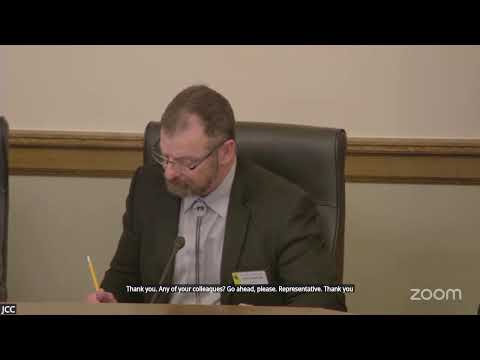
A joint conference committee on Senate File 153 on Wednesday failed to reach agreement on competing House and Senate positions over residential property tax rates and related wording, and adjourned without a resolution.
The committee considered a House amendment that would set the residential real-property rate at 9.5% for tax year 2025 and, for tax year 2026 and thereafter, keep residential real property at 9.5% while creating a lower owner-occupied subclass at 8.3%. The amendment also amended two provisions on page 2 (changing a six-month reference to eight months) and added an exception "unless the owner is an active duty member of the armed forces who is deployed outside of the state." The House amendment was moved but failed on a recorded voice/roll-call sequence the panel summarized as three ayes and three nays.
The committee then considered adopting the Senate position as reflected in the engrossed bill. That motion also failed by the committee's tally. After discussion the panel concluded it had reached an impasse and agreed to report back to the presiding officers of each chamber rather than resolving the differences on the floor.
Why it matters: The disagreement affects how local assessors will prepare tax notices. A committee member noted that unless the Legislature or a court acts, local tax notices would be prepared using the 9.5% rate for residential property when notices go out in May. The committee also discussed potential legal challenges and the option of a special session to remedy collection uncertainty.
Key points of debate
- "Beneficial" language: Committee members discussed inserting the term "beneficial" before "owner." A member who consulted Legislative Service Office (LSO) attorneys said the only use of "beneficial owner" in Wyoming statute appears in trust law and that adding the term without a definition might unintentionally exclude natural persons. That member said, "the only time beneficial owners used in statute, Wyoming statute, is under trust statute," and recommended dropping or defining the term before retaining it in this statute. The committee agreed to drop the beneficial language in the course of negotiations.
- Rates and owner-occupied subclass: The House amendment proposed 9.5% in 2025 for residential property, and then 9.5% generally with owner-occupied residential property at 8.3% from 2026 onward. Several members said they preferred to defer detailed choices on owner-occupied treatment to interim study, with one member saying the matter "should be just as narrow as possible, and create the tier, and let us deal with it later." Another member said she would vote against adopting the Senate position because she wanted the bill to include a measure "to help the folks" and to honor prior expectations.
- Administrative timing and secondary edits: The proposed amendment changed a six-month reference to eight months on page 2, and added the active-duty military deployment exception for owner-occupied status. One senator said she did not like the "8 months language" and was not ready to support treating owner-occupied property as a separate subclass without further work during the interim.
Votes and formal actions
- Motion: Adopt House amendment (as described above). - Mover: Representative (unnamed) (moved the amendment during the meeting) - Second: not specified - Vote tally: committee reported three ayes, three noes (no individual vote names provided in transcript) - Outcome: failed - Notes: The amendment would have set 2025 residential rate at 9.5% and created an 8.3% owner-occupied subclass effective 2026; it also changed a six-month reference to eight months and added a military deployment exception.
- Motion: Adopt Senate position (engrossed bill language). - Mover: not specified - Second: not specified - Vote tally: committee reported the motion failed (counts summarized by chair; individual names not recorded) - Outcome: failed - Notes: Committee members confirmed two failed motions; the committee concluded it had reached an impasse and would report back to presiding officers. No final statutory text was agreed.
Discussion-only items and directions
- LSO and drafter review: Committee members reported that LSO staff consulted with the drafters about the "beneficial owner" language and raised concerns about definitional gaps. That exchange was part of the discussion but did not produce a binding drafting change beyond the committee's decision to drop the term in the versions under consideration.
- Next steps: Committee members agreed to report the impasse to presiding officers. Members discussed options if no agreement is reached before tax notices go out in May: local assessors would prepare notices using the 9.5% figure unless a court issued a stay or the Legislature called a special session to change collection timing.
Context and background
The meeting was Joint Conference Committee No. 1 on Senate File 153 during the 2025 general session committee meetings. Participants referenced Committee of the Whole Amendment Number 2 and a standing committee amendment to the engrossed bill during negotiations. Committee members repeatedly described remaining disagreement over the owner-occupied subclass percentage and some specific language changes as the reason they could not reach a final conference agreement.
Ending
The panel adjourned without a final conference report, with members saying they would inform their presiding officers of the impasse and leave it to leadership whether to appoint another conference committee or seek other remedies.