Get Full Government Meeting Transcripts, Videos, & Alerts Forever!
Get email alerts on the Opioid Settlement Programs topic
No spam. Unsubscribe anytime.
City presentations show opioid-settlement funds supporting school-based mental health and nonpharmacological pain programs
Summary
Youth First and Forefront Therapy described how opioid-settlement funds awarded by the city are being used for school-based student assistance and multidisciplinary nonpharmacological pain and neonatal programs.
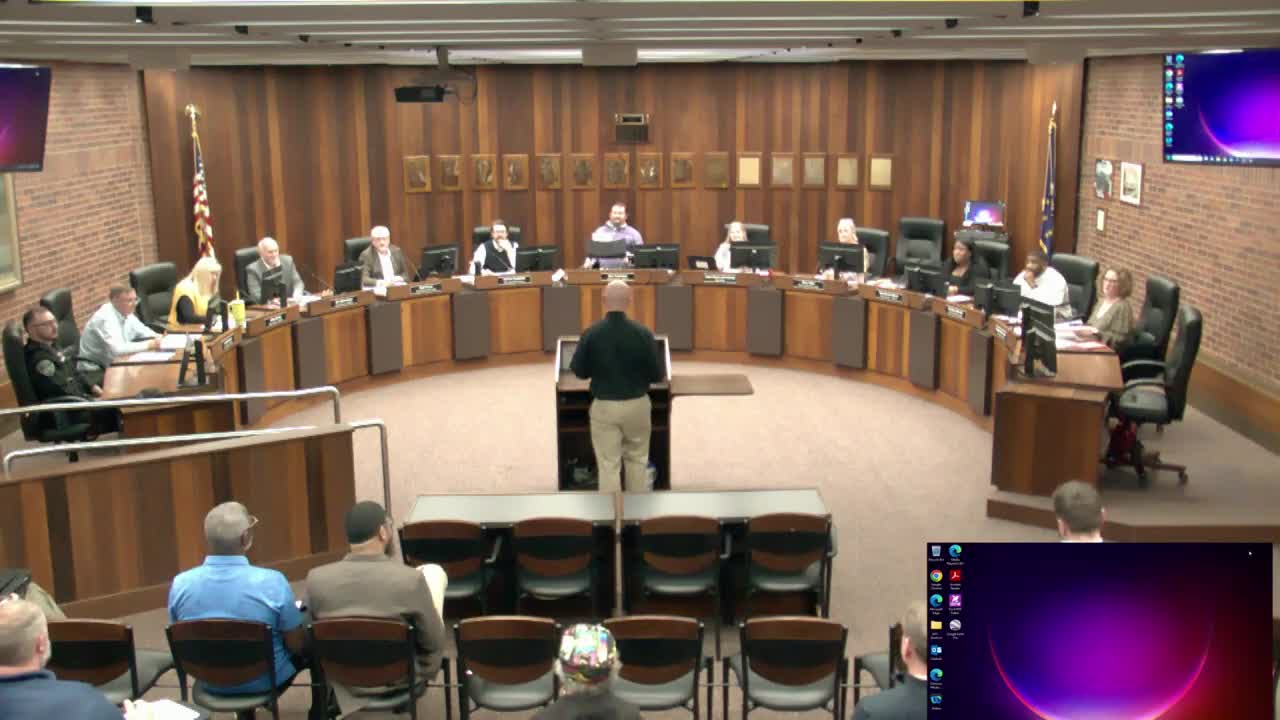
City staff and nonprofit partners presented to the Evansville Common Council on March 10 to show how opioid-settlement funds have been allocated to local programs supporting prevention, early intervention and nonpharmacological pain care.
Joe Atkinson, communications director for Mayor Terry’s office, introduced a video and representatives from Youth First and 4 Front (Forefront) Community Therapy. Carrie Black, president and CEO of Youth First, said Youth First received $257,500 and is using the funds for its school-based mental health and student-assistance program to keep mental-health professionals working in schools amid a statewide shortage.
Ryan Wood, co-founder, president and CEO of 4 Front Community Therapy, described multiple programs funded by the settlement dollars: an interdisciplinary chronic complex pain program that aims to prevent opioid initiation and to reduce opioid use among patients already on opioids; a neonatal opioid withdrawal program for infants exposed in utero and for their mothers; and a planned regional opioid symposium expected in October or November to train providers in nonpharmacological strategies. Wood said the programming emphasizes pain neuroscience education, behavioral approaches and coordination with social-work and clinical partners.
Speakers and several video testimonials described individual outcomes, including patients who reduced or stopped pain medication, and families whose infants showed improvement after therapy. Carrie Black and Ryan Wood said the programs are intended to expand access to evidence-based nonpharmacological care and to educate providers across the region.
Council members thanked presenters and requested continued updates. No formal council action was required or taken on the presentations during the meeting.