Get Full Government Meeting Transcripts, Videos, & Alerts Forever!
Get email alerts on the Probate Trusts topic
No spam. Unsubscribe anytime.
Committee advances probate code changes including creditor notice and POA tax authority fixes
Summary
House Bill 1088 would revise multiple probate and trust provisions, including creditor-notice language, trustee authority to make in-kind IRA distributions, and continuing power-of-attorney authority for tax matters after death.
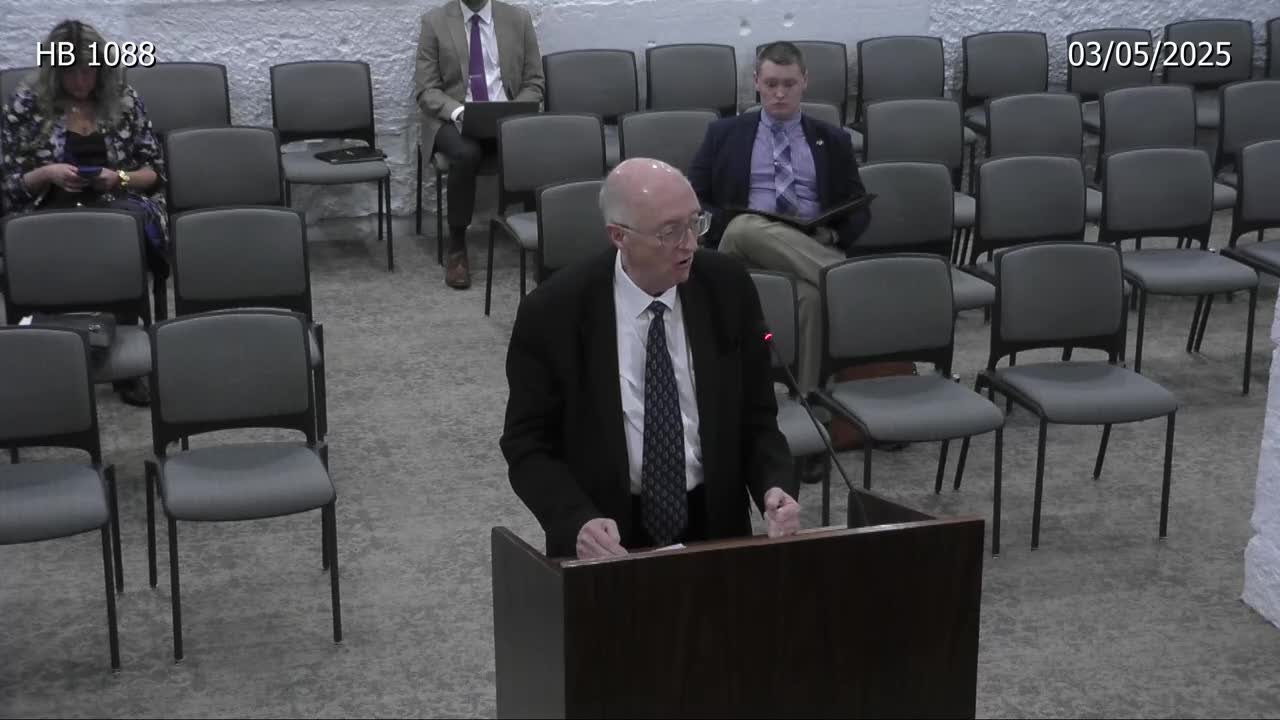
House Bill 1088, presented to the Judiciary committee by Jeff Deibel (Frost Brown Todd) on behalf of the Probate, Trust and Real Property Section of the State Bar Association, would make multiple changes to titles 29 and 30 of the probate and trust code.
Deibel outlined four primary changes: (1) clarify creditor notice rules under IC 29-1-7-7 so mailed late notices include the correct claims deadline; (2) expressly authorize personal representatives and trustees to make in-kind distributions of IRAs or retirement accounts to beneficiaries without obtaining a separate court order; (3) correct and clarify the rules that allow testamentary trusts created by wills to receive nonprobate assets such as retirement accounts; and (4) amend the power-of-attorney statute so an agent with authority over records, reports and statements (including tax matters) may continue limited authority after the principal's death until a personal representative is appointed, enabling the agent to handle pending tax refunds or liabilities.
Deibel said the bill reflects recommendations of the Probate Code Study Commission. He explained the creditor-notice change responds to a Court of Appeals decision that required mailed late notices to inform a creditor of the two-month filing window; the bill standardizes the notice language and process so clerks can generate a form notice to be mailed when a creditor is discovered late.
Attorney Hayden Parsons testified that the bill's draft language left an ambiguity in the creditor-notice subsections that could allow late, potentially improper notices to extend claims windows and slow administration. Parsons urged the committee to amend subsections e and f to reference creditors described in subsection d (those known or reasonably ascertainable within one month) and to clarify that claims are barred after the applicable claims period. Deibel and committee members agreed that a second-reading amendment to clarify the reference to subsection d would resolve the issue.
Members also discussed the in-kind distribution authority for IRAs, testamentary trust funding, and the POA tax authority change; Deibel said those items reduce cost and delay for estates and trust administration and are not intended to force agents to act. The committee moved the bill forward and agreed to include the drafting clarification on creditor notice in a second-reading amendment. The roll call on the motion to advance was recorded as 8 to 0.