Get Full Government Meeting Transcripts, Videos, & Alerts Forever!
Get email alerts on the Charitable Fund Transfers topic
No spam. Unsubscribe anytime.
Committee hears bill to speed transfers to charities after donors’ deaths; stakeholders seek amendments
Summary
House Bill 1081 would require financial firms to transfer funds to charitable organizations after receiving an affidavit from the charity and to respond within 30 days or provide a reasonable justification. Insurers, banks and regulators raised concerns about evidence-of-death standards, federal anti-money-laundering laws, liability protection and
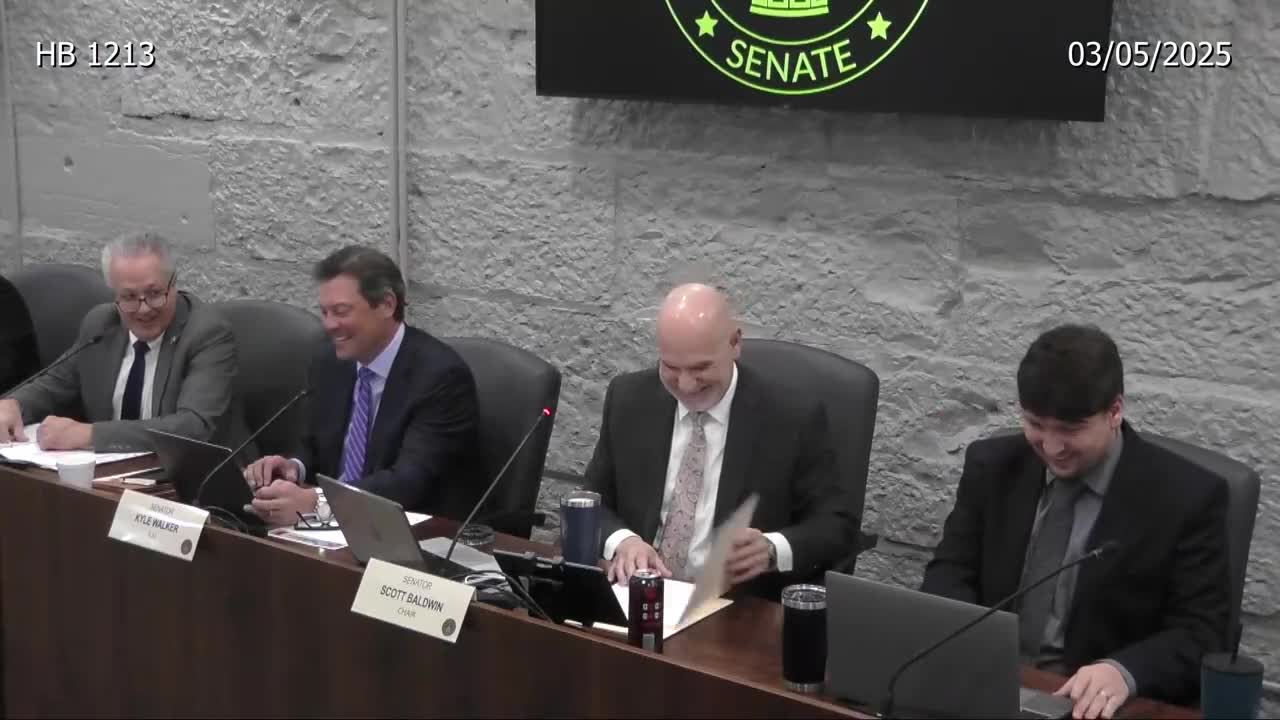
Representative Manning introduced House Bill 1081 to the Senate Insurance and Financial Institutions Committee as legislation aimed at reducing delays charities face when receiving funds left by deceased donors.
"House bill 10 81 is my favorite kind of bill," Representative Manning told the committee, saying the idea came from a constituent, Deanna Crispin of the Cass County Community Foundation. Manning said the bill would "stop this abuse of charitable organizations, expedite this process, and better respect the wishes of the deceased." He described the bill’s core requirements: charities would submit an affidavit with key documents and the financial institution would be prohibited from requiring personal identifying information from charity officers or agents or requiring the charity to open an account as a condition of transfer.
Brian Loshel, public policy and advocacy strategist for Indiana United Way, testified in support. "Streamlining the process of delivering these funds will help ensure the funds can be utilized for the purposes which they were donated," Loshel said.
Representatives of the life insurance and banking industries raised concerns. Trent Hahn of the Association of Indiana Life Insurance Companies (AILIC) urged requiring a death certificate as the most reliable proof of death and said members want liability protection if they release funds in good faith and are later sued. "Most if not all of our members or all of our members require a death certificate ... they are the most valid proof of death," Hahn said. He also noted Indiana has a retained-asset-account law that makes optional accounts available to beneficiaries after a death claim.
Ross Tierra of the Indiana Bankers Association said federal anti-money-laundering and tax laws shape banks’ information requirements; banks may need additional documentation for large transfers and must comply with the Bank Secrecy Act, Patriot Act and related rules. Tierra said a 30-day deadline to respond to charities is too short for some institutions and suggested extending it; he also described complexities when IRAs or probate proceedings are involved.
Staff from the Department of Financial Institutions (DFI) and the Department of Insurance (DOI) said they are willing to accept complaints for entities in their regulatory jurisdiction but cautioned the bill as drafted would broaden regulatory authority beyond state-chartered institutions and asked that damages or tribunal-like powers be removed. DFI staff clarified that complaints against out-of-state or non‑state‑chartered firms (for example, national brokerages) could fall outside their enforcement authority.
Committee members and stakeholders discussed several potential amendments: making a death certificate the preferred proof but allowing two alternative documents in lieu of a certificate; clarifying that reasonable justification for noncompliance may include compliance with federal statutes; adding limited liability protection for firms that comply with the statute in good faith; and extending the 30-day response window (a compromise discussed included 45 days). The chair announced the committee would not move the bill that day and that sponsors and stakeholders would draft a single amendment to reconcile concerns.
Ending: Representative Manning said he will work with industry and regulators on amendments; the bill was not advanced at this hearing and will return after committee consideration of amendments.