Get Full Government Meeting Transcripts, Videos, & Alerts Forever!
Get email alerts on the Permanency Timelines topic
No spam. Unsubscribe anytime.
Committee takes up sweeping changes to permanency timelines and foster‑parent rights; bill recommitted to appropriations
Summary
House Bill 1605 would tighten timelines for reunification and fact‑finding, allow certain long‑term foster parents to intervene in CHINS proceedings and permit additional parties to seek termination of parental rights; witnesses testified both for and against the bill and the committee recommitted it to appropriations.
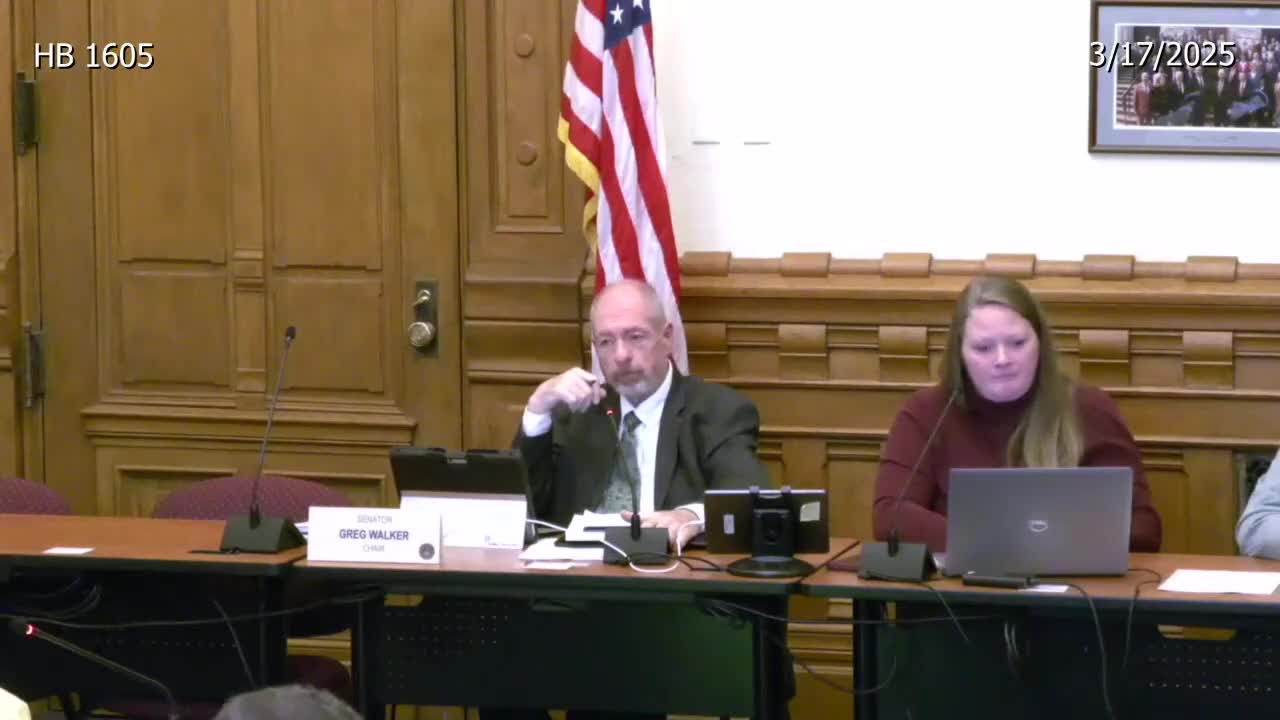
A Senate committee heard hours of testimony and debate on House Bill 1605, a comprehensive package of changes targeting timelines to permanency in child welfare, expanded rights for foster parents to intervene in CHINS (children in need of services) proceedings, and new procedures for termination of parental rights (TPR).
Representative Julie McGuire presented the bill, which sponsors describe as an effort to reduce the long time children spend in foster care and to give courts and caregivers clearer tools to secure timely permanency. The sponsor summarized several major provisions: prohibiting procedural waivers of deadlines in many CHINS and TPR hearings (while preserving extensions for exigent circumstances), allowing long‑term foster parents and certain caregivers to intervene in CHINS proceedings under defined guardrails, enabling intervenors to seek TPR in some cases, and requiring the court to hold certain hearings within specified windows to reduce delay.
“Trauma continues to occur,” said Rebecca Eimerman, a private attorney who testified in favor of the bill after working CHINS cases for a decade. She recounted cases in which children remained in care for years and argued the current timelines are ignored. Eimerman said the bill targets gamesmanship that lengthens cases and exhausts resources: "When non compliant parents are allowed to occupy state resources for years on end, then parents who actually want to change and get better may be forced to wait," she told the committee.
Supporters included private attorneys who represent children or placements, adoption attorneys and multiple foster parents and guardians ad litem. They described repeated examples in which children remained in care for years, cases were delayed by continuances or by dismissed TPR petitions that were never refiled, and foster parents who provide daily care had limited ability to be heard in court. Several foster parents and caregivers described paying privately for counsel to pursue contested adoptions or intervention because they believed delay left children at risk.
Opponents and careful reviewers — including the Indiana Public Defender Council and some family law attorneys — said the bill risked unintended consequences. The Public Defender Council urged changes to preserve fairness and judicial discretion, including starting timeline calculations at the court’s disposition date rather than the initial removal date, placing clearer best‑interest thresholds on automatic intervention, and ensuring courts retain explicit authority to grant continuances for good cause. They warned accelerated timelines could increase the number of children who never return home or who age out without permanency.
Committee members repeatedly asked whether the bill balanced parental rights, judicial discretion and child safety; witnesses from multiple perspectives urged clarifying language and additional judicial education. Representative McGuire and several supporters said the measure incorporates drafting from other states and is intended to give judges more information and families more timely outcomes. At the hearing’s close the committee voted to recommit the bill to appropriations; the roll call recorded 7 yes, 0 no.
If enacted, the bill would represent a substantial change to Indiana’s CHINS and TPR processes: it seeks to reduce time in care, increase the role of day‑to‑day caregivers in court, and provide clearer triggers and deadlines to avoid cases lingering for years. Supporters said the changes aim to reduce trauma and improve permanency outcomes; critics said wording and implementation details should be tightened to avoid adverse legal and practical consequences.